Vice President JD Vance on Monday said his lengthy talks with senior Iranian officials in Switzerland created a “good foundation for a successful final deal” as they negotiate bringing a permanent end to the war that the U.S. and Israel began in late February. The mediation effort in Switzerland, which started Sunday and stretched into early Monday, had rocky moments. But the talks also led to some agreements, mediators said, as technical talks continue this week.
We've also got all the latest in this week's primaries — including the South Carolina gubernatorial runoff I'm covering tomorrow, in which now President Donald Trump has backed both GOP candidates, throwing a last-minute curveball into the race.
Plus, Congress wonders if the Iran war was worth it, and an AP investigation on the DEA's fentanyl waiting game. |
|
|
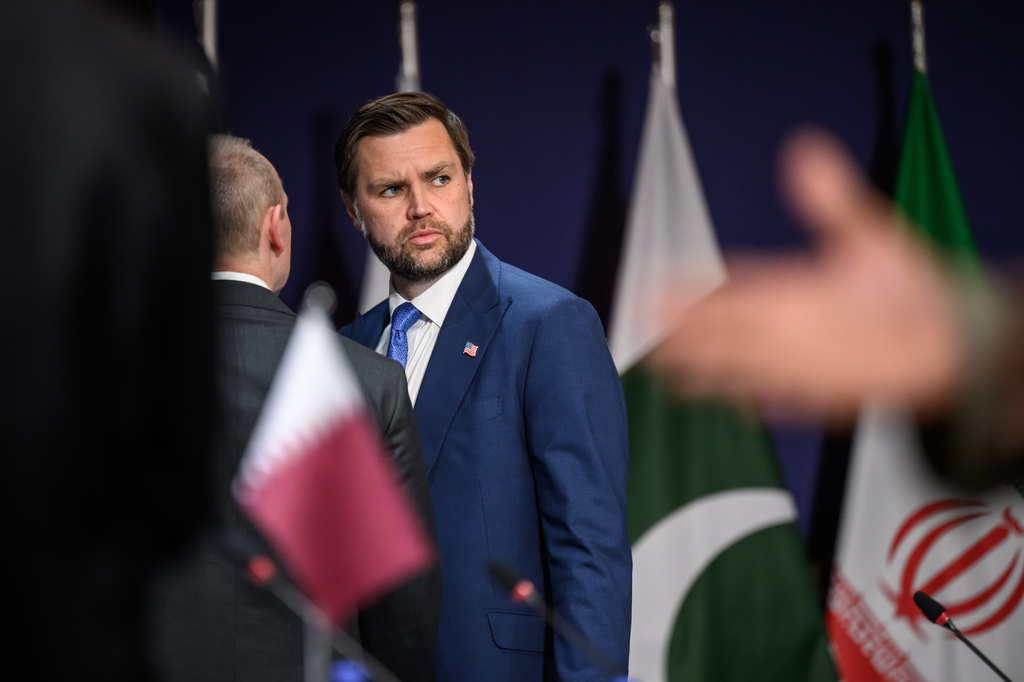
Vice President JD Vance prior to a quadrilateral meeting between the United States, Iran, Pakistan and Qatar at the Burgenstock luxury hotel complex overlooking Lake Lucerne, Switzerland, Sunday June 21, 2026. (Fabrice Coffrini/Keystone via AP) |
US and Iran wrap high-level talks in Switzerland after making 'encouraging progress,' mediators say — By Aamer Madhani, Jamey Keaten and Seung Min Kim
“The final deal is the house,” Vance told reporters after initial talks with Iran’s parliamentary speaker Mohammad Bagher Qalibaf. “We set the foundation. We haven’t built the house, but we’ve laid a successful foundation to get to a good place for the American people.”
Iran noted “major progress" to end the fighting in Lebanon and called that the first real test of the negotiations.
Vance suggested that the U.S. could agree to unfreeze Iranian assets for purchases of U.S. soy, corn and wheat. He said Jared Kushner, the son-in-law of President Donald Trump and one of the lead U.S. negotiators, came up with the idea with officials from Qatar.
Vance said Qatar would have approval over the process, and Iranian money that would be accessible as sanctions were lifted “would actually go to buy American soy, American corn and American wheat for the benefit of the Iranian people.”
Iran, which has pressed for the unfreezing of billions of dollars in assets, has not spoken to the idea of using the funds to purchase American products. The assets have been made inaccessible over years of sanctions, banking restrictions and legal disputes imposed by the U.S. and international community on the Islamic Republic. Read more from Madhani, Keaten and Kim on the Iran war talks. |
|
|
|
Congress picks up the pieces after the Iran war |
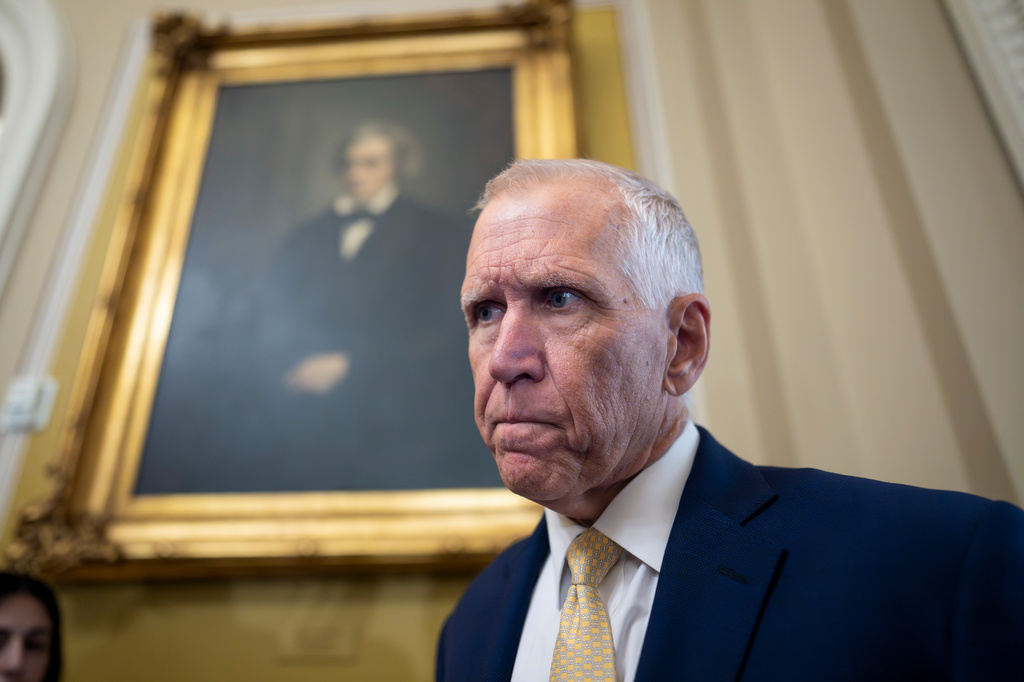
Sen. Thom Tillis, R-N.C., speaks with reporters before a Republican lunch at the Capitol in Washington, Tuesday, June 16, 2026. (AP Photo/J. Scott Applewhite) |
Congress wonders as the Iran war draws to a close: Was it worth it? — By Lisa Mascaro Congress, which never authorized the war against Iran yet never fully objected to it, now must grapple with the consequences of Trump's nearly four-month conflict: the lives lost, the billions spent and the national security fallout that has reordered the political dynamics in the Middle East.
Ask senators what they think about the deal Trump struck to end the war, and they do not search too far for words.
“Pathetic. Failure. Inevitable conclusion of a combination of never making the case to the American people, flawed strategic vision, lack of grasp of the regional dynamics,” said Delaware Sen. Chris Coons, a Democrat on the Senate Foreign Relations Committee.
Yet Republican Sen. Ron Johnson of Wisconsin, a past chairman of the Senate Homeland Security and Governmental Affairs Committee, said that because of the president’s actions, “We are safer today.”
“You can criticize — Oh, he didn’t totally win,” Johnson said. “Well, that was always going to be very difficult.”
As Trump moves on to the next phase, it is left to the Congress to pick up the pieces: explaining the war to voters back home, restocking the military arsenal that has run low from bombing runs and trying to ensure the fragile ceasefire holds as the United States seeks to halt Iran's nuclear ambitions and work toward an uneasy peace. Read more from Mascaro about Capitol Hill's feelings on the war. |
|
|
|
AP Elections Spotlight: A look at this week's primaries |
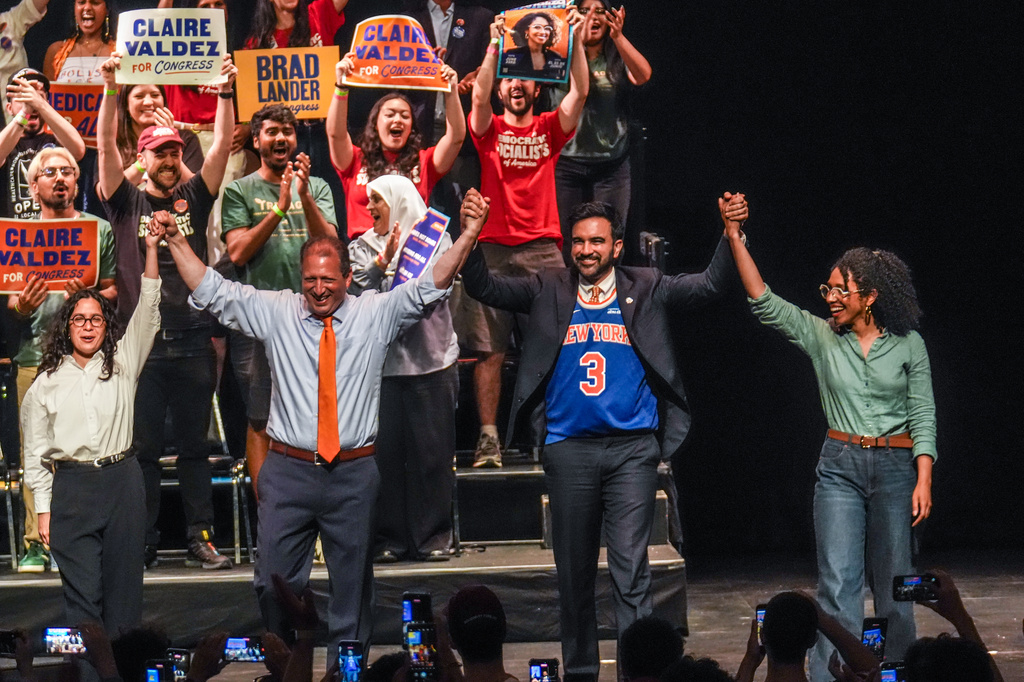
Democratic congressional candidates, Claire Valdez, Brad Lander, and Darializa Avila Chevalier gesture on stage with Mayor Zohran Mamdani during a Get Out The Vote rally ahead of New York's primary election, Thursday, June 18, 2026, in the Brooklyn borough of New York. (AP Photo/Ryan Murphy) |
Mamdani tries to make his mark in Congress, while Trump guarantees himself a win in South Carolina — By Robert Yoon
The big picture: U.S. House races take center stage in Tuesday’s primaries in four states, with New York Mayor Zohran Mamdani betting his political capital to reshape his city’s congressional delegation in his image. Meanwhile, South Carolina voters will tap a Republican nominee for governor as they mull a revised endorsement from President Donald Trump. Here’s what to watch for on Tuesday:
South Carolina (polls close 7 p.m. ET): On Friday, Trump endorsed both remaining Republican candidates for governor. He backed Lt. Gov. Pamela Evette over state Attorney General Alan Wilson and three others for the June 9 primary, but she was forced to a runoff after Wilson pulled within 3 points of placing first. Trump’s picks have a strong winning record in 2026, but his recent endorsees for governor in Iowa and Georgia lost their races, while his top choice in Oklahoma was forced to a runoff after placing second.
Maryland (polls close 8 p.m. ET): Two dozen Democrats are running in MD05 to replace longtime Democratic U.S. Rep. Steny Hoyer, who backs state Del. Adrian Boafo. The field includes former U.S. Capitol Police officer Harry Dunn. In MD06, Democratic U.S. Rep. April McClain Delaney faces a challenge from the man she replaced, former U.S. Rep. David Trone, who’s already spent at least $26 million from his personal fortune to win back his old seat.
New York (polls close 9 p.m. ET): Mamdani has endorsed challengers to Democratic U.S. Reps. Dan Golden in NY10 and Adriano Espaillat in NY13. He’s also backed a candidate for U.S. Rep. Nydia Velázquez’s open seat in NY07 over her preferred pick. In NY12, retiring U.S. Rep. Jerry Nadler backs a state Assemblyman to replace him over JFK’s grandson and the ex-husband of one of Trump’s former top advisers.
North of the city, there’s a competitive primary in NY17 to take on Republican U.S. Rep. Mike Lawler and a Republican primary in NY21 in upstate to replace U.S. Rep. Elise Stefanik. Trump has endorsed the candidate who donated a bronze statue of him to his West Palm Beach golf club. Utah (polls close 10 p.m. ET): A new court-ordered map gives Democrats an edge in picking up a new Salt Lake City-based seat in UT01. Meanwhile, two Republican incumbents face competitive primary challenges in the new UT02 and UT03.
Read more from Yoon on South Carolina, Maryland, New York and Utah.
|
|
|
|
DEA watched, took no action as fentanyl hit streets, records show |
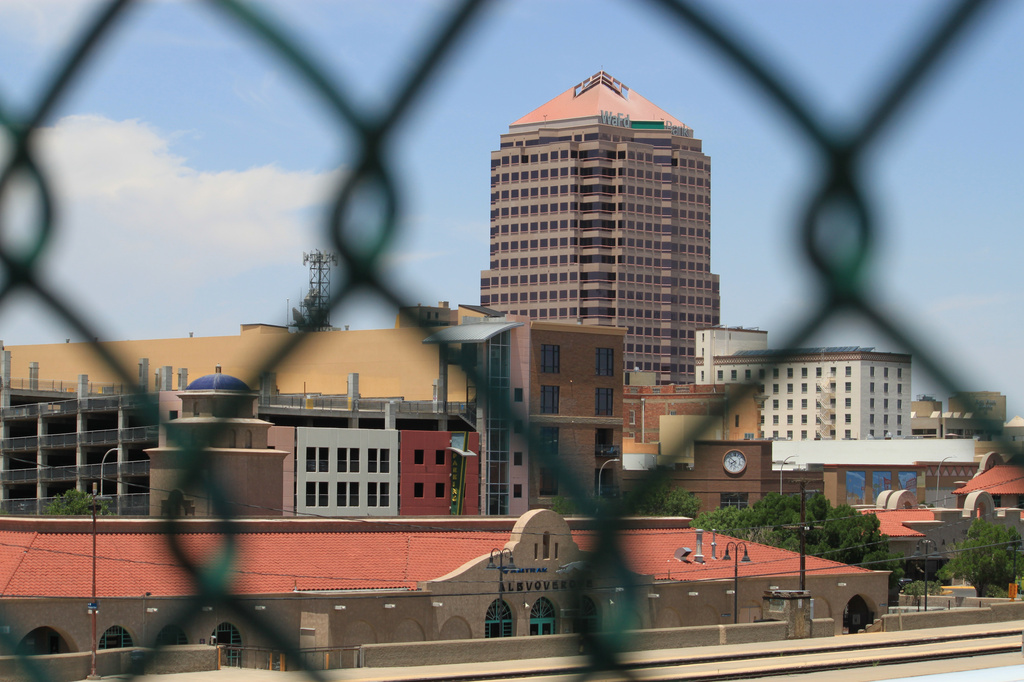
The tallest building in downtown Albuquerque, N.M., which houses the U.S. attorney's office, is seen beyond a chain link fence on Friday, June 12, 2026. (AP Photo/Susan Montoya Bryan) |
Staggering amounts of fentanyl hit streets as the DEA watched and took no action, records show — By Jim Mustian and Joshua Goodman Even as it battled the deadliest drug epidemic in American history, the U.S. Drug Enforcement Administration permitted hundreds of thousands of fentanyl pills to hit the streets of New Mexico between 2023 and 2025, according to three current and former DEA agents and government records reviewed by The Associated Press. DEA agents repeatedly monitored shipments of fentanyl pills — but did not seize them — as federal prosecutors sought to bring bigger criminal cases against traffickers of a synthetic opioid that the White House last year designated a “weapon of mass destruction.” Agents and experts, however, said the tactic amounted to a gamble with public safety that potentially imperiled communities in and around Albuquerque and may have violated U.S. Justice Department rules intended to safeguard the public. “We poisoned our community to make cases,” DEA Special Agent David Howell told AP in a series of interviews in New Mexico. “Through our own willful blindness, we get to say, ‘We don’t really know what happened to the drugs.’ But we 100% got people kil |
|
|
|
|