|
|
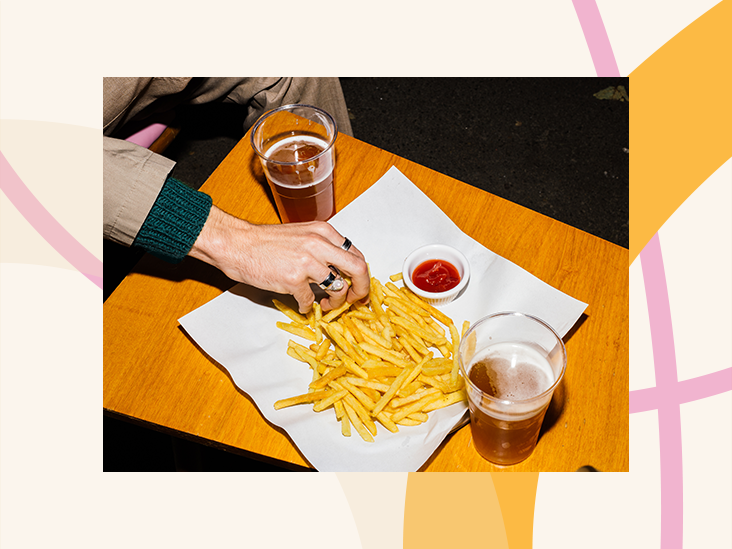
A large part of the nighttime economy runs on human cravings for salty snacks, often heightened by alcohol. There are streets across the world lined with takeaway kebab, burger, pizza, and fries stores that stay open into the night to satisfy this need.
New research suggests that this is not down to raw hunger but a hormone that switches on when we drink and steers us toward savory flavors and away from sweet ones. The food most likely to be available near bars may depend on this signal. More on this tasty topic below. |
|
|
|
|
|
|
Cheers!
Tim Snaith
Newsletter Editor, Healthline
|
 |
|
Written by Tim Snaith
June 23, 2026 • 2 min read |
|
|
|
 |
|
|
| The science behind late-night fast-food cravings |
| A few drinks in, the snacks we want most are salty and savory, not sweet. Researchers at the University of Sydney think they know why, with a new analysis that traces the craving to a hormone called FGF21. |
| Alcohol appears to raise levels of this hormone, which drives your protein appetite. When it’s active, it pushes you toward savory, umami flavors (the deep, meaty taste of broth, soy sauce, or aged cheese) and away from sweets. |
| For most of human history, a savory taste meant you were eating real protein, like meat or fish. That link no longer holds. Plenty of ultra-processed foods (chips, instant noodles, savory crackers) are built to taste rich and savory while delivering very little protein. The researchers call them “protein decoys.” Your body keeps chasing protein it never receives, so you eat more, stacking up calories, carbs, and fat without ever satisfying the craving. |
| However, the study that identified this link did not directly measure FGF21. The team built a model from earlier lab work and tested it against a large national survey of what people actually ate, so it’s best viewed as an explanatory theory rather than proof. |
| Nonetheless, drinking fewer units of alcohol and remembering to snack on protein-rich whole foods is a good way to end your next night out on a nutritional high note. |
|
|
| |


