|
|
| This is a paid advertisement for SmartBrief readers. |
| The content does not necessarily reflect the view of SmartBrief or its Association partners. |
|
|
 
| Highlights from #SIFMAaml 2026 |
|
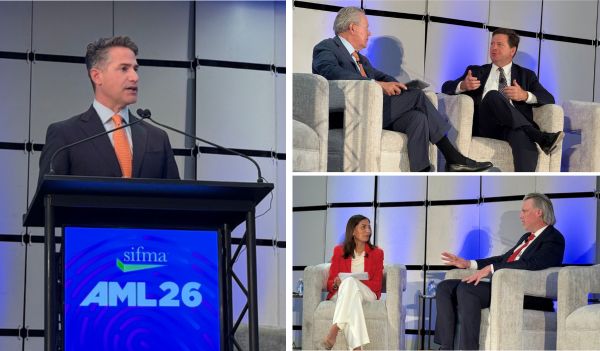
At the 2026 Anti-Money Laundering and Financial Crimes Conference, regulators, law enforcement officials and industry leaders explored how AML frameworks can become more effective, risk-based and technology-enabled. In SIFMA's conference recap, Bernard Canepa shares key takeaways from the event, including discussions on AML and sanctions reform, public-private information sharing, digital assets and AI, and strategies for combating increasingly sophisticated financial crime. Read the full blog here. |
|
|
|
It's a common complaint: too many false positives from legacy tech are noisy, not relevant, or low risk. But what about the hidden danger of false negatives? Find out what could happen when genuine risk isn't flagged by that same legacy tech – and what you can do about it.
|
|
|
| ADVERTISEMENT |  |
|

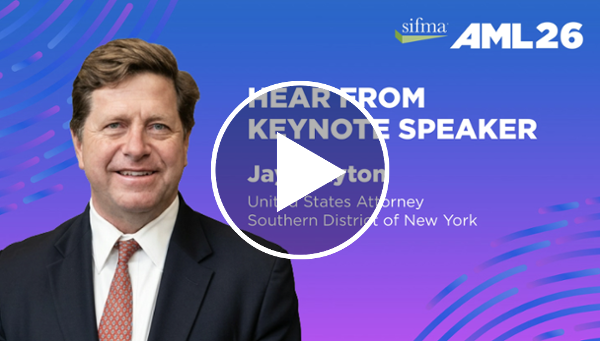
SIFMA President and CEO Kenneth E. Bentsen Jr. joined US Attorney, Southern District of New York, Jay Clayton for a discussion on the growing scale and sophistication of financial crime, the importance of rapid enforcement action against terrorism financing, drug trafficking and fraud, and the critical role of public-private partnerships in protecting the financial system. News coverage: SDNY's Clayton Warns Of Foreign Social Media Sway |
|
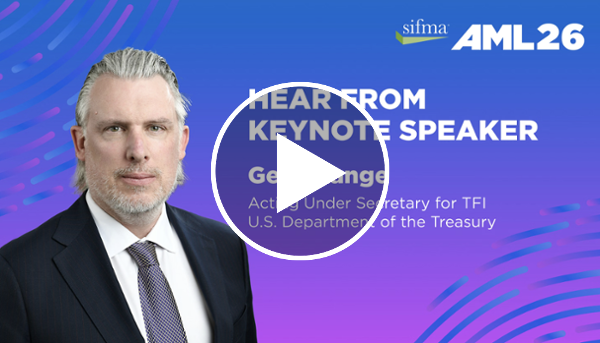
SIFMA Executive Vice President and General Counsel Saima Ahmed sat down with Acting Under Secretary for Terrorism and Financial Intelligence Gene Lange to discuss the Administration's AML reform agenda, including efforts to shift compliance programs from box-checking to risk management, strengthen fraud prevention, advance SAR reform, enhance sanctions effectiveness, and leverage AI and innovation to improve outcomes while reducing costs. Related resource: US Department of the Treasury: Money Laundering |
|
|
|
|
It's a common complaint: too many false positives from legacy tech are noisy, not relevant, or low risk. But what about the hidden danger of false negatives? Find out what could happen when genuine risk isn't flagged by that same legacy tech – and what you can do about it. Get the guide. |
|
|
|
| ADVERTISEMENT | |
|

As sanctions policy continues to evolve amid heightened geopolitical tensions and expanding regulatory requirements, SIFMA has released a new white paper examining the growing impact of US sanctions on capital markets participants, firms and investors. The paper, US Capital Markets Sanctions: A Proposed Framework to Standardize Requirements and Mitigate US Investor Harm, outlines recommendations to modernize and standardize how sanctions are applied across capital markets activities. It highlights how the rapid expansion of sanctions programs since 2014 has created a patchwork of compliance obligations that can create operational challenges for firms and unintended consequences for US investors. |
|
|
Mark your calendar for SIFMA AML 2027. We'll be at the New York Marriott Marquis from June 9-10, and we hope you will be too. Sign up to receive updates. In the meantime, explore what's next, including:
|
|
|
| Got this from a friend? Subscribe now and stay in the loop! |
|
|
|
|
|
|
|
| Copyright © 2026 SmartBrief. All Rights Reserved. A division of Future US LLC. |
| Full 7th Floor, 130 West 42nd Street, New York, NY, 10036. |
|
|
|