And, disabling the West Nile virus.
 

Health Rounds

Health Rounds

By Nancy Lapid, Health Science Editor

Hello Health Rounds readers! Today we report on an experimental drug that could improve patients' lives after kidney transplant. We also highlight potentially important discoveries that could lead to the first treatment for West Nile virus, and improved care of pneumonia patients.   

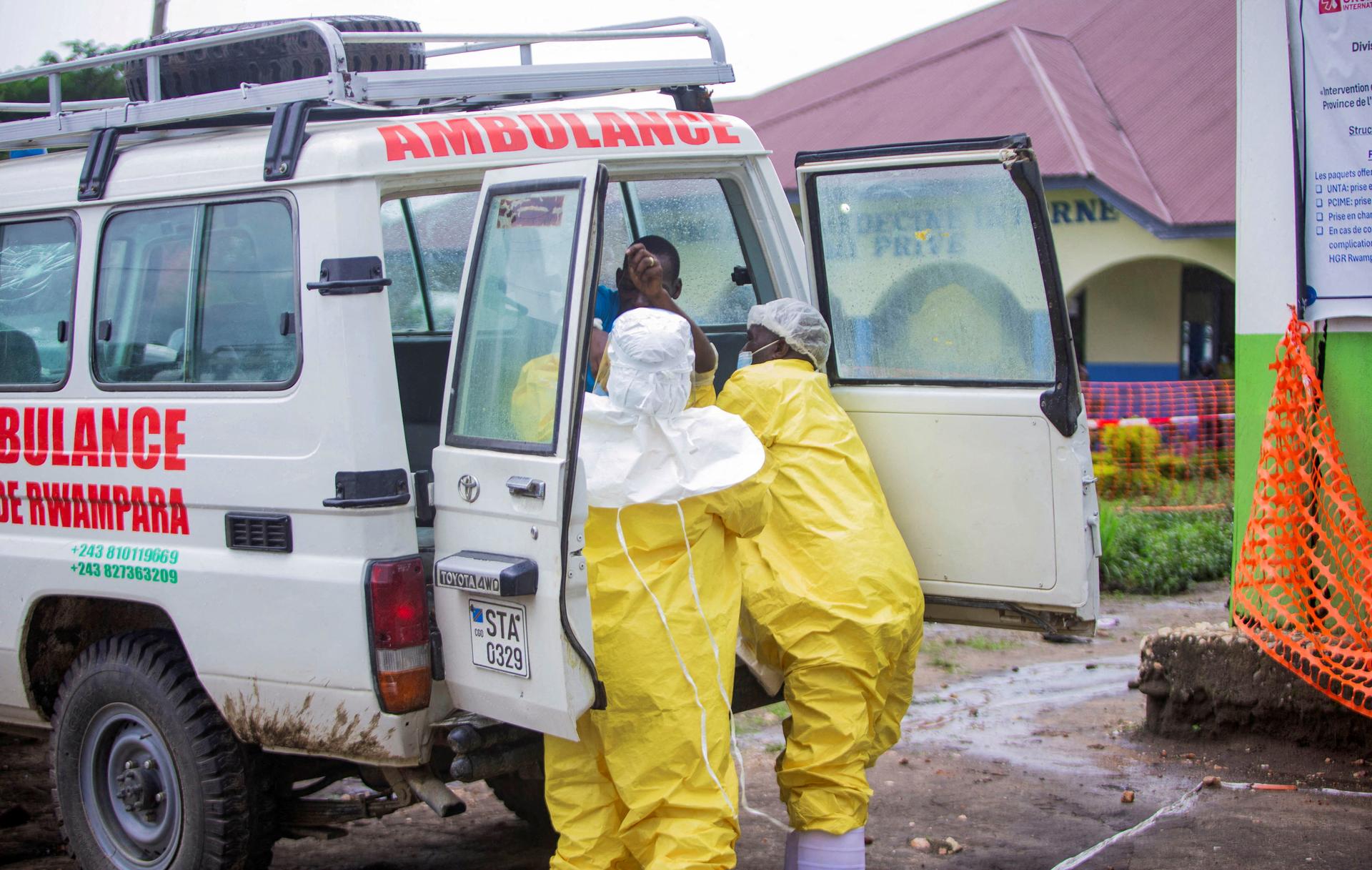
Ebola updates: Cases in Congo reach highest first-month total of any outbreak, WHO says, while construction of US-backed Ebola facility in Kenya is halted.

In other breaking news: US judge blocks Trump administration's SNAP restrictions on soda, candy; European patients' access to new drugs worsens, pharma lobby says; UNAIDS chief urges US to reconsider South Africa funding cut; and US FDA updates guidance to speed drug development. 

Also: Ukraine's battlefield shift has not solved its humanitarian crisis; and climate-vulnerable countries push for global funding framework.


Industry Updates

  • Missouri appeals court won't send Abbott's appeal of $495 million verdict to higher court
  • Eli Lilly says Trump pricing policy will affect obesity drug launches in Europe.
  • Foundation Healthcare seeks up to $187 million in Singapore IPO.
  • Pfizer experimental drug misses main goal of lung cancer trial.
  • US FDA declines to approve Achieve Life Sciences smoking-cessation drug.
  • Nuvectis gains two experimental drugs in deal with China's Haisco.
  • AbbVie sharpens immunology focus with $10.9 billion Apogee deal.
  • Definium's LSD-based depression pill delivers strong results.
  • US FDA reverses course on Regenxbio rare-disease gene therapy, backs accelerated approval bid.
  • South African court grants Novo Nordisk petition to block Ozempic copies.


US provides Ebola treatment for outbreak in Congo, bringing trials closer

REUTERS/Stringer/File Photo

The U.S. has provided doses of an experimental antibody drug from Mapp Biopharmaceutical for use in clinical trials to fight the widening Ebola outbreak in Democratic Republic of Congo, a shift from its position of making the drug available just for ‌Americans. Read more.


Study Rounds

A new immunosuppressant for kidney recipients


An experimental immunosuppressant drug being developed by Eledon Pharmaceuticals proved superior to the current standard treatment, according to data from a clinical trial, and looks to be a potential game-changer for kidney transplant patients.

Kidney recipients must take immunosuppressive drugs for their lifetime to prevent organ rejection. The medications can affect both long-term graft survival and how patients feel and function in their daily lives.

While the current standard-of-care immunosuppressant – tacrolimus, in use since the 1990s – basically affects the entire immune system, the Eledon drug, tegoprubart, selectively blocks the activation of specific immune cells in the so-called CD40L pathway.

In a long-term follow-up study of kidney transplant patients who participated in a 12-month mid-stage trial, those treated with tegoprubart had superior kidney function from one month onward compared with patients treated with tacrolimus, researchers reported at the American Transplant Congress in Boston.

Patients treated with tegoprubart had no graft loss and no biopsy-proven acute rejection episodes after the first six months post-transplant, compared with roughly 64% in the tacrolimus group.

Side effects were less common with tegoprubart as well. Just 2% of those who got the Eledon drug experienced headache or acute kidney injury versus 12% and 6% for tacrolimus, respectively. None of the patients taking the new drug had extremity pain, or falls or loss of balance, compared with 10% and 6% for the standard of care.

“For kidney transplant recipients, success is measured not only by preventing rejection, but by preserving kidney function and maintaining quality of life over the long term,” study leader Dr. Andrew Adams of the University of Minnesota said in a statement.

Eledon has said it plans to conduct a late-stage trial of tegoprubart in kidney recipients later this year.

In a separate presentation at the meeting, Dr. Nicole Wojcik from the University of Chicago reported on a pilot study in which tegoprubart was well-tolerated and effective in patients with diabetes undergoing pancreatic islet cell transplantation.


Read more about kidney transplants on Reuters.com

  • Health Rounds: Scientists change kidney blood type, a potential advance for transplant recipients
  • CAR-T therapy brings hope to kidney patients with few transplant options
 

Developing protection against West Nile virus

Researchers are a step closer to developing a vaccine or a treatment for West Nile virus, the mosquito-transmitted disease that can cause severe brain infection and death.

Studying blood samples provided by survivors of the disease, the researchers identified antibodies that may help address this unmet medical need, according to a report published in Immunity.

Reproducing the antibodies in test tubes, they found that one, called W010, recognizes and attacks a protein on the virus envelope that helps it attach to and infect host cells.

Treatment with W010 protected mice when administered before and even five days after exposure to West Nile virus.

A second antibody, W014, was effective not only against West Nile virus but also against other orthoflaviviruses, including Japanese encephalitis, Murray Valley encephalitis, Saint Louis encephalitis and Usutu viruses.

The identification of these human antibodies – and the vulnerable sites they target on the viruses – will help guide “the development of medical countermeasures against severe diseases that... represent an important unmet medical need globally,” the researchers said.


Read more about West Nile virus on Reuters.com