
| Forwarded this email? Subscribe for more |



 |
| By The Free Press |
It’s Friday, June 26. This is The Front Page, your daily window into the world of The Free Press—and our take on the world at large. Today: Jonathan Rosen on how antisemitic obsessions came to dominate our politics. Ayaan Hirsi Ali on what the Montreal shooter really believed. Jed Rubenfeld unpacks the Supreme Court’s landmark asylum ruling. And much more.
But first: Why was the man who co-founded Wikipedia just banned from the site for life?
Twenty-five years ago, Larry Sanger co-founded what is arguably the most important encyclopedia in human history. Wikipedia, which now has millions of entries on every topic imaginable, was designed to be a hub of free and unfettered knowledge, built by and open to the public.
So why was Sanger, earlier this week, permanently banned from the site he helped found?
He tells that story for us today. It’s one that starts back in 2001, with the admirable, game-changing goal of democratizing information. But after Sanger left the project in 2002, he “watched in dismay as the site I’d created began to drift from its founding mission.” Ideological bias took hold; pages were whitewashed; left-leaning outlets came to dominate sourcing; and a small group of administrators grew “beholden more to each other than to any constitutional framework.”
Last week, Sanger launched an effort to reform Wikipedia from within—only to be met with a coordinated effort to ridicule, discredit, and undermine it, culminating in a lifetime ban on Monday. “I knew Wikipedia’s disciplinary processes were bad—but I had never experienced them myself,” he writes.
Read Sanger’s account of how one of the miracles of the internet age has abandoned truth and evolved into an emblem of our censorious age, and what his ban reveals about the culture that allowed it.
—Jillian Lederman
 |
On Monsters and Monstrous Ideas
What happens when the fringe becomes mainstream? For years, many of the ideas now coursing through our politics—socialism, antisemitism, the division of society into oppressors and oppressed—were largely confined to campus radicals and the darkest corners of the internet.
That’s now changed. According to Jonathan Rosen, few things illustrate this shift more clearly than Tuesday’s New York City primary, in which three far-left candidates toppled establishment Democratic incumbents. The victors, Jonathan writes, “had indistinguishably progressive platforms from those they defeated, with one key difference”: a virulent hatred for Israel and its supporters. And they’re not alone. From Mayor Zohran Mamdani calling the American Israel Public Affairs Committee “monsters” to coffee shop workers harassing a Jewish congressman online, radical antisemitism is becoming an organizing principle of American political life. At threat? “America’s understanding of history and the country’s founding principles.” Read his piece to understand why these developments spell danger not only for American Jews, but for the entire country.
“Rhetoric has a way of becoming policy, or something worse,” notes Jonathan in his piece. On Monday, a gunman proved that very point when he opened fire in a Montreal neighborhood with a large Jewish community, killing an Israeli man and a police officer. Initial coverage of the shooting focused on the suspect identifying as an incel. But Ayaan Hirsi Ali read the 104-page manifesto he left behind and argues that such a label badly misses the point. Read Ayaan on what the shooter really believed—and the disturbing lesson from his lethal attack.
 |
 Have thoughts? Join the conversation in The Free Press Forum. Our new digital home for paid subscribers is now live. Meet, debate, recommend, organize, joke, argue, and converse like civilized people with other Free Pressers. |
The Supreme Court Read Immigration Law Plainly. And the Media Freaked Out. | |||||
 | |||||
|
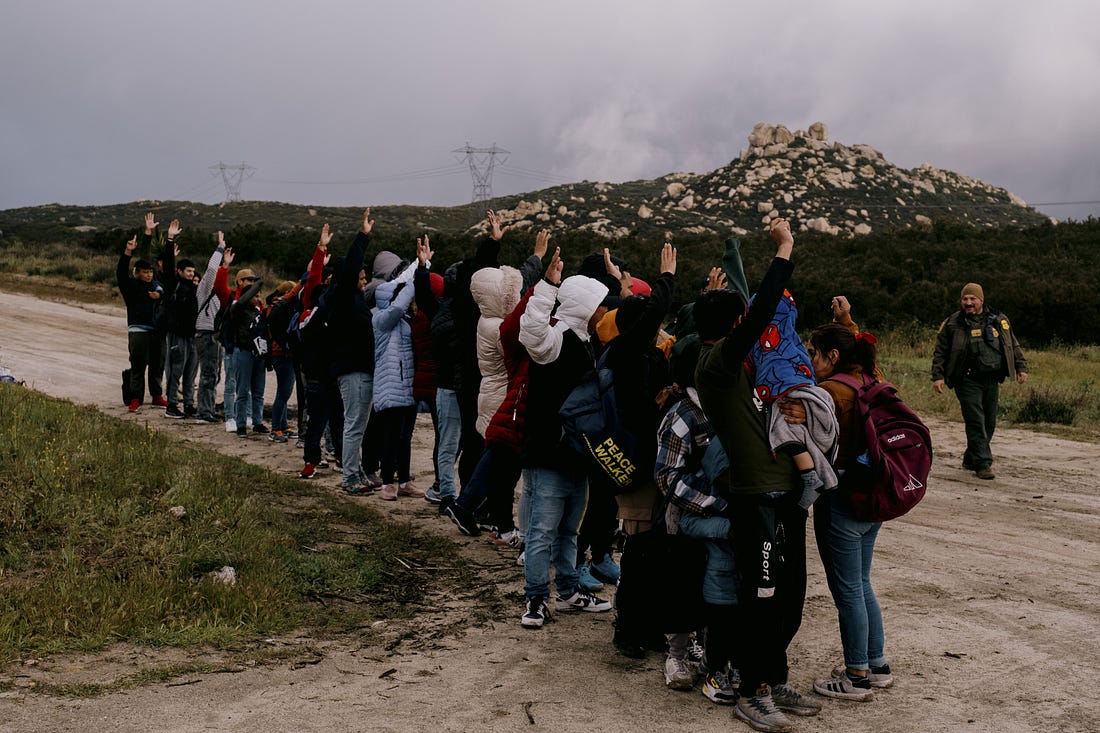
EXCLUSIVE: HHS Proposes Stricter Standards for Claiming Unaccompanied Migrant Children | |||||
 | |||||
|