
|
 |
Hello, Bulwark subscribers. Today I return to the topic of medical research and the threat to its future under Donald Trump. Like a lot of my writing, its centerpiece is a narrative—in this case, the story of a young man and the breakthrough treatment that has changed his life.
He is from New Orleans, which is another one of those special places for me. My first experience in professional journalism was many years ago as a summer news intern at the Times-Picayune, which was then still a daily independent newspaper. Its history includes the essential, alarming and heart-breaking coverage of Hurricane Katrina that won it the 2006 Pulitzer for public service. But in the years that followed it took a beating from the economic upheavals that came with digital journalism, social media and our tech overlords. Today it exists as part of a larger online enterprise, still with heroic journalists turning out great work, but operating under enormous pressure.
That should sound familiar: Independent, public-minded journalism is struggling to survive all over America. It's one reason I hope you'll consider supporting our work here at The Bulwark. Telling the stories that need to be told is what we try to do every day. But as in New Orleans and everywhere else, that task requires reporting, writing and production that isn’t possible without your financial support.
–Jonathan
These Are the Medical Miracles Trump Could Take Away
The story of a life-changing breakthrough and the federally funded research that made it possible.
|

| ||||||||||||


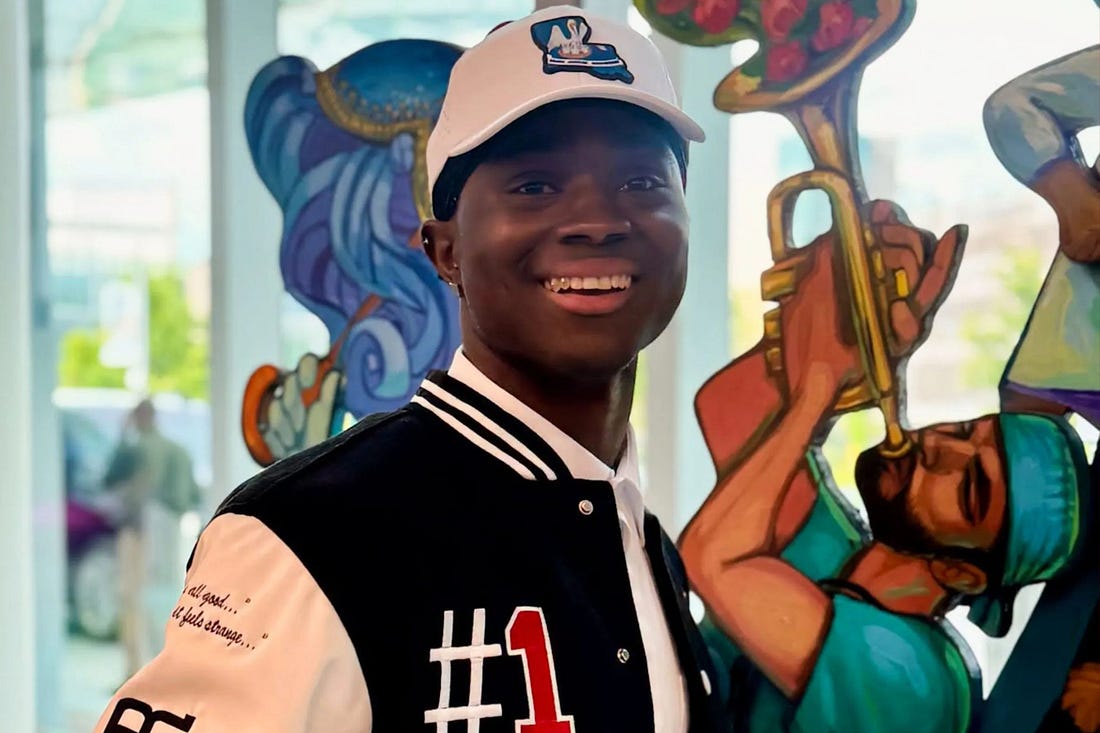 |
A LOUISIANA MAN WALKED OUT of a hospital this week, functionally cured from a debilitating disease that until very recently was mostly incurable. In so doing, he offered a genuinely heartwarming case study in what modern medicine can now achieve—and a genuinely worrisome reminder of what Donald Trump’s attacks on science could now destroy.
I’m here to tell you about both.
Let’s start with the medical miracle and the man who benefitted from it. His name is Daniel Cressy. He is one of more than 100,000 Americans who suffer from sickle cell disease, a congenital disorder in which the body produces misshapen, sickle-shaped red blood cells. These cells stiffen and become sticky, and can clog smaller vessels in ways that restrict blood supply to parts of the body. Sickle cell disease causes the weakness and fatigue common to all kinds of anemia. It also causes recurring bouts of pain that require hospitalization because of their severity
“Think about the tightest rubber band ever on any part of your body,” Cressy told me in a phone interview on Friday, describing the episodes that during his childhood sometimes sent him to the hospital once a month.¹ “And think about that rubber band just going super tight, then relaxing, then going super tight again, then relaxing—just constantly pulsating with pressure, and you can’t do anything about it.”
Fatigue and pain aren’t sickle cell disease’s only effects. The disease strains organs throughout the body, including kidneys, the liver and (especially) the spleen. It also weakens the immune system, rendering people more prone to severe infection, while increasing the risk of cardiovascular crises. “Stroke was probably my biggest concern,” Cressy, who is just 23, told me.
 |
The underlying cause of sickle cell disease is a single genetic mutation, which in turn causes the blood-producing stem cells inside bone marrow to churn out those mis-formed, sickle- or crescent-shaped red blood cells instead of the normal, puffy discs. Until a few years ago, the only cure was a bone marrow transplant that, in effect, imported into the body the blood-making capacity of an unafflicted person. And it worked only in rare cases, in part because finding donors whose bone marrow was a close enough match was so difficult.
All of that changed in the early 2010s...
Join The Bulwark to unlock the rest.
Become a paying member of The Bulwark to get access to this post and other subscriber-only content.