| | The US and Iran exchange strikes, the White House approves the release Anthropic’s Mythos for some i͏ ͏ ͏ ͏ ͏ ͏ |
| |  | Flagship |  |
| |
|
The World Today | 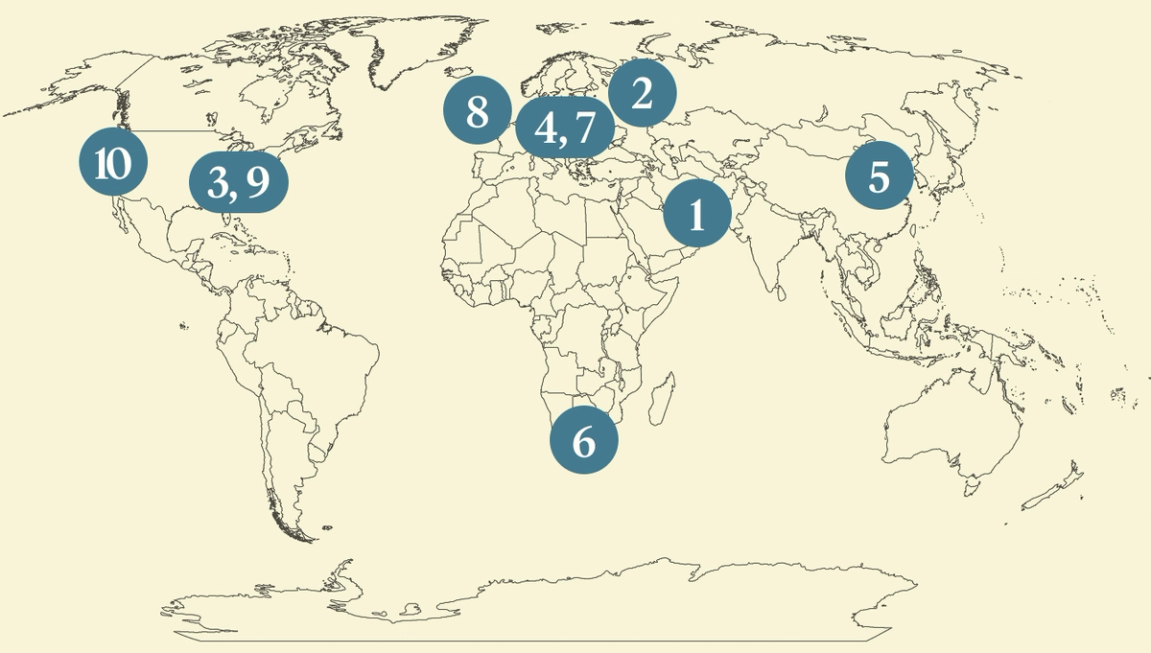 - US-Iran ceasefire tested
- Putin marks ‘difficult time’
- US OKs Mythos release
- Warnings over AI boom
- China tower plane crash
- South Africa on edge
- Europe’s historic heat wave
- UK economy improves
- The rent-freeze debate
- OpenAI’s chemistry tool
 Why America’s older generations wield disproportionate power, and a look at the week ahead. |
|
Fresh US-Iran hostilities test truce |
 US Central Command/Handout via Reuters US Central Command/Handout via ReutersThe US and Iran traded strikes over the weekend, the latest test of the countries’ fragile ceasefire. Tehran attacked American military sites in Kuwait and Bahrain after the US accused Iran of attacking a cargo ship in the Strait of Hormuz and targeted Iranian infrastructure in response. The revival of hostilities less than two weeks into the truce shows that “deliberately opaque wording” in the nations’ memorandum of understanding is “crumbling under the pressure,” as both sides embrace conflicting interpretations, The Guardian’s diplomatic editor wrote. The US and Iran plan to meet in Qatar on Tuesday and discuss their dispute over the strait, Axios reported. |
|
Putin acknowledges ‘difficult period’ |
 Stringer/Reuters Stringer/ReutersPresident Vladimir Putin acknowledged Russia is facing a “difficult period” as Ukraine expanded its long-range assaults on the country’s infrastructure. Kyiv struck a Russian defense plant and set fire to a major oil refinery as part of its efforts to weaken Moscow’s wartime economy. Russian fuel production has dropped, and the country’s stock market has fallen in June by the most since 2022. “There is a feeling that there is no good end to this in sight,” a former Russian official told The Washington Post. This “vibe shift” presents an opening for Europe to provide Ukraine with more funding and tighten sanctions on Russia, a Financial Times commentator wrote: “This prescription is not new but the outcome could be.” |
|
US OKs Mythos release for some firms |
 Kylie Cooper/Reuters Kylie Cooper/ReutersThe US government lifted its block on Anthropic’s powerful Claude Mythos AI model, a major de-escalation in the confrontation between the Trump administration and one of the world’s most valuable private companies. The decision, first reported by Semafor, allows the company to release Mythos to more than 100 US institutions. It comes two weeks after the administration imposed export controls on Mythos over concerns it could be “jailbroken” for malicious purposes. The move signals the beginning of a new regulatory regime that gives the US government control over the release of frontier AI models; the White House asked OpenAI to limit the release of its next model. Chinese AI labs, meanwhile, are quickly closing the gap on cybersecurity capabilities, experts said. |
|
Warnings over rapid AI investment |
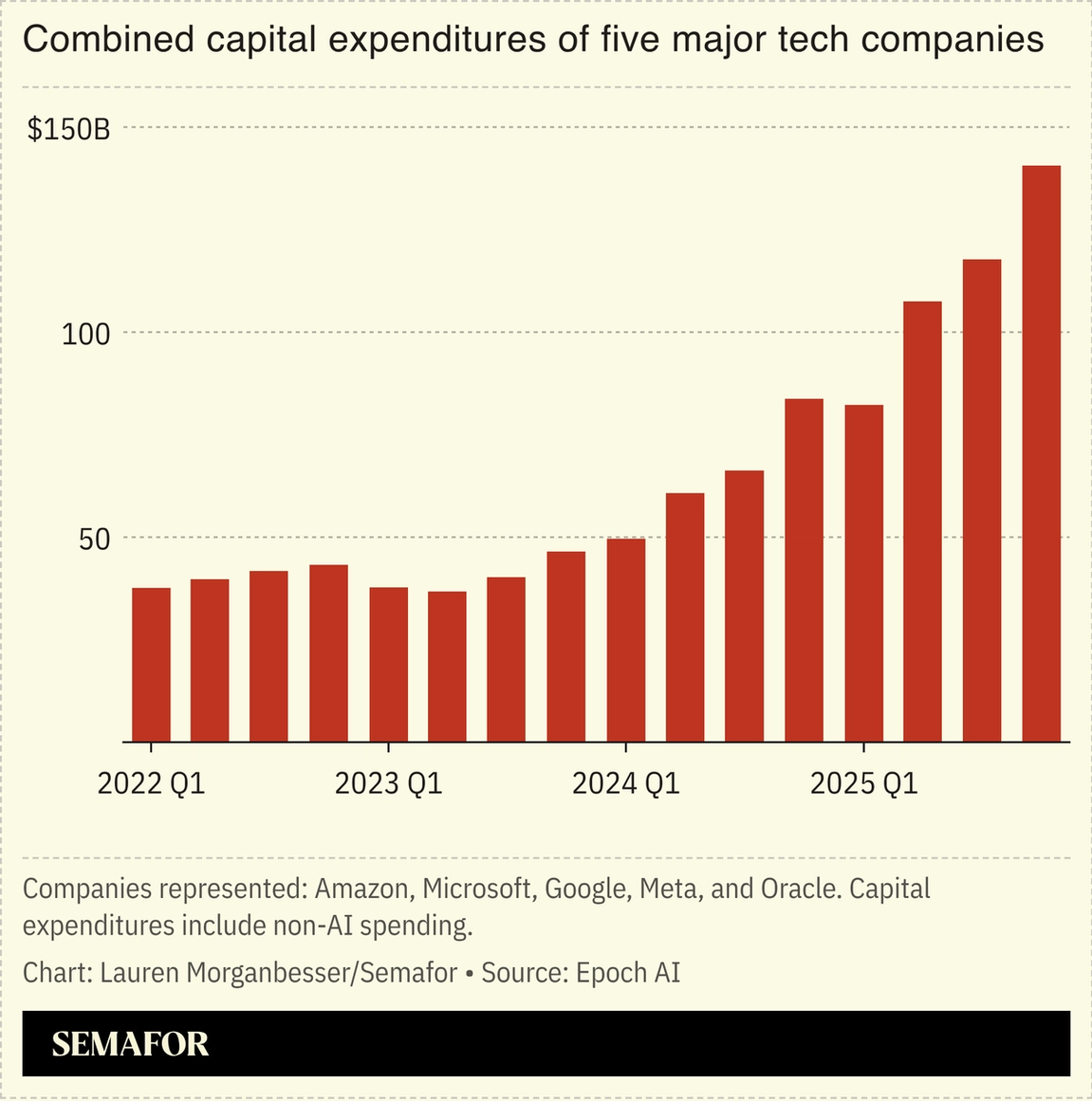 The AI spending spree risks an extended “investment bust” that could imperil the global economy, a report warned Sunday. The Bank for International Settlements, which advises the world’s central banks, wrote in its annual report that lackluster returns on AI investment from tech giants — which are pouring billions into the sector — could trigger a sudden reduction in financing. The scale of the AI boom, the report showed, has dwarfed past bubbles, including the spread of railways and the internet. The warnings add to longstanding concerns over the sustainability of AI investments; last week saw a major tech stock selloff, while OpenAI is reportedly considering delaying its IPO in part over concerns that investors won’t be eager for its shares. |
|
Beijing crash shows security gaps |
 Maxim Shemetov/Reuters Maxim Shemetov/ReutersA small plane crash in China’s capital exposed major gaps in the country’s airspace controls, analysts said, as the government tried to limit public discussion of the incident. The aircraft flew into Beijing’s tallest skyscraper Friday, not far from the Chinese Communist Party’s headquarters and the homes of top leaders. Authorities will “go into overdrive” to find out how the plane breached the tightly controlled airspace, one expert said; posts about the crash were erased from social media. But the incident could benefit the “low-altitude economy,” which focuses on drones, by forcing a “regulatory revamp” that ultimately makes the sector less risky, a veteran China watcher argued. The government is embracing drones for things like deliveries, maintenance, and farming. |
|
S. Africa braces for anti-migrant violence |
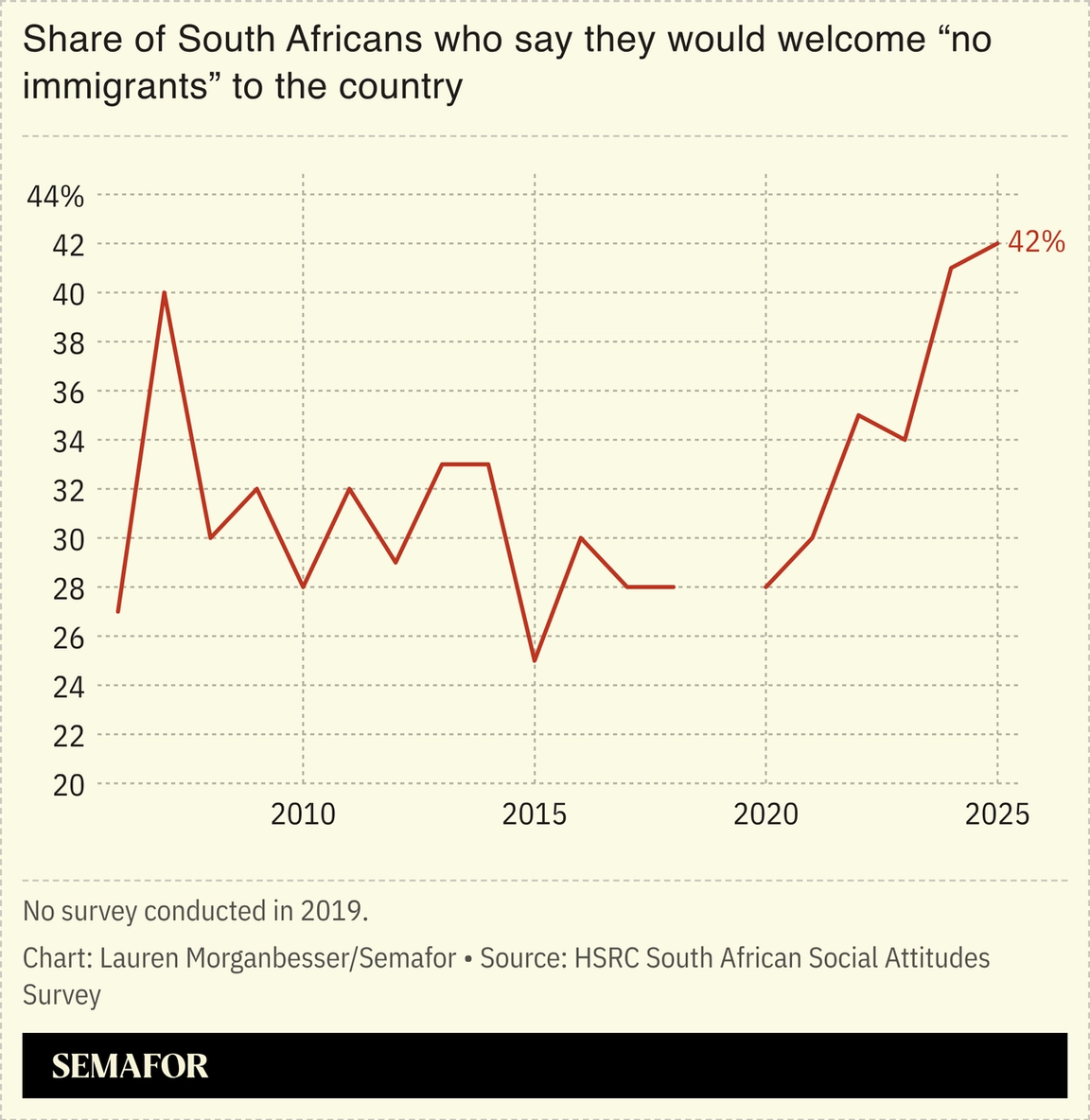 Thousands of migrants are fleeing South Africa as the country braces for violence after an anti-immigrant group set a Tuesday deadline for all undocumented migrants to leave. The unrest began in mid-March but has intensified, leaving at least three dead as vigilantes armed with spears, clubs, and whips assaulted migrants and destroyed their homes. Anti-immigrant sentiment has ballooned as protest groups without evidence blame migrants for the country’s economic woes. Police are preparing a massive security deployment as the government asks people not to take enforcement into their own hands. Businesses have pledged to help the police maintain stability with drones and helicopters, while other African governments have sent planes and buses to repatriate their citizens. |
|
Europe heat wave reignites AC debate |
 Tom Nicholson/Reuters Tom Nicholson/ReutersAustria, the Czech Republic, Germany, and Poland sweat through record temperatures on Sunday, as a European heat wave reignited a political debate over the continent’s preparedness for hotter summers. The World Health Organization said the heat has caused more than 1,300 excess deaths since June 21, as some places hit 40°C (104°F). While some American commentators voiced befuddlement or disdain toward Europe’s low rates of air conditioning, France’s far right seized on the moment to criticize the government and push a plan for widespread AC installation, bringing the issue into the culture war zeitgeist. But some experts argue mass AC would strain energy grids, threatening blackouts, and would carry environmental costs. |
|
 From launching Call Her Daddy in 2018 to becoming one of the most successful podcasters in the world, Alex Cooper has built a highly influential media brand — and now she’s expanding into the creative agency space. On this week’s episode of Mixed Signals, the Unwell co-founder joins Max and Ben live from Cannes Lions to talk about growing her media business beyond podcasting, how her creative agency ended up going toe-to-toe with Call Her Daddy in revenue, and why she’s more interested in the marketing than most talent in her field. Plus, what she’s learned from her interview with Michelle Obama. Listen to the latest Mixed Signals now. |
|
Britain’s economic outlook improves |
 House of Commons/Handout via Reuters House of Commons/Handout via ReutersBritain’s economy may be showing signs of recovery, good news for the likely incoming prime minister, Andy Burnham. Though the GDP is 6% lower than it would have been without Brexit, according to Goldman Sachs, the “peak Brexit headwind” could be over: The government is seeking closer EU cooperation, and the biggest impacts were front-loaded. The Iran war raised fears of soaring inflation, but as negotiations continue, “some of the worst outcomes can be ruled out,” one analyst told Bloomberg. And Britain, unlike most of its European neighbors, has a thriving AI sector because DeepMind stayed in London after its 2014 sale to Google, the Financial Times noted. That decision brought foreign outposts of the world’s biggest companies to the city. |
|
Debate over NYC rent-freeze plan |
 Eduardo Munoz/Reuters Eduardo Munoz/ReutersNew York City’s approval of Mayor Zohran Mamdani’s two-year rent freeze on nearly 1 million apartments marks a victory in his affordability push, though it rekindled a contentious debate. The decision pauses increases on more than 40% of homes, a financial relief to renters. But rent controls are generally opposed by economists: A 2019 study in San Francisco found they reduced rental housing supplies by 15% by incentivizing landlords to sell as well as disincentivizing renters from moving. The dissenting opinion in New York’s decision said rent stabilization lowers building quality and drives up market-rate rents, as happened in Berlin. One expert in favor said: “To truly address the housing crisis, we need to tackle its root cause: the housing shortage.” |
|
|


