What matters in U.S. and global markets today

Start the day with Reuters on the stories moving U.S. and global markets. Subscribe for $1/week.


Morning Bid U.S.

Morning Bid U.S.

A Reuters Open Interest newsletter

What matters in U.S. and global markets today


By Mike Dolan, Editor-at-Large, Finance & Markets

Is it over or not? World markets that assumed the Middle East conflict was over and done with got a rude awakening over the weekend after the United States conducted fresh strikes on Iran in response to attacks on Gulf shipping.

But oil markets barely got a chance to react in early trading today, as the two sides agreed to halt hostilities and resume peace talks once again.

I'll get into that and more below.

But first, listen to the latest episode of the Morning Bid daily podcast. Subscribe to hear Reuters journalists discuss the biggest news in markets and finance seven days a week.


Data refreshes every time you open this email. For more U.S. market news, click here. Please send any feedback to morningbid@thomsonreuters.com.


Today's Market Minute

  • Iran and the U.S. agreed to halt recent hostilities in the Gulf and renew talks regarding their dispute over the Strait of Hormuz, a U.S. official said on Sunday.
  • South Korea on Monday laid out a sweeping industrial strategy centred on semiconductors and AI, as President Lee Jae Myung unveiled over $576 billion in investment to lock in global dominance.
  • The dollar was headed for its biggest monthly gain in nearly a year on Monday, supported by the growing chances of rate rises and optimism about the U.S. economy, as investors watched developments in ‌the Gulf ahead of a key jobs report later this week.
  • Crude prices may be back near pre-war levels, but surging oil exports from the Middle East and complex logistics are creating a chaotic market that could take months to settle, argues ROI Energy Columnist Ron Bousso.
  • And for a big-picture view on the recent energy shock, check out Ron's weekend essay delving into the Arab oil embargo of 1973 and what clues it could offer about the Hormuz crisis.
 

Weekend wars

Crude prices didn't react much to the weekend's hostilities, maintaining their recent slide to pre-war levels heading into the week, with parts of the oil market already seeing oversupply due to a resumption of Gulf shipping. Brent crude was still trading at under $73 per barrel on Monday morning, after slipping more than 10% last week.

However, the wobbly tech sector remains on edge after last week's whipsaws and selloffs, largely due to profit-taking after a spectacular quarter for chip stocks.

Real concerns are still swirling on that front. Despite Micron Technology's blowout earnings report last week, the tech space was also rocked by product price rises from Apple on soaring memory costs, as well as reports of a possible delay to OpenAI's planned IPO.

Combined with the peace deal uncertainty, those worries helped keep Asia markets jittery on Monday, with major indexes closing lower. Things looked steadier elsewhere, with Wall Street futures in the green before the bell and European shares holding their ground in early trading. 

Meanwhile, the dollar was poised for its biggest monthly gain against major peers in nearly a year, fired higher by Federal Reserve rate-hike bets.

The week will be shortened by Friday's Independence Day holiday stateside, with the June payrolls report set for release on Thursday. That should give a further read on the outlook for Fed policy.

Elsewhere on the calendar for the week, new Fed Chair Kevin Warsh will make a speech on Wednesday at the European Central Bank's annual symposium in Sintra, Portugal, which kicks off today.

And Andy Burnham, the leading contender to become the next UK prime minister, was set to deliver his first keynote speech on a plan for government on Monday morning. He is expected to outline a long-term vision for raising living standards and giving more power to regional authorities. 


Today's key chart  


Graphics are produced by Reuters.

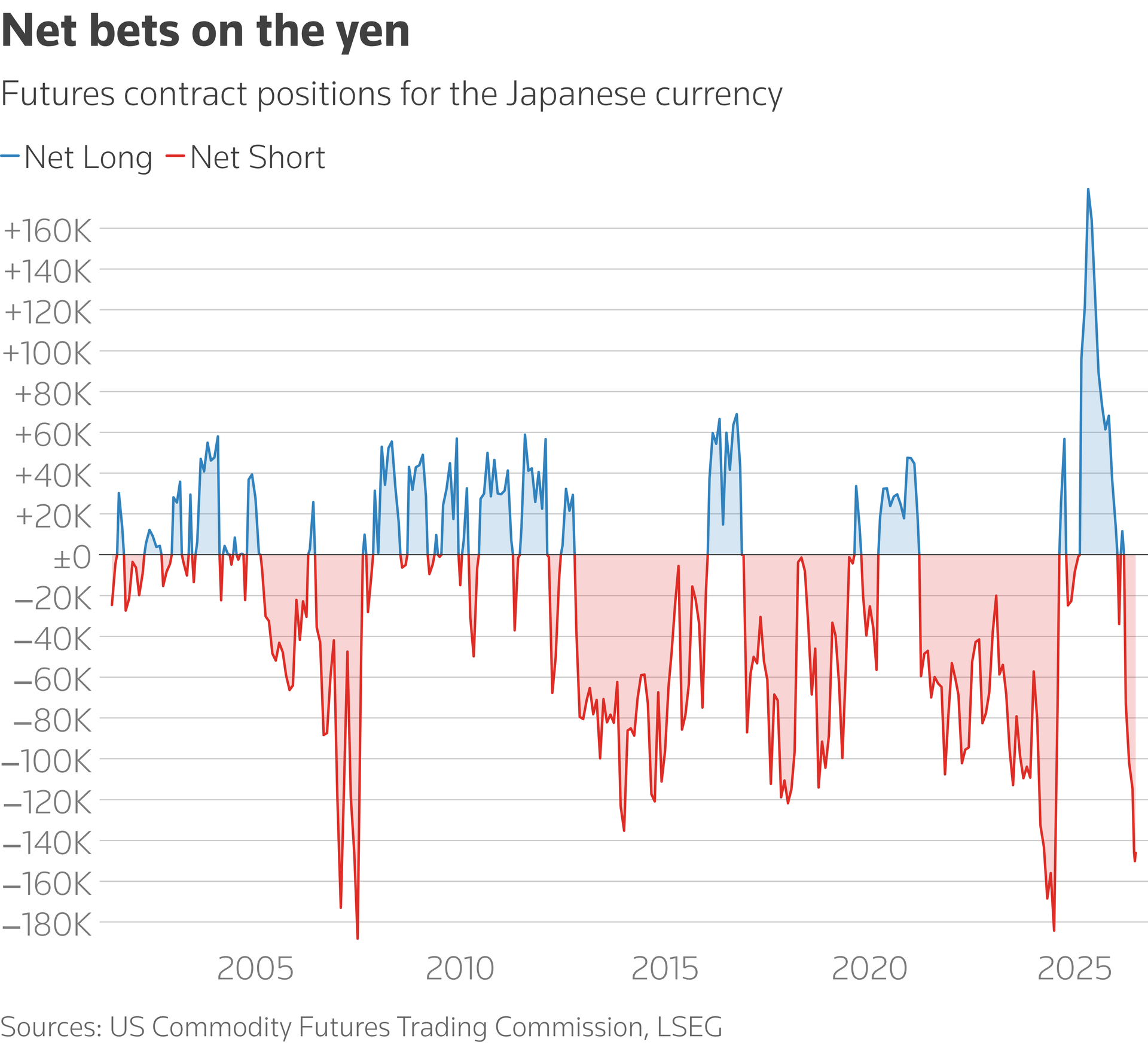
The U.S. dollar is heading for its biggest monthly gain in nearly a year, ahead of key U.S. jobs data later in the holiday-shortened week, with futures markets still betting on a Fed interest rate rise by October.

At the sharp end of the dollar stick is Japan's yen, which continues to hover near 40-year lows. CFTC data showing speculative short-yen positioning has ballooned to extremes not seen since 2024.