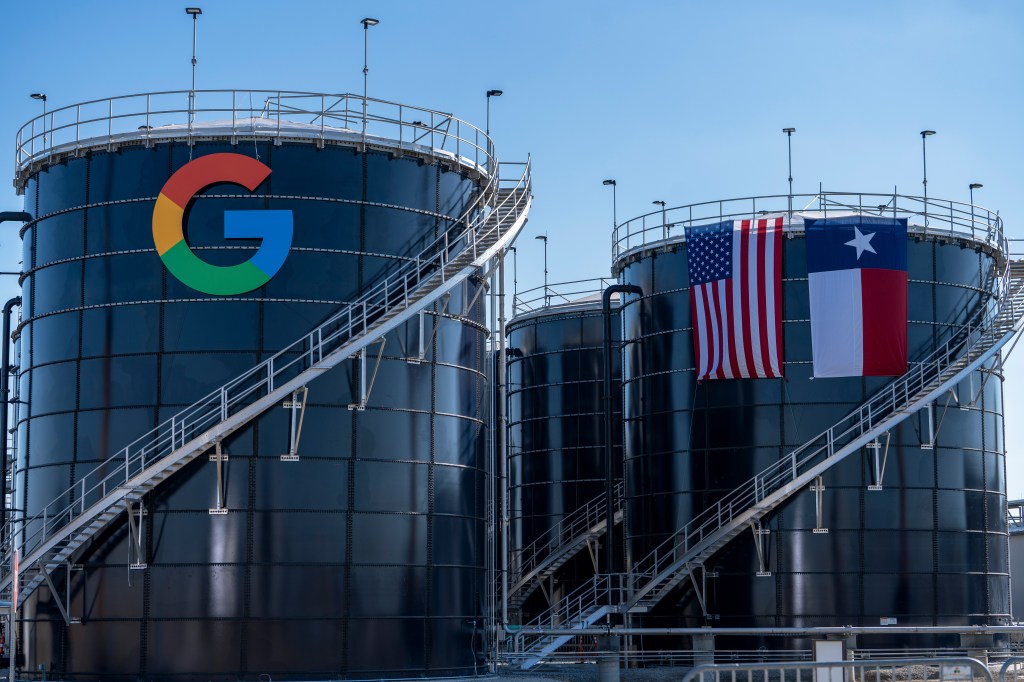
 The Google Midlothian Data Center in Midlothian, Texas, on Friday, Nov. 14, 2025. Alphabet's Google plans to invest $40 billion in three new Texas data centers. Jonathan Johnson/Bloomberg/Getty Images
One of the strategies driving OpenAI’s growth has been the belief that AI compute will be limited amid so much global demand—therefore the firm that secures it first will win the AI arms race.
As Ferris Bueller once said: “Life moves pretty fast.”
A new Financial Times report says Google informed Meta in March that it wasn’t able to offer all the Gemini capacity that Facebook’s parent company wanted—which in turn has delayed some of Meta’s own AI projects.
“Owing to the restrictions, which remain in place, as well as a broader push to streamline AI costs, Meta has encouraged staff to be more efficient with AI tokens—the units that measure AI usage,” the report reads.
This wasn’t exactly unforeseen. On a call with investors in April, Google CEO Sundar Pichai acknowledged the supply-demand mismatch in its fast-growing Google Cloud unit: “We are compute-constrained in the near term,” he said. “And as an example, our cloud revenue would have been higher if we were able to meet that demand. So we are working through that moment, and we are investing.”
Still, it’s cold comfort for Meta, which is moving aggressively to infuse every part of its business with AI. This year alone, Meta has laid off thousands of workers and transferred thousands more in a bid to realign its workforce with AI initiatives. The company recently debuted a new AI model (Muse Spark), AI agents for businesses, a new generation of AI-driven smart glasses, and paid subscription tiers for its own Meta AI.
So far, investors aren’t entirely convinced the juice is worth the squeeze. Meta shares are down more than 15% for the year to date.
—AN