| | In today’s edition: Tit-for-tat strikes, more nuclear power coming to Abu Dhabi, and Saudi’s year of͏ ͏ ͏ ͏ ͏ ͏ |
| |  | Gulf |  |
| |
|
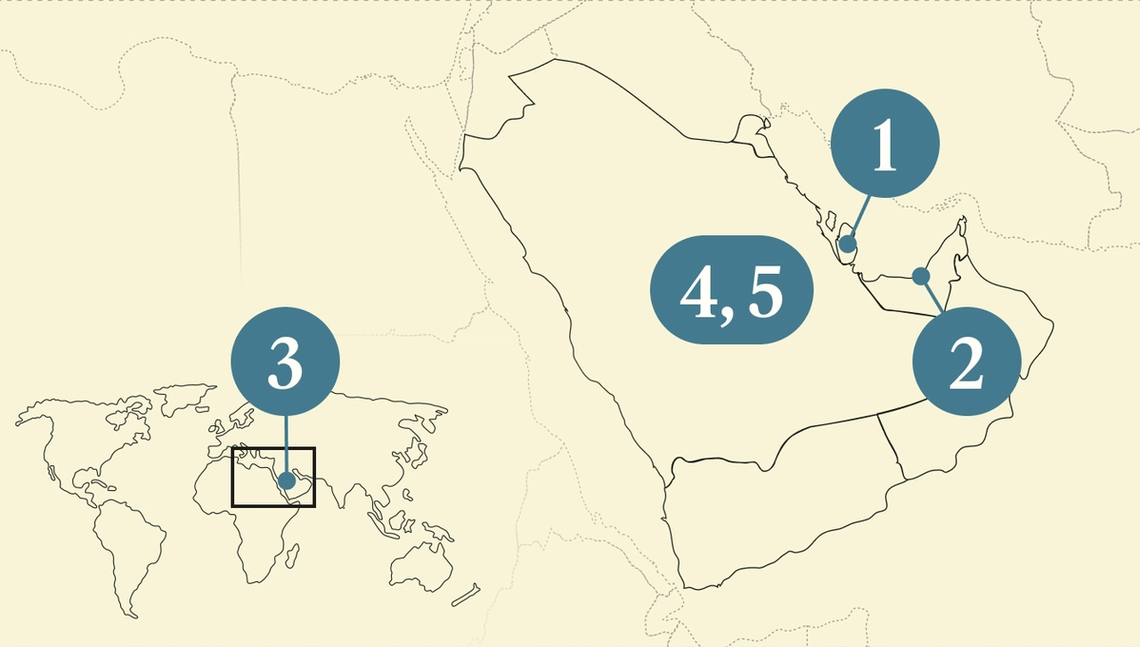 - Iran, US skirmish
- More nuclear in Abu Dhabi
- SWF shift to infrastructure
- Deeper Saudi budget deficit
- Deadly Aramco accident
 An old tech symbol to mark the Saudi year of AI. |
|
Iran’s Hormuz goals spark flare-up |
 Stringer/File Photo/Reuters Stringer/File Photo/ReutersTehran’s efforts to impose its authority on the Strait of Hormuz led to a series of tit-for-tat strikes between the US and Iran; the two sides have agreed to de-escalate, and talks are scheduled for Doha tomorrow. On two occasions in recent days, Iran hit vessels in the strait; the US responded with strikes on missile, drone, and radar sites in Iran. Tehran also fired missiles and drones at Kuwait and Bahrain, and an advisor to Iran’s supreme leader said Tehran was warning Bahrainis to “know their limits and not play such games with their own fate.” Qatar said one of its citizens was killed over the weekend during “military operations,” but it is unclear if that was linked to the US-Iran exchanges. The events highlight the limitations of the interim agreement signed by the US and Iran this month, which left much open to interpretation or further discussion. Both sides accuse the other of breaching the deal, and Iran remains intent on imposing its will on Hormuz. It held talks with Oman about the strait on Monday, and vowed: “From now on, rogue ships will be dealt with more forcefully than before.” Even if a comprehensive deal is reached, the presence of Iranian mines means shipping through the strait will be hampered for months. |
|
US firm eyes UAE nuclear sites |
 A small modular reactor (SMR) project in Argentina. CNEA/Handout via Reuters. A small modular reactor (SMR) project in Argentina. CNEA/Handout via Reuters.US-based nuclear energy startup Nano Nuclear is aiming to get its partnership with the UAE back on track, after the Iran war delayed plans to identify sites for small modular reactors (SMRs) in the Gulf nation, its chief executive told Semafor. Nano Nuclear is also in early-stage talks about potential investment from a firm linked to UAE National Security Advisor Sheikh Tahnoon bin Zayed, as it looks to fund the rollout of its technology, James Walker said in an interview. Abu Dhabi is looking toward SMRs as a possible way to power data centers and remote oil and gas facilities. Several companies are developing microreactor technology, and dozens of countries have expressed interest, but so far only a handful of plants are operational or under construction. If the UAE government commissions Nasdaq-listed Nano Nuclear to build a reactor it will also likely invest in the company, and some initial talks about a potential dual-listing of the firm in Abu Dhabi have already taken place, Walker said. — Matthew Martin |
|
The SWF infrastructure pivot |
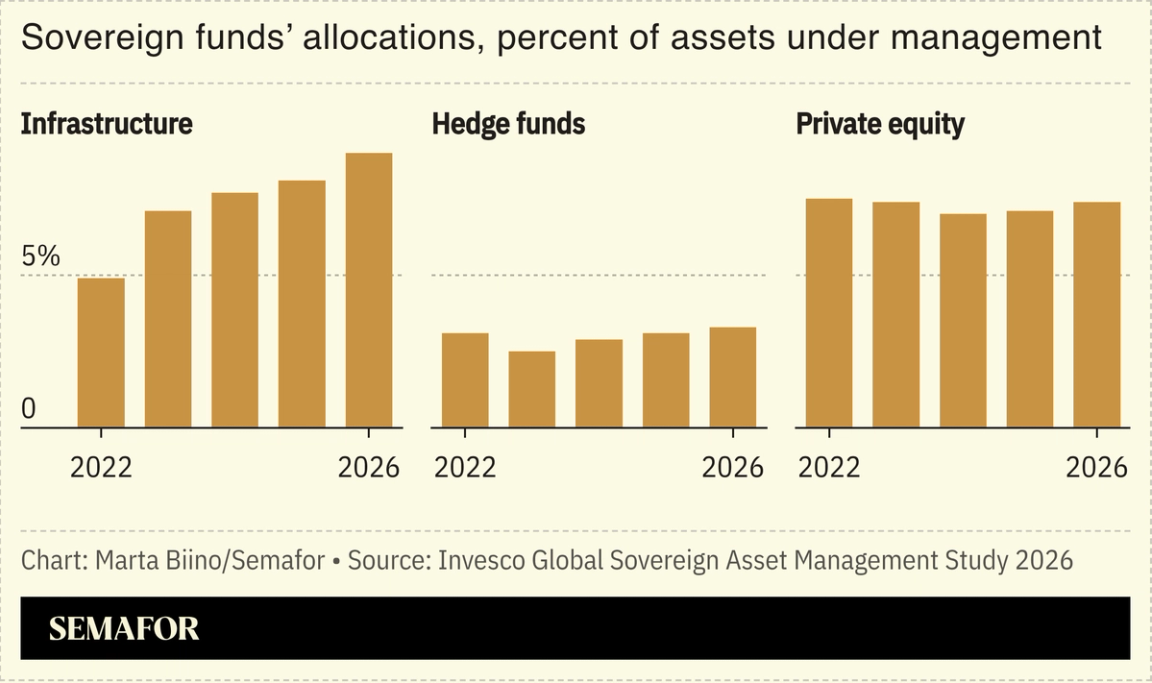 Sovereign wealth funds are accelerating a shift toward private markets and infrastructure, with investors in the Middle East leading the rotation, according to research from Invesco. In a global survey of 144 institutions managing about $29 trillion in assets, Invesco found that infrastructure allocations have grown faster than any other alternative asset class over the past five years. This is an area where Gulf sovereign funds have been particularly active in recent years, and now the sentiment has been quantified: All Middle East investors surveyed viewed AI as a “transformative technology,” compared with 77% globally, and all identified AI infrastructure and semiconductors as major long-term investment opportunities. |
|
Saudi’s deeper 2025 deficit |
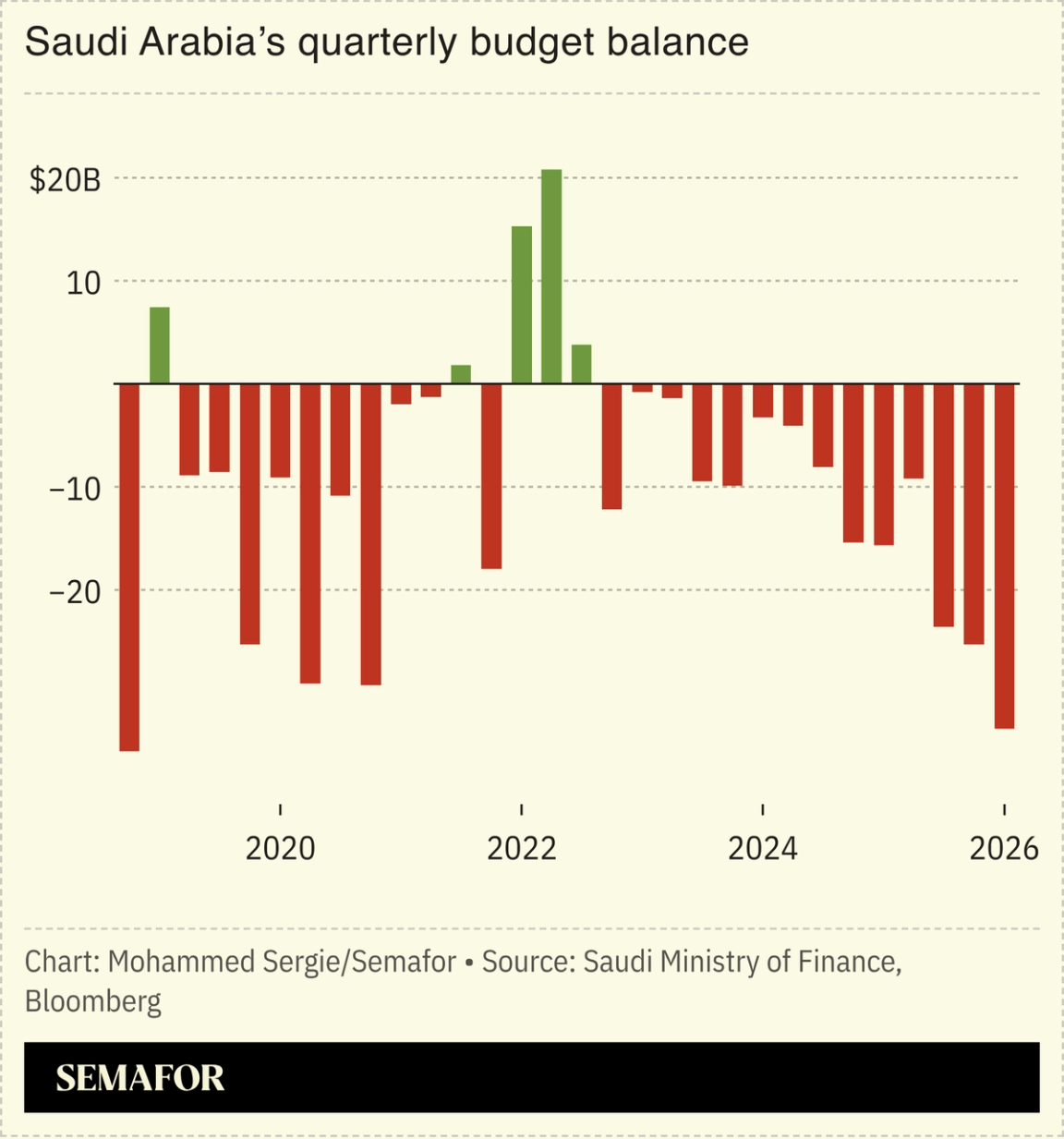 Saudi Arabia’s budget deficit last year was slightly larger than previously thought due to higher spending, according to the latest figures from the finance ministry. The kingdom ended the year with a deficit of 277 billion riyals ($74 billion), or 5.8% of GDP, higher than the estimate of 245 billion riyals published in December and more than double what the government initially budgeted for. Total revenue for 2025 was 6.1% lower than the government had forecast, due to a drop in oil income, while spending was up 8%. Non-oil revenues were higher than expected, reflecting progress in the kingdom’s economic diversification plans. Capital expenditure fell last year as work on major projects, including Riyadh’s public transport network, entertainment district Qiddiya, and the Red Sea International Airport were completed. The trends continued into 2026, with the government recording its highest quarterly deficit since 2018 in the opening quarter. |
|
Aramco helicopter crash kills 14 |
 Ahmed Jadallah/File Photo/Reuters Ahmed Jadallah/File Photo/ReutersAn Aramco helicopter crashed near the company’s Ras Tanura oil terminal, killing all 14 Saudi nationals on board. The cause of the accident was not disclosed and is under investigation. The tragedy came just two days after Aramco resumed loading tankers at Ras Tanura — the world’s largest crude exporting hub — for the first time in almost four months. The terminal had been largely idle after Iranian strikes forced the kingdom to divert its export operations to ports on the Red Sea. It has been a dangerous month for the region’s oil industry: Last week’s explosion at Qatar’s Ras Laffan gas-processing complex killed 13 workers, in one of the Gulf’s deadliest energy-sector accidents in more than two decades. |
|
 Checking In- Inspections are being carried out on some Airbus A380 jets flown by Emirates, after cracks were found in the wings. — The National
Defense- Iranian missile and drone strikes caused extensive damage to a US Navy base in Bahrain, including to the command headquarters, satellite communications terminals, and at least a dozen other buildings. — The Wall Street Journal
- Qatar and Saudi Arabia are reportedly large buyers of Israeli defense systems. Both countries have bought missile defense and combat helmets for their F-15 fighter jets, while some of Qatar’s royal fleet has been fitted with a system that “emits an infrared beam” that can disrupt incoming missiles. — Haaretz
Finance- Another US banking giant is expanding in Saudi Arabia. State Street received an upgraded license allowing it to manage and administer investment funds locally, deepening the presence of one of the world’s biggest custodian banks as the kingdom invests in expanding its capital markets.
|
|
Old, meet new: Saudi Post has issued a commemorative three-riyal ($0.80) postage stamp to mark 2026 as the kingdom’s Year of Artificial Intelligence, bringing the warp-speed technology down to a walking pace.  Courtesy of Saudi Press Agency Courtesy of Saudi Press Agency
|
|
| |