It's almost the end of the Supreme Court's current session. In one of the remaining major cases left to be decided, justices on Monday dramatically expanded presidential power, upholding President Donald Trump’s firings of the heads of independent federal agencies with one important exception: the Federal Reserve. Plus, the ubiquitousness of Kara Swisher as 2028 approaches, Colorado takes its turn this week with primaries and polling on American pride.
We'll be back tomorrow with a special edition of Ground Game that will wrap up the Supreme Court's term.
|
|
|
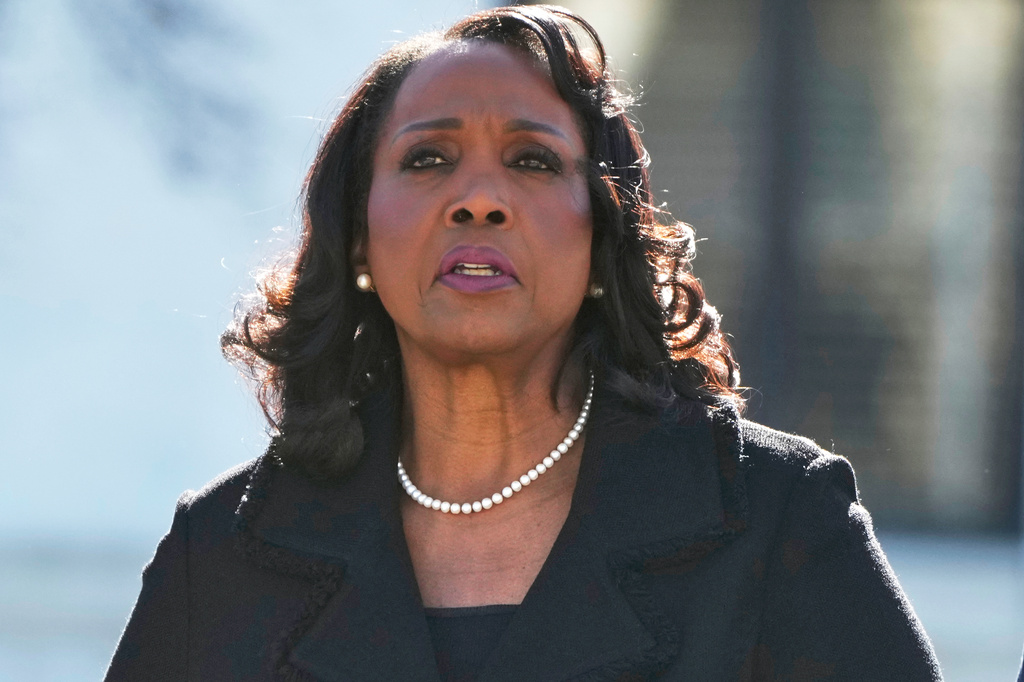
Federal Reserve Board of Governors member Lisa Cook leaves the Supreme Court in Washington, Jan. 21, 2026. (AP Photo/Mark Schiefelbein) |
Supreme Court says Fed’s Cook can keep her job for now, but it upholds other Trump firings — By Mark Sherman
The justices allowed Fed governor Lisa Cook to stay in her job while she fights the Republican president’s effort to fire her over allegations of mortgage fraud, which she has denied.
But other than at the nation’s central bank, with its role of setting interest rates, the court held that presidents have free rein to fire agency heads at will, despite federal laws that require a cause for such dismissals and a 91-year-old decision that had limited executive authority.
With the six conservative justices in the majority, the nine-member court jettisoned its unanimous decision in Humphrey’s Executor that had limited when presidents can fire agencies’ board members — in part to try to ensure decision-making free of political influence.
The justices ruled in the case of former Federal Trade Commission member Rebecca Slaughter, whom Trump fired without cause despite a provision of federal law that requires a reason. The logic of the decision extends to other agencies, including the National Labor Relations Board, the Merit Systems Protection Board and the Consumer Product Safety Commission, where Trump also has fired board members. Read more from Sherman on the high court's executive power ruling. |
|
|
|
Kara Swisher brings her Silicon Valley influence into politics |
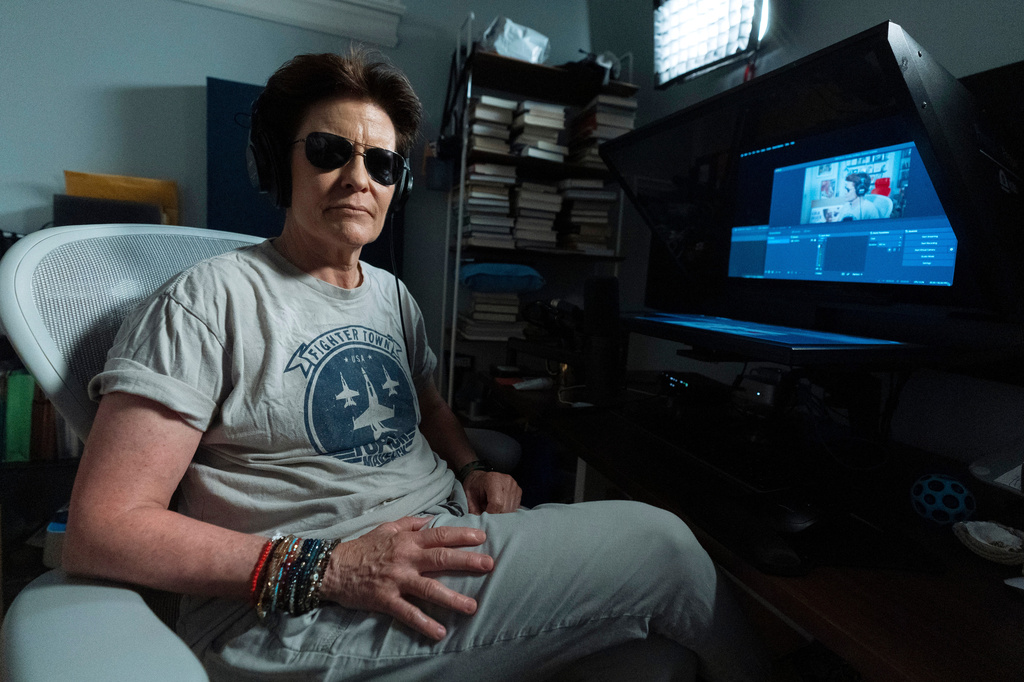
Podcaster Kara Swisher speaks during an interview with The Associated Press, Thursday, June 11, 2026, in Washington. (AP Photo/Manuel Balce Ceneta) |
Kara Swisher is everywhere.
She's filling in for Joy Behar on ABC's “The View.” Appearing alongside Meryl Streep in “The Devil Wears Prada 2.” Starring in a CNN documentary. Preparing a national tour. And churning out four podcasts most weeks featuring long-form interviews and commentary. It's a ubiquity born of more than three decades chronicling the technology industry with a professed indifference to power that vaulted her into a rare echelon of journalism celebrity.
She harnessed that reputation to persuade rivals Steve Jobs and Bill Gates to appear onstage together and make Mark Zuckerberg so uncomfortable under questioning that he broke out into a sweat. She had Elon Musk's cellphone number — the two aren't currently speaking — and often texts tech and business leaders. She's betting the influence that made her a Silicon Valley force will translate into politics as podcasts supplant traditional media as a destination for candidates seeking attention. Read more from Sloan about Swisher's 2028 influence play. |
|
|
|
FACT FOCUS: A look at the Trump administration's challenge to birthright citizenship |
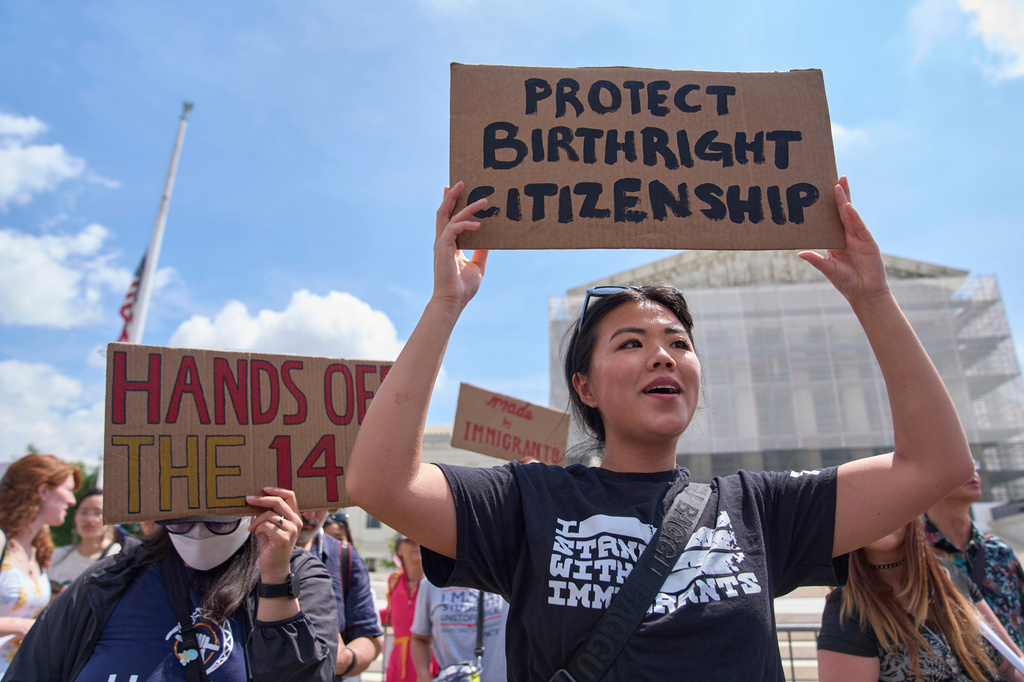
Hannah Liu, 26, of Washington, holds up a sign in support of birthright citizenship, May 15, 2025, outside of the Supreme Court in Washington. (AP Photo/Jacquelyn Martin) |
When it comes to birthright citizenship, the Trump administration hasn’t been subtle about its views. The practice, which grants automatic citizenship to nearly everyone born on U.S. soil and which is soon to face Supreme Court judgment, is “a disgrace,” according to Trump.
The Supreme Court is expected to address the issue in the coming days, ruling on a Trump executive order that would upend more than a century of constitutional and legal history.
Claim: Trump has repeatedly said "we're the only country that has it," when it comes to birthright citizenship. Analysis: It’s true that the practice isn’t the norm around the world. In most countries, a child’s citizenship follows that of its parents, no matter where the birth takes place. Yet dozens of countries other than the United States have unrestricted birthright citizenship. Most are in the Americas, including Canada, Mexico and many nations in Central and South America. Dozens of other countries, from Germany to Australia, have a mixed approach, using a variety of principles, including parenthood, place of birth, residency and ethnicity, to decide a child’s citizenship.
Background: Birthright citizenship became law in 1868 when the 14th Amendment was ratified in the aftermath of the Civil War, in part to ensure that former slaves would be citizens.
In the late 1800s, it was expanded to include children of immigrants. In later cases, the Supreme Court ruled that anyone born in the U.S. is a citizen, including if their parents are in the U.S. illegally or temporarily. There are a tiny number of exceptions, mostly for children born in the U.S. to foreign diplomats. Read more from Tim Sullivan on the birthright citizenship debate. |
|
| |
AP Elections Spotlight: Rocky Mountain Primary |
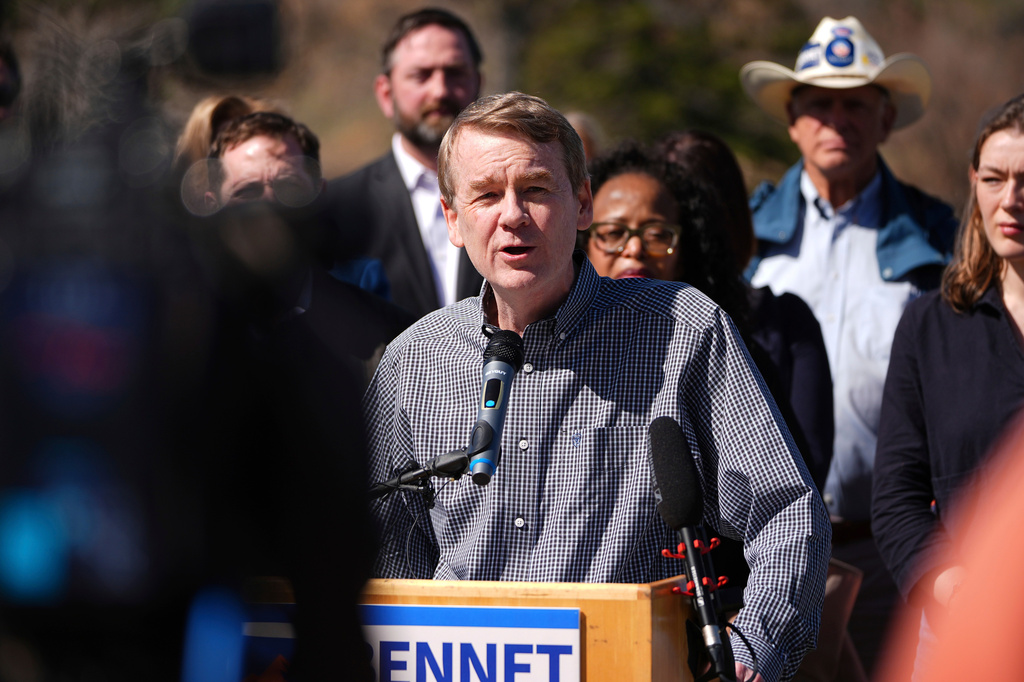
Sen. Michael Bennet, D-Colo., announces his plan to run for Colorado's governorship in the 2026 election at an event outside the Museum of Nature and Science, April 11, 2025, in Denver. (AP Photo/David Zalubowski) |
The big picture: Colorado voters will close out Act I of the 2026 campaign season on Tuesday with the last state primary before a three-week summer intermission. In the night’s marquee race, U.S. Sen. Michael Bennet and state Attorney General Phil Weiser are in a competitive primary for the nomination to succeed term-limited Gov. Jared Polis as the state’s Democratic governor.
Mile High Matchup: Bennet and Weiser are two of Colorado’s best-known Democrats, and they both face their most competitive primaries since they were first nominated to their current posts. The Money Race: Weiser had a small fundraising edge over Bennet as of mid-June, although both candidates have the backing of outside groups who have spent millions in support of their campaigns and against the other.
Counties to watch: Both reside in Denver County, the state’s key Democratic stronghold. Weiser carried it by more than 7 points in his only contested 2018 AG primary. Bennet lost it by about 6 points in his only contested Senate primary in 2010.
Weiser also carried heavily Democratic Boulder County by about 8 points in his 2018 primary, while Bennet narrowly lost it narrowly in 2010. But Weiser lost Adams County, north of Denver, and El Paso County, the state’s most populous, while Bennet carried both by big margins 16 years ago.
The general election: The Republican nominee will be state Rep. Scott Bottoms, state Sen. Barb Kirkmeyer or pastor and Marine Corps veteran Victor Marx. Democrats have won nine of the last 11 elections for Colorado governor and have held the office since 2007.
U.S. House primaries to watch: Former state Rep. Shannon Bird and state Rep. Manny Rutinel compete for Democratic nod to take on Republican Rep. Gabe Evans in the 8th District, a critical seat that could decide control of the chamber. Rep. Diana DeGette in the 1st District faces two primary challengers, including Melat Kiros, a democratic socialist backed by Vermont Sen. Bernie Sanders.
Meanwhile, Republican Rep. Jeff Hurd faces a primary challenge from former state Rep. Ron Hanks in the 3rd District.
Kicking off Act II: After a three-week hiatus, the primary season will resume in Arizona on July 21 with a flurry of August primaries not far behind.
Read more from Robert Yoon about Colorado's primary elections. |
|
|
|
|