| | In today’s edition: US and Iran trade blows again, Saudi reshuffles key ministers, and venture capit͏ ͏ ͏ ͏ ͏ ͏ |
| |  Riyadh Riyadh | Washington DC | Doha |
 | Gulf |  |
| |
|
 - US and Iran trade strikes
- Saudi ministry shakeup
- UAE secures US chips
- Foreign investors AWOL
- Gemcorp’s first Saudi loan
- Qatar’s former emir dies
 Destinations revealed for Saudi Arabia’s first ultra-luxury train. |
|
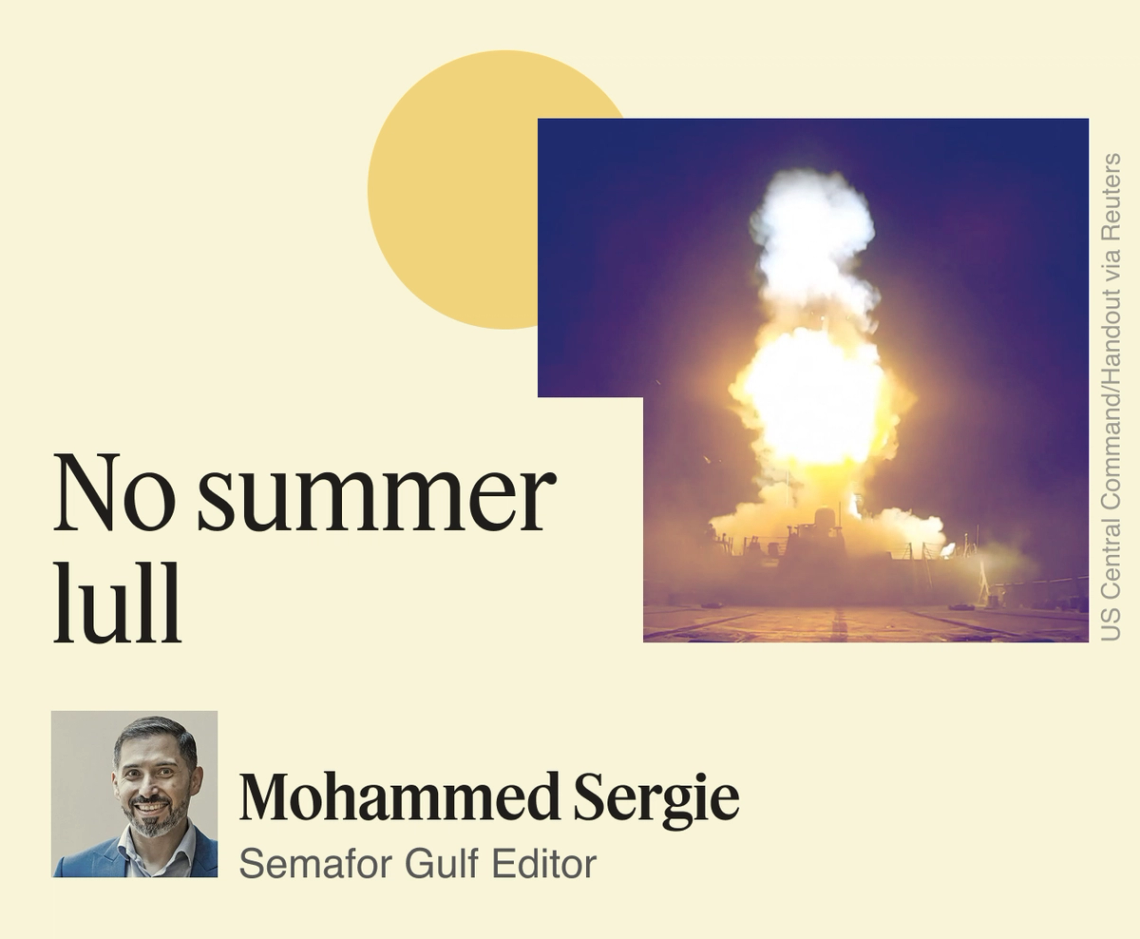 The return of strikes over the past week has brought back to the fore growing concerns about the fragility of the ceasefire and the Gulf’s recovery. Maintaining the truce and reopening the Strait of Hormuz is still the best of a bad set of potential outcomes for Gulf states, short of a comprehensive peace deal, but Tehran doesn’t necessarily benefit from that dynamic. Convinced it has strengthened its position through war, Iran is focused on maintaining its leverage over Hormuz and aims to “establish a new Pax Iranica in the Middle East,” The Wall Street Journal’s Yaroslav Trofimov writes. The International Crisis Group reckons that if last month’s interim agreement collapses, the next war could be shorter but “fiercer,” potentially including Houthi attacks on shipping through the Bab al-Mandab, disrupting traffic to the Red Sea. Economic indicators are showing the strain on the Gulf. Fitch Ratings is the latest to trim its forecast for Saudi growth this year. Kuwait and Qatar are expected to contract, and the IMF has lowered its 2026 Middle East growth forecast to 0.7%. Over the next few weeks, earnings from listed Gulf companies will provide the clearest picture yet of the war’s impact. Reuters reported that banks and real estate are the most exposed, while telecoms are expected to be less affected. Energy companies that can get their crude out could post gains: The UAE, which left OPEC in May, freeing it from the cartel’s quota, had record oil exports in June. With so much at stake, it is clear we are not heading into a slow summer. To keep up with events — and keep you informed — Semafor Gulf is expanding to five editions a week, up from four, starting this week. We thank you for reading and aim to bring you intelligent briefings you can trust. And if you have ideas, tips, or feedback, write to us or reply to this email — we’d love to hear from you. |
|
US, Iran edge toward ‘forever war’ |
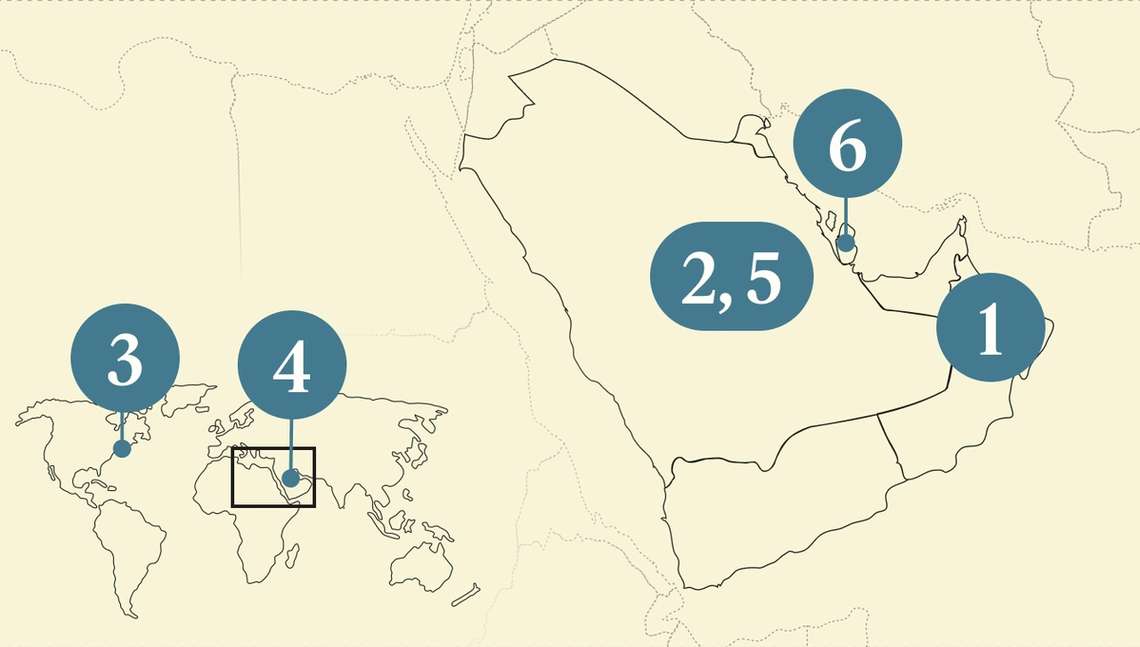
 Mohammed Aty/File Photo/Reuters Mohammed Aty/File Photo/ReutersIran and the US traded more blows over the weekend, as the two sides clashed over control of the Strait of Hormuz. Tehran said it had closed the waterway because of US military actions; Washington insists the strait remains open, but only a handful of vessels are now prepared to attempt the crossing. The picture is one of steady escalation. The US said it hit some 140 sites in Iran, up from 80 or 90 in raids in the preceding days. In response, the IRGC widened its target list beyond Bahrain and Kuwait (the focus of most of its recent attacks), by firing salvos at Jordan, Oman, Qatar, and the UAE. Unless the two sides can reach a deal to break the deadlock, the White House may find that it has locked itself in “a new kind of forever war — a forever air war,” according to one analyst, albeit one in which shipping is the central issue. |
|
Saudi reshuffle hints at economic pressures |
| |  | Matthew Martin |
| |
 The Al Amar gold mine in Saudi Arabia. Fahad Shadeed/Reuters. The Al Amar gold mine in Saudi Arabia. Fahad Shadeed/Reuters.Saudi Arabia reshuffled the leadership of its mining and defense sectors, in a sign of renewed pressure on lagging areas of the economy that are key to the kingdom’s diversification plans. Energy Minister Prince Abdulaziz bin Salman will now oversee the industry and mineral resources ministry, replacing Bandar Al Khorayef, who was appointed to oversee the General Authority for Military Industries. The reshuffle follows the appointment of Public Investment Fund executive Fahad Al Saif as investment minister in February, replacing the long-serving Khalid Al-Falih, in another sign of how the kingdom is trying to shake things up to meet its Vision 2030 goals. Riyadh said it wants to unlock an estimated $2.5 trillion in mineral wealth and sees mining as a “third pillar” of the economy alongside oil and petrochemicals. It spun out the industry ministry as a separate department in 2019 to give the sector more focus, but the kingdom hasn’t significantly scaled output or attracted foreign companies. |
|
UAE wins access to US AI chips and more |
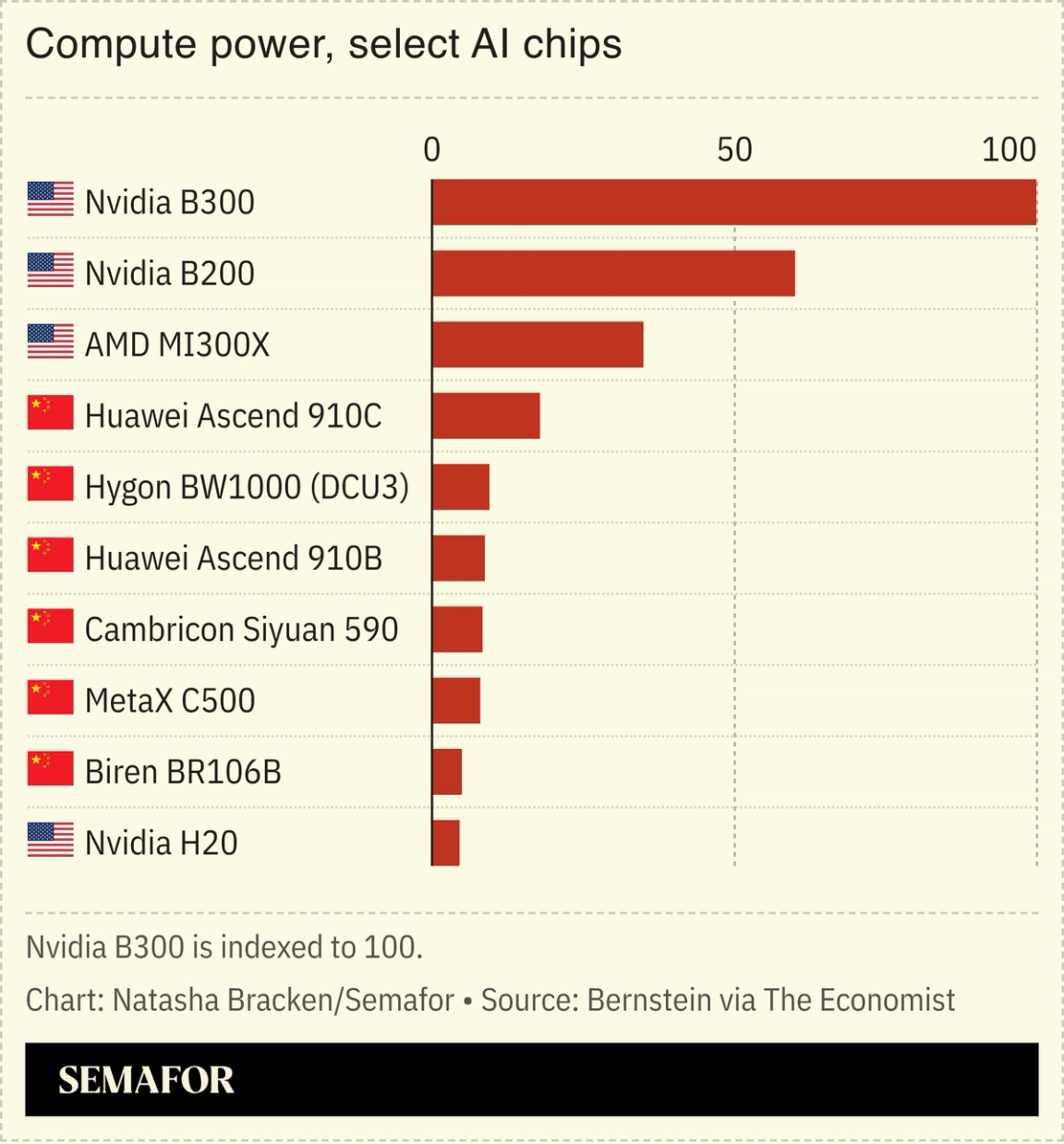 The US has softened export controls on UAE purchases of America’s most advanced technologies. The UAE government and approved companies no longer need licenses to buy semiconductor processors, some commercial satellites and military equipment, or dual-use items for civil nuclear power — a status no other Middle Eastern state, including Israel or Saudi Arabia, enjoys. Abu Dhabi has lobbied for the policy change for years, but previous administrations feared closely guarded technologies, such as those underpinning Nvidia’s Blackwell chips, could leak to China if the UAE was allowed access. On Friday, the Department of Commerce said the UAE’s support for the US war against Iran and its status as America’s largest trading partner in the Middle East were behind the change in policy. The UAE has pledged to invest more than $1 trillion in the US. |
|
Venture capitalists retreat |
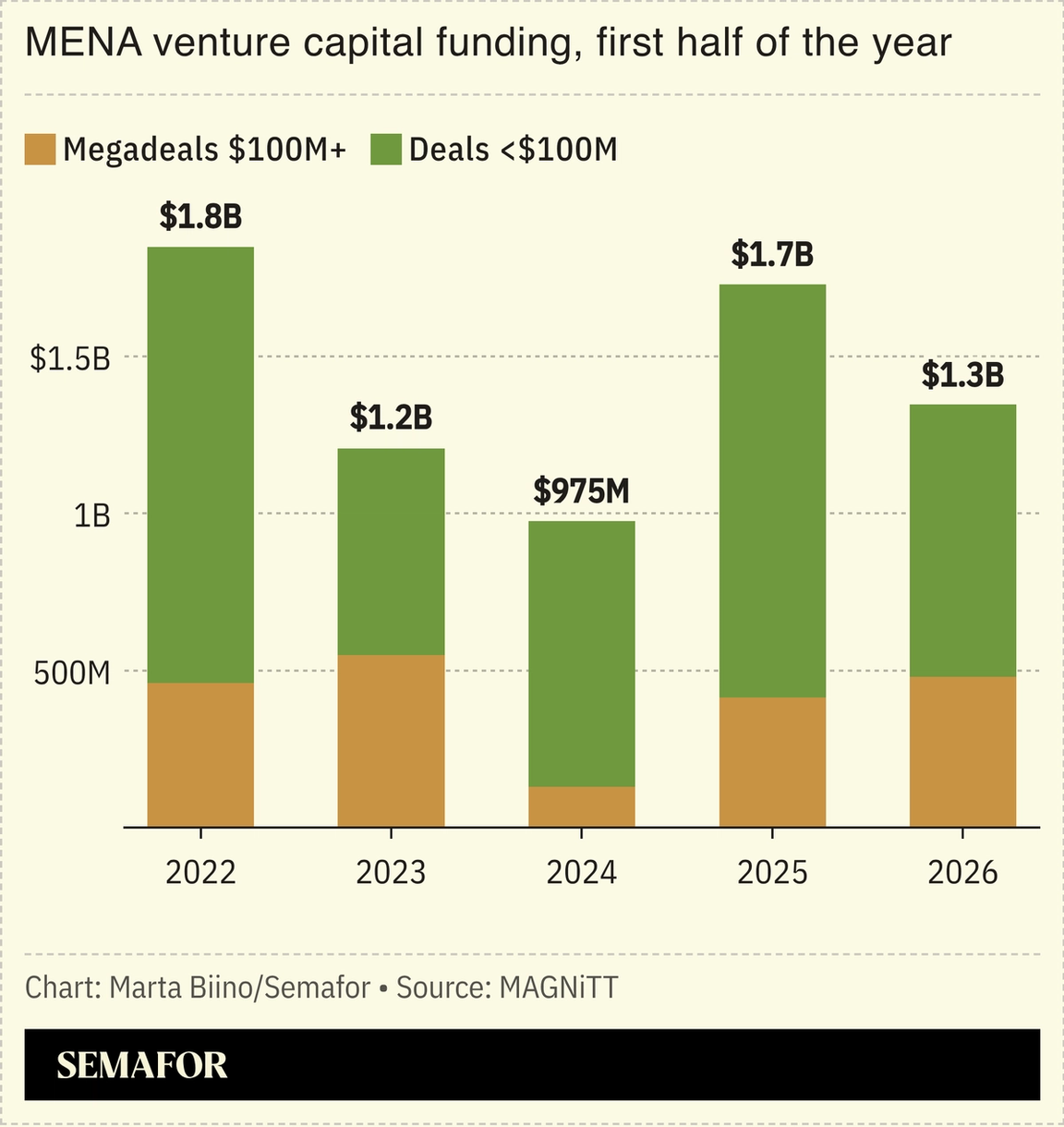 Venture capital investment in the Middle East has collapsed amid the Iran war, jeopardizing the growth of startups that are an engine of employment, innovation, and non-oil revenue. The number of deals finalized in the first half of 2026 plunged to a five-year low, dropping 41% year-on-year to 214, while the value of deals fell 22% to $1.35 billion, according to venture capital data platform Magnitt. International investors, who had started to outpace local backers in recent years, are retreating: Their share of invested capital more than halved from a year earlier. The geopolitical turmoil makes it a harder environment in which to make investments, but venture capital funds are also facing constraints from their limited partners: “Sovereign wealth funds and fund-of-funds haven’t scaled to match startup capital demand. Corporates, already managing credit concerns, are focused inward. And family offices have kept deploying capital, but internationally into AI rather than regionally,” Magnitt CEO Philip Bahoshy told Semafor. Magnitt is tracking three metrics for recovery: The return of international investors, more early-stage deals, and exits. But Bahoshy said he doesn’t expect to see a reversal of the current trends until at least next year. — Kelsey Warner |
|
Gemcorp completes first Saudi deal |
 Hamad I Mohammed/Reuters Hamad I Mohammed/ReutersEmerging markets asset manager Gemcorp has closed a $20 million private credit deal in Saudi Arabia, a senior executive told Semafor, and plans to expand financing for small and medium-sized companies in the kingdom. The funding will go to SILQ, which provides procurement, payments, and financing services for small businesses. Private credit has found a ready market in the Gulf, where banks have long been wary of lending to SMEs and fast-growing sectors such as technology. Saudi lenders are also contending with tight liquidity. That gap has drawn firms from Apollo to Goldman Sachs into the market. Gemcorp is raising $1 billion funds in both Abu Dhabi and Saudi Arabia — the London-based firm has deployed more than $9 billion since 2014. — Ed Clowes |
|
Doha bids farewell to Father Emir |
 Qatar’s emir attends his father’s funeral. Qatar News Agency/Handout via Reuters. Qatar’s emir attends his father’s funeral. Qatar News Agency/Handout via Reuters.Sheikh Hamad bin Khalifa Al Thani, the former emir who transformed Qatar from a little-known Gulf state with declining oil output into one of the world’s richest countries, died at the age of 74. After seizing power from his father in a coup in 1995, Sheikh Hamad embarked on an ambitious national development program. His biggest bet was exploiting gas in the North Field, turning Qatar into the world’s leading exporter of liquefied natural gas. He used that wealth to drive domestic development and build what is now the $580 billion Qatar Investment Authority. Sheikh Hamad used some of the rest of the surplus to bankroll media giant Al Jazeera, lure top universities to Qatar, and assemble one of the region’s most significant collections of modern and Islamic art. Under his rule, the country became a go-to mediator for regional conflicts and secured the rights to host the 2022 men’s soccer World Cup. “He did not just make Qatar rich. He made it relevant. And for a small state, this is a form of security,” writes Andreas Krieg, associate professor at King’s College London. — Mohammed Sergie |
|
 Deals- UAE telecoms firm e& has sold its entire stake in Vodafone to French billionaire Xavier Niel for $6 billion. Its exit as the largest shareholder comes as e& looks to refocus on its core business, and step back from international expansion. — Reuters
- Qatar Investment Authority vetoed a deal for Volkswagen to make vehicles for Israel’s Iron Dome air defense system, in a deal intended to save hundreds of jobs at the German carmaker’s Israeli plant.
Energy- Qatar is reportedly pausing its plan to quickly revive production of liquefied natural gas due to security concerns. Last week, Iran struck the Qatari LNG tanker Al Rekayyat, forcing the crew to abandon ship. — Bloomberg
Logistics- Dubai ports operator DP World bought 700 trucks to expand its Gulf freight network. It follows the opening of overland customs corridors to other ports, including Sohar in Oman, and the rerouting of some trade through Saudi Arabia to alleviate disruption caused by the Iran conflict.
|
|
 Courtesy of Dream of the Desert Courtesy of Dream of the DesertOne of Saudi Arabia’s newest luxury journeys will take you right back to where you started. Dream of the Desert, the kingdom’s first ultra-luxury train, is due to start running at the end of the year, with cabins from $8,000 a night. One of its trips will leave Riyadh in the afternoon on a two-day swing through the desert without stopping. For those who do want to get off, there are three-day tours north to AlUla, by way of the prehistoric rock art at Jubbah and a night camping in the dunes, or an overnight run to Qassim during Ramadan, with iftar and suhoor meals served on board and the hours between spent stargazing. |
|
|


