From the Greenberg Center for Geoeconomics |
|
|
|
 |
By Edward Fishman
Senior Fellow and Director of the Maurice R. Greenberg Center for Geoeconomics
|
|
Dear readers,
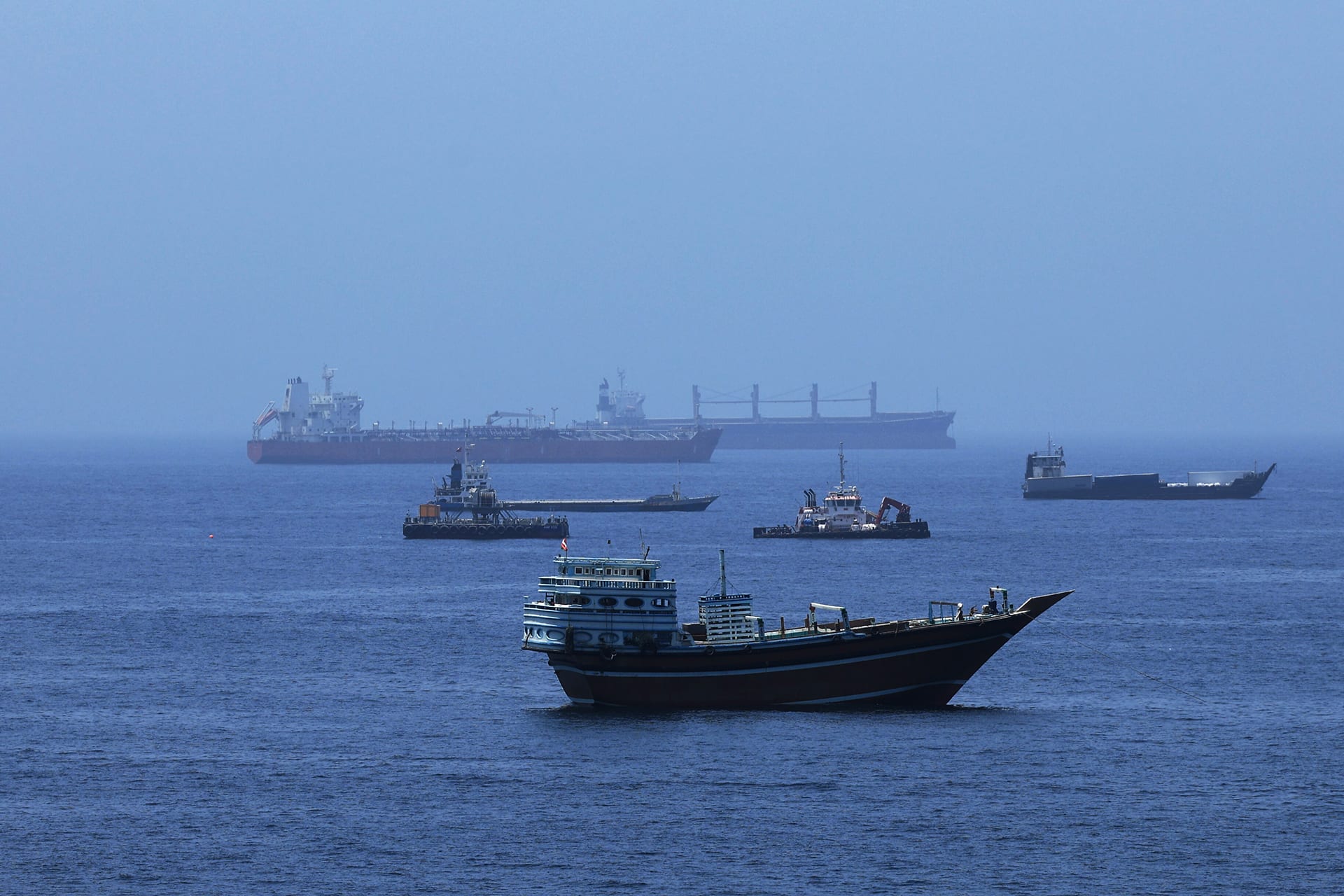
For much of this year, the world economy has been on a knife’s edge as ship traffic through the Strait of Hormuz ground to a halt. For a couple weeks after the signing of the U.S.-Iran memorandum of understanding (MOU) on June 17, traffic began to recover, with more than sixty ships crossing on some days, roughly half the prewar average.
But the MOU is now falling apart over a fundamental disagreement about what it means. Washington sees the deal as guaranteeing safe passage through the strait. Tehran sees it as recognizing Iran’s exclusive right to administer the waterway. Over the past two weeks, Iran has stepped up attacks on commercial ships that have attempted to transit the strait without following protocols established by its Persian Gulf Strait Authority.
The Strait of Hormuz is the world’s most important energy chokepoint. Iran seized control of it during the war, using drones and missiles to regulate traffic, and it used that control to coax Donald Trump into agreeing to a ceasefire and granting Iran substantial sanctions relief. Iran is now trying to convert its wartime control over the strait into a source of enduring peacetime power. The United States is unwilling to concede that authority, and the dispute has led to a resumption of hostilities. Tehran has declared the strait is again closed, while Trump announced this morning that he plans to reimpose the U.S. naval blockade.
At CFR, we are tracking these developments closely. Five of our fellows published a comprehensive analysis of what it would take to actually reopen the strait. I wrote an essay in the New York Times about how Iran’s success could encourage other countries to weaponize and monetize chokepoints of their own. And I joined Trevor Noah on his podcast to discuss the history of U.S. efforts to halt Iran’s nuclear program, first through economic pressure and ultimately through military force.
The contest over Hormuz illustrates a broader theme of our work at the Greenberg Center: how geopolitical competition is reshaping the global economy. In Foreign Affairs, Brad Setser and Shahin Vallée argue that China’s undervalued currency and manufacturing surplus now pose the central challenge to the global trading system. Jonathan Hillman and Ishaan Thakker call for larger and more sophisticated U.S. stockpiles of critical materials, while Rebecca Patterson warns that the global rearmament boom could worsen already strained government finances and increase the risk of turmoil in financial markets.
Below you’ll find these contributions and more from our team over the past month. Thank you for reading, and please send us any feedback or ideas.
All best,
Eddie
|
|
|
|
The U.S.-Iran ceasefire is on the verge of collapse, and with it any prospect of restoring normal traffic through the Strait of Hormuz. Even if the agreement holds, transit fees, sea mines, billions in infrastructure damage, and deep regional mistrust pose significant obstacles to a genuine recovery. Five CFR experts examine the MOU and the obstacles that remain. Read the joint piece
|
|
|
|
Iran is poised to emerge from the war battered militarily and economically but strengthened strategically, the newly empowered gatekeeper of the world’s most important energy chokepoint. Other countries will take note—and seek their own chokepoints to exploit, writes Fishman. Read the New York Times op-ed
|
|
|
|
Comedians Trevor Noah and Eugene Khoza sat down with Fishman to examine the inner workings of global power. Using Iran as a lens, Fishman explains the history of economic sanctions as a preferred American foreign policy tool, why policymakers frequently view them as more peaceful option, and what happens when that strategy clashes with real-world circumstances. Watch the live podcast show
|
|
|
|
How much cross-border trade flows among the United States, Canada, and Mexico each year? |
|
|
|
Trade and the Global Economic Order |
|
|
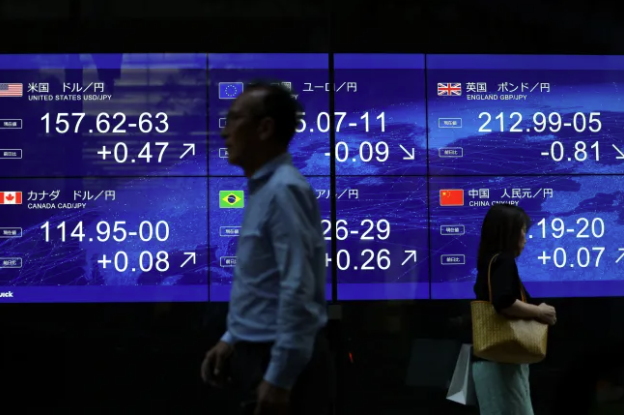
China’s currency has depreciated 15 percent in real terms even as its productivity has risen—and Chinese state banks are now actively holding the renminbi down, write CFR Fellow Brad W. Setser and German Council on Foreign Relations Fellow Shahin Vallée in Foreign Affairs. The Group of Seven (G7) needs to present Beijing with a choice: allow its currency to appreciate or face new trade restrictions. Read the essay
|
|
|
|
Cohosting the World Cup, the United States, Canada, and Mexico feel less like friends and more like suspicious neighbors. The tournament is a moment for North American leaders to reflect on what binds their countries together rather than divides them and to stop thinking of their nearest neighbors as foreigners, writes CFR Fellow Inu Manak. Read more
|
|
|
|
Most of the International Monetary Fund and Organisation for Economic Co-operation and Development imbalances reports paint a deceptive picture, showing Europe’s surplus as bigger than China’s. Netting out Ireland, China’s goods and services balance is two times bigger. It simply is not credible to maintain that Europe is as “bad” as China, writes Setser. Read more
|
|
|
|
Technology and Strategic Industries |
|
|
The United States’ stockpiles were built for an earlier era. Mounting resilience against coercion and preparing for possible conflict will require larger reserves, smarter technology, and deeper coordination with industry and allies, write CFR Fellow Jonathan E. Hillman and Research Associate Ishaan Thakker. Read more
|
|
|
|
CFR’s “U.S. Government Deal Tracker” shows how the government is experimenting with new tools and financing structures to advance a range of strategic sectors, including critical minerals, energy, global logistics, manufacturing, telecommunications, and other technologies. |
|
|
|
|