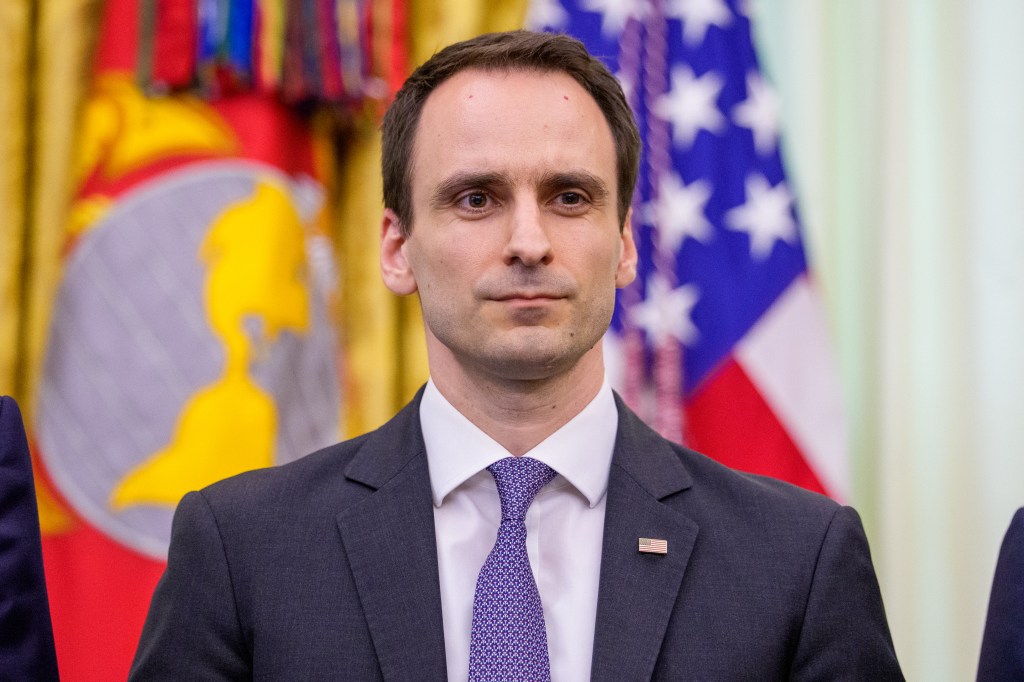
 White House Office of Science and Technology Policy Director Michael Kratsios on June 22, 2026 in Washington, D.C. Andrew Harnik/Getty Images
A top Trump administration official has accused one of China’s most promising AI startups of stealing from one of the most valuable AI companies in the U.S.
Michael Kratsios, the president’s science and technology advisor, said Moonshot and its formidable new K3 AI model, released last week, distilled Anthropic’s new Fable model, released last month as part of its flagship Mythos series.
(AI distillation involves the training of a smaller, more efficient AI model to replicate the behavior of a larger, more complex AI model. It’s not copying, per se, but it can be a purposeful strategy to fast-follow an innovator.)
What’s more, Kratsios added, Moonshot did so using Thailand-based Nvidia GB300 AI systems—“G” as in Grace CPU, “B” as in Blackwell GPU—which are expressly prohibited from being sold to Chinese companies under current U.S. export controls.
“They developed a sophisticated internal platform to conduct large scale distillation against U.S. models, allowing them to quickly switch between multiple methods of access to avoid detection,” the official wrote in a social media post, adding: “Large-scale, covert industrial distillation aimed at stealing proprietary U.S. technology and undermining American research is unacceptable.”
In his own social media post, U.S. Treasury Secretary Scott Bessent said he was considering blacklisting and sanctioning Moonshot.
In a comment
made to Reuters, a spokesperson for the Chinese embassy in Washington called the accusations “entirely unfounded.”
For months, the U.S. government has been on high alert for what it believes are widespread efforts by Chinese tech companies to steal American intellectual property. In February, Anthropic accused three Chinese AI companies of
creating tens of thousands of user accounts to harvest data from its Claude model for the purpose of training their own AI models. That same month, Anthropic’s rival OpenAI accused Hangzhou-based DeepSeek
of similar behavior.
—AN