Released almost one year ago, the America First Global Health Strategy (AFGHS) is driving the largest shift to the global health landscape in a generation. The strategy, which calls for country self-reliance and an expanded role for the private sector, redefines the United States’ role in global health and represents a fundamental reset of its support to three of the world’s leading infectious diseases: HIV/AIDS, tuberculosis, and malaria.
To lead this week’s edition, Chris Collins, president and CEO of Friends of the Global Fight Against AIDS, Tuberculosis and Malaria; Jirair Ratevosian, former chief of staff for the President’s Emergency Plan for AIDS Relief; and Jeffrey L. Sturchio, former chairman and CEO of Rabin Martin, describe how the AFGHS can maintain progress against those diseases by applying certain private-sector principles—such as accountability and metrics—to the aid transition.
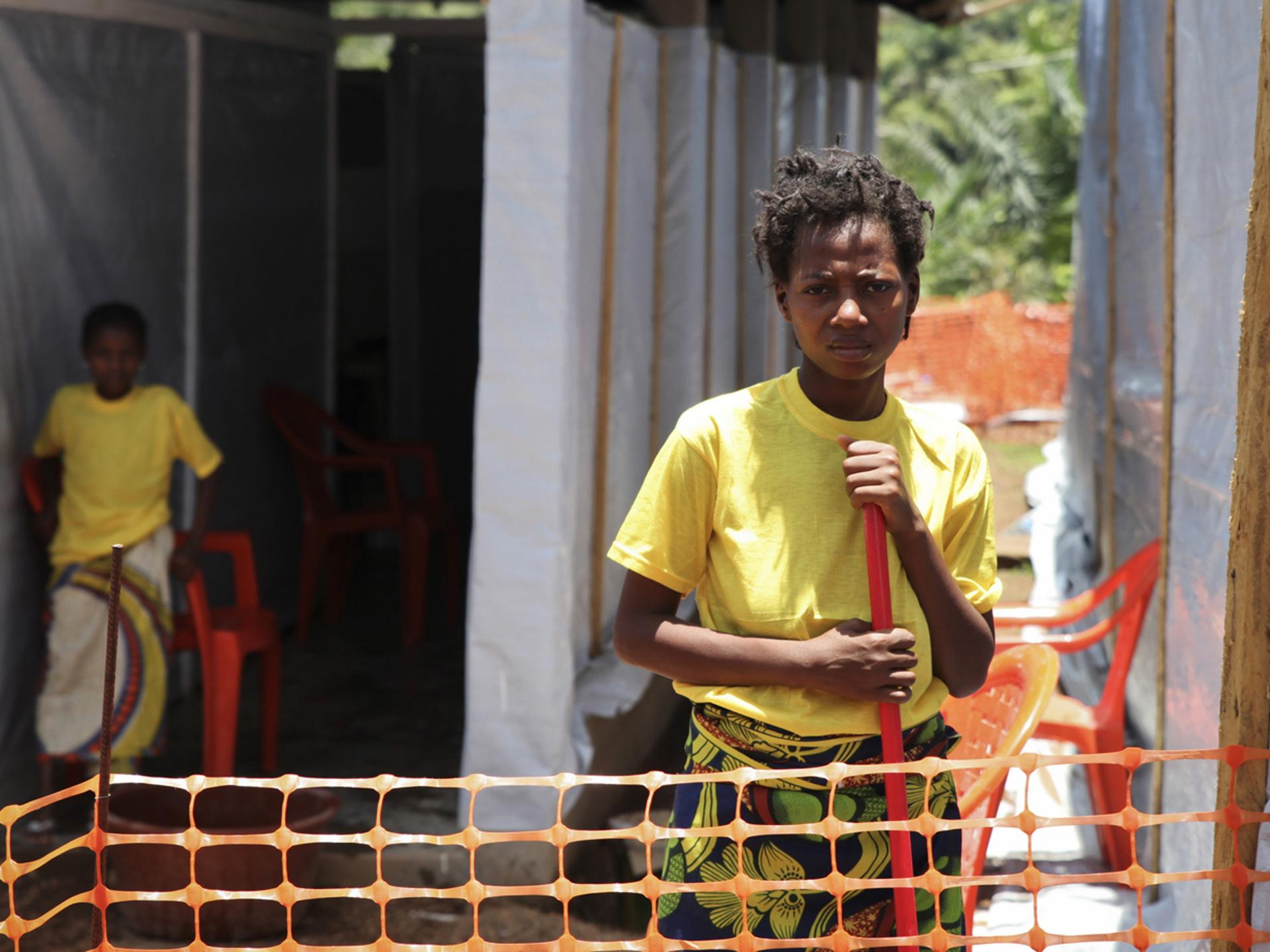
On Thursday, the number of Ebola cases in the Democratic Republic of Congo surpassed 3,400, nearing the record of the country’s worst outbreak. As infections spread at record speed, Ranu S. Dhillon, cofounder of Optimize Health, and Jean-Vivien Mombouli, director of Fondation Congolaise pour la Recherche Médicale, Brazzaville, draw on their experience leading Guinea’s response to the 2014–16 West Africa Ebola epidemic to describe how authorities can more effectively contain the ongoing outbreak—even without an approved vaccine.
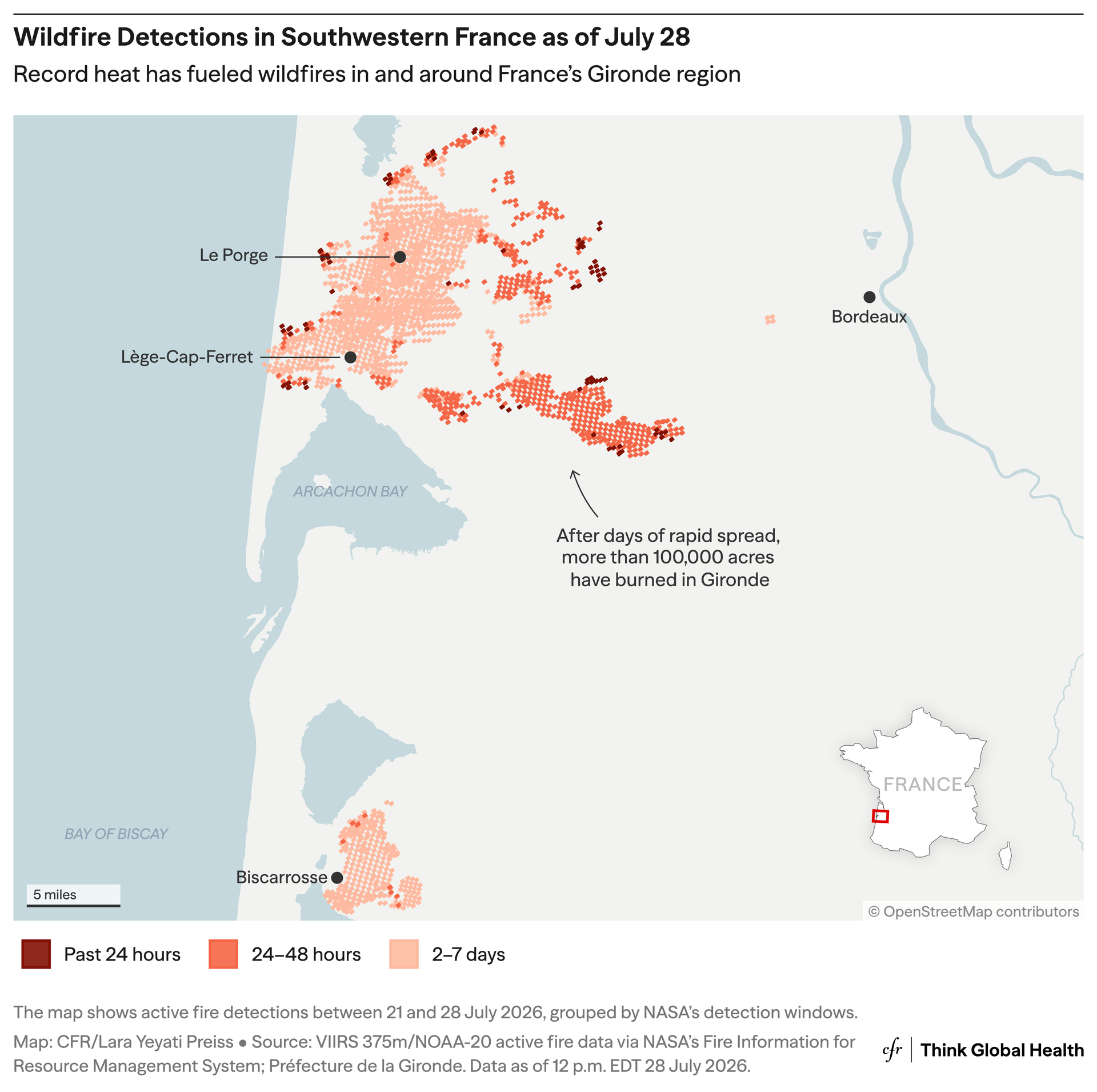
Across the globe in Western Europe, a heat wave is shattering temperature records and fueling deadly wildfires in France and Spain. To wrap up, Michael Brauer, affiliate professor at the University of Washington’s Institute for Health Metrics and Evaluation, and Rémy Slama, an environmental health professor at Ecole Normale Supérieure Paris, illustrate how—by renovating buildings, implementing workplace protection rules, and strengthening efforts to address wildfire risks— France’s “playbook” for preventing deaths during heat waves offers a blueprint for other countries experiencing extreme temperatures.
Until next week!—Caroline Kantis, Associate Editor