| | In today’s edition: Regional economies recovered in July, Türkiye aims to compete with Gulf finance ͏ ͏ ͏ ͏ ͏ ͏ |
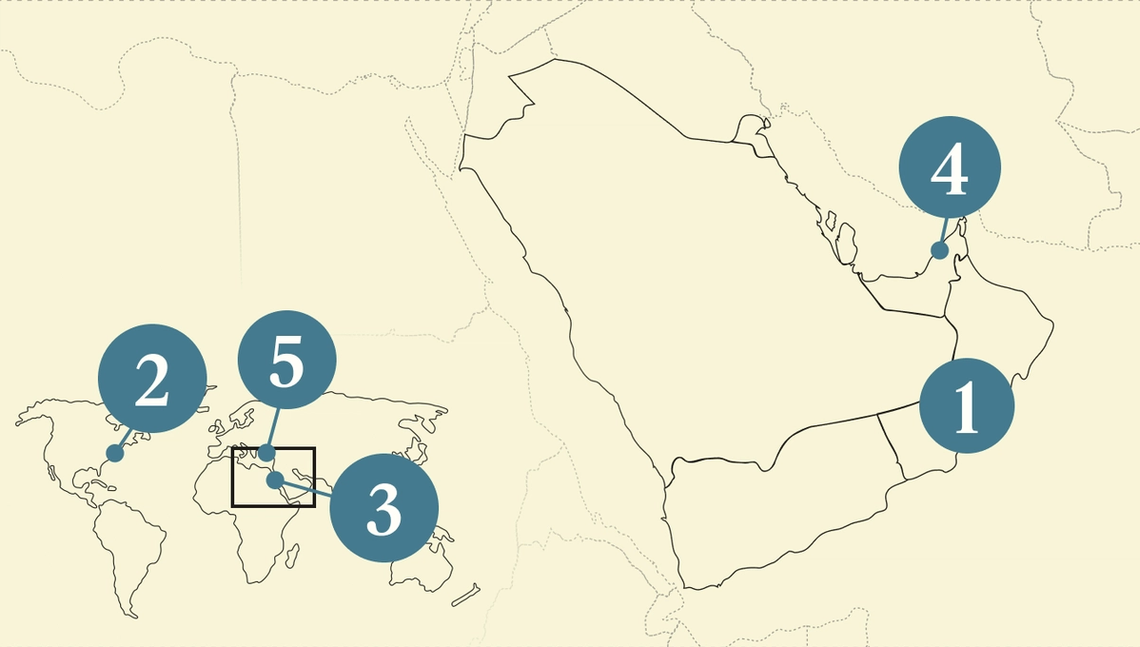
| |  Riyadh Riyadh |  Washington, DC Washington, DC | Istanbul |
 | Gulf |  |
| |
|
 - Oil falls on positive talks
- Saudi-US nuclear divisions
- Gulf non-oil sector rebound
- Dubai grows during war
- Türkiye targets rich expats
 Separation anxiety: Saudi’s global lead in helping conjoined twins. |
|
Fresh diplomatic push for Iran and US |
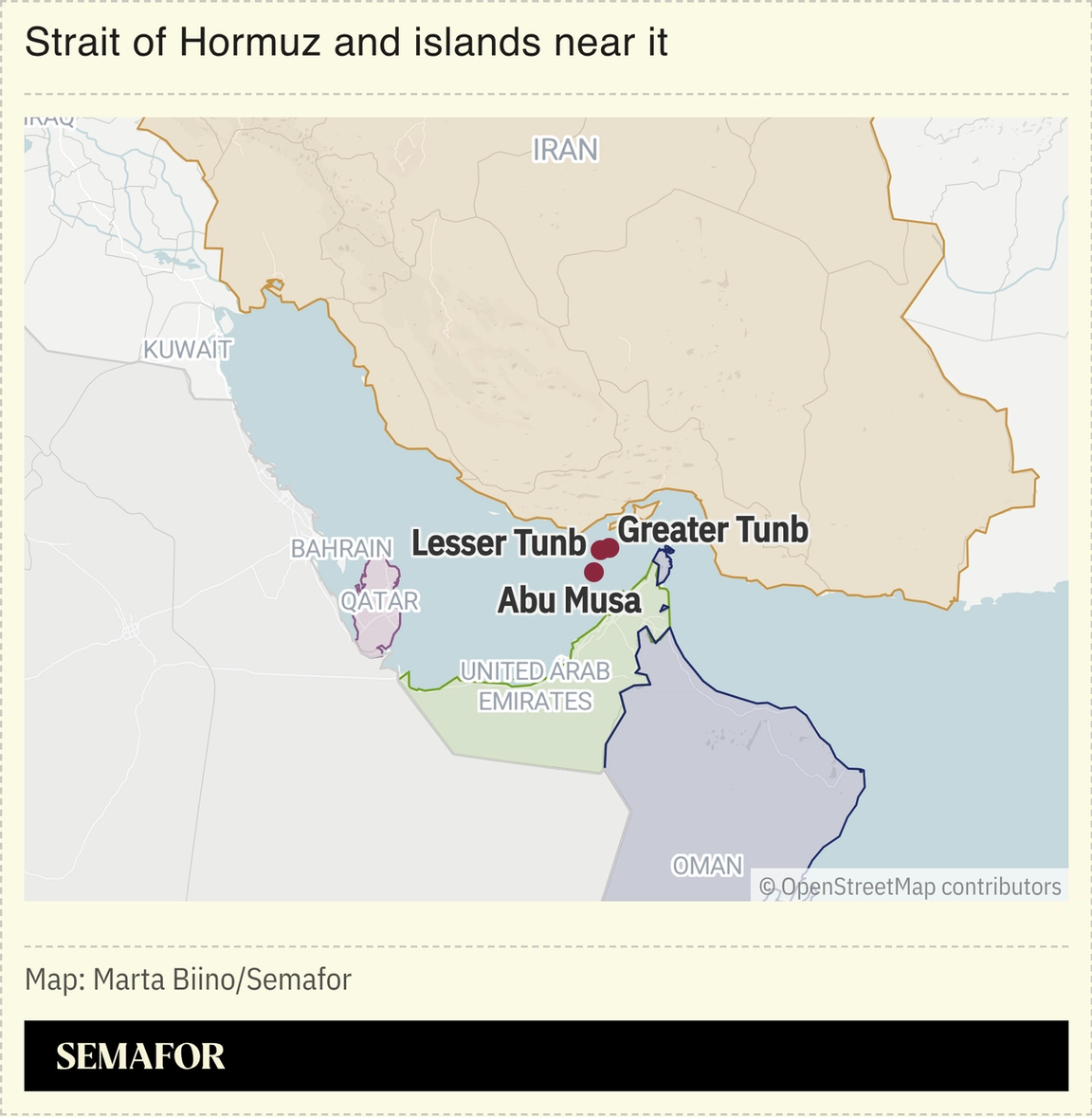 Iran and the US are both talking up the prospects of a new agreement, which is likely to focus on ensuring safe passage through the Strait of Hormuz and restoring a ceasefire. US President Trump said there had been “very good discussions” on Tuesday, while an Iranian official said its talks with Oman on Hormuz were progressing positively. Oman’s mediation, supported by Pakistan and Qatar, appears set to deliver another interim deal rather than a full resolution. If it is to prove sustainable, it will need to be far more detailed than the June agreement, which quickly unraveled. The US is running low on long-range precision missiles, according to Reuters, which may also be playing into Washington’s desire to halt hostilities. Gulf oil flows are at around a third of their prewar levels. Nevertheless, the renewed emphasis on diplomacy is easing supply concerns, pushing crude prices below $80 a barrel. |
|
Debate over US-Saudi nuclear deal |
 Kevin Lamarque/Reuters Kevin Lamarque/ReutersThe US-Saudi civilian nuclear agreement is facing criticism from all sides. By making the deal contingent on Saudi Arabia joining the Abraham Accords, US President Donald Trump risks pushing Riyadh toward China, which already cooperates with the kingdom on nuclear research and is unlikely to impose many conditions, Ali Shihabi, a Saudi commentator close to the royal court, wrote in The Washington Post. The kingdom still prefers an American partnership, he added. In addition to opposition in the US Congress, the deal has raised concerns in Israel. Allowing Saudi to enrich uranium — which, under the agreement, would be overseen by the US and only proceed after extensive study — could encourage Egypt, Türkiye, and the UAE to seek similar capabilities, eroding nonproliferation norms, Israeli academic Or Rabinowitz wrote in Haaretz. It could also weaken Washington’s stance on Iran’s nuclear ambitions if other countries in the region can make nuclear fuel. |
|
Firms dig out from wartime lows |
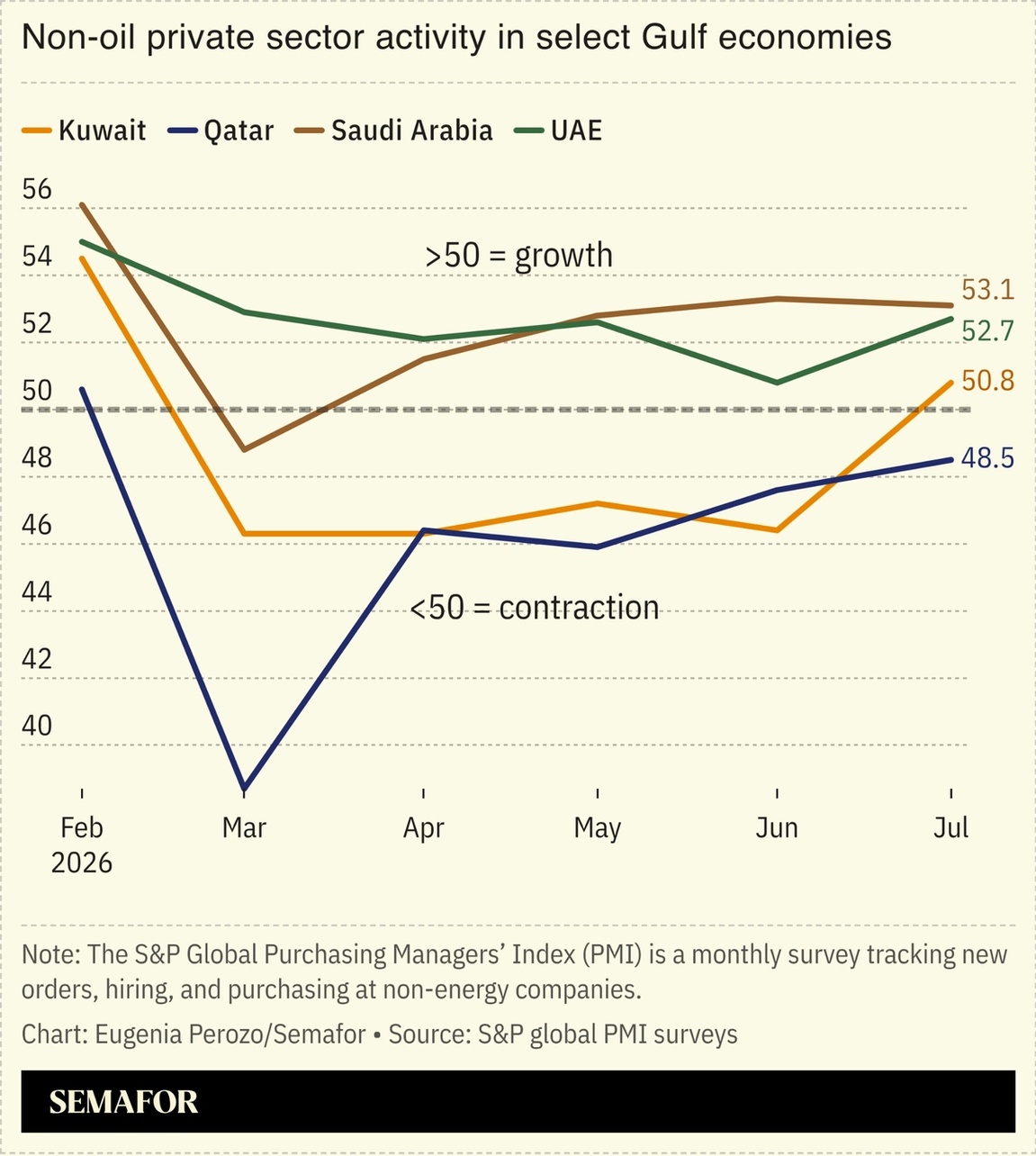 Non-oil business activity in some of the Gulf’s largest economies rebounded in July, according to S&P Global’s latest surveys. The snapshot of firms’ output, which includes measures like new orders, buying, and hiring, indicated that, as hostilities eased at the start of the month, firms were fast to recover. But renewed Iranian and US strikes and slower traffic through the Strait of Hormuz later in July may undermine the chances of a sustained rebound into August, according to S&P. Kuwait returned to growth for the first time since the war began, while the UAE recovered from a five-year low in June on renewed export demand and a return to hiring. Saudi Arabia notched a fourth straight month of business expansion, even as confidence slipped on rising costs. Only Qatar continued to contract, although there were signs even there that the impact of the war was easing, according to S&P. All four economies remain below pre-war levels, hampered by delivery delays, rising costs, and softer export demand. Just 7% of UAE firms and 8% of Saudi firms expect to grow over the coming year. — Kelsey Warner |
|
Dubai population tops prewar peak |
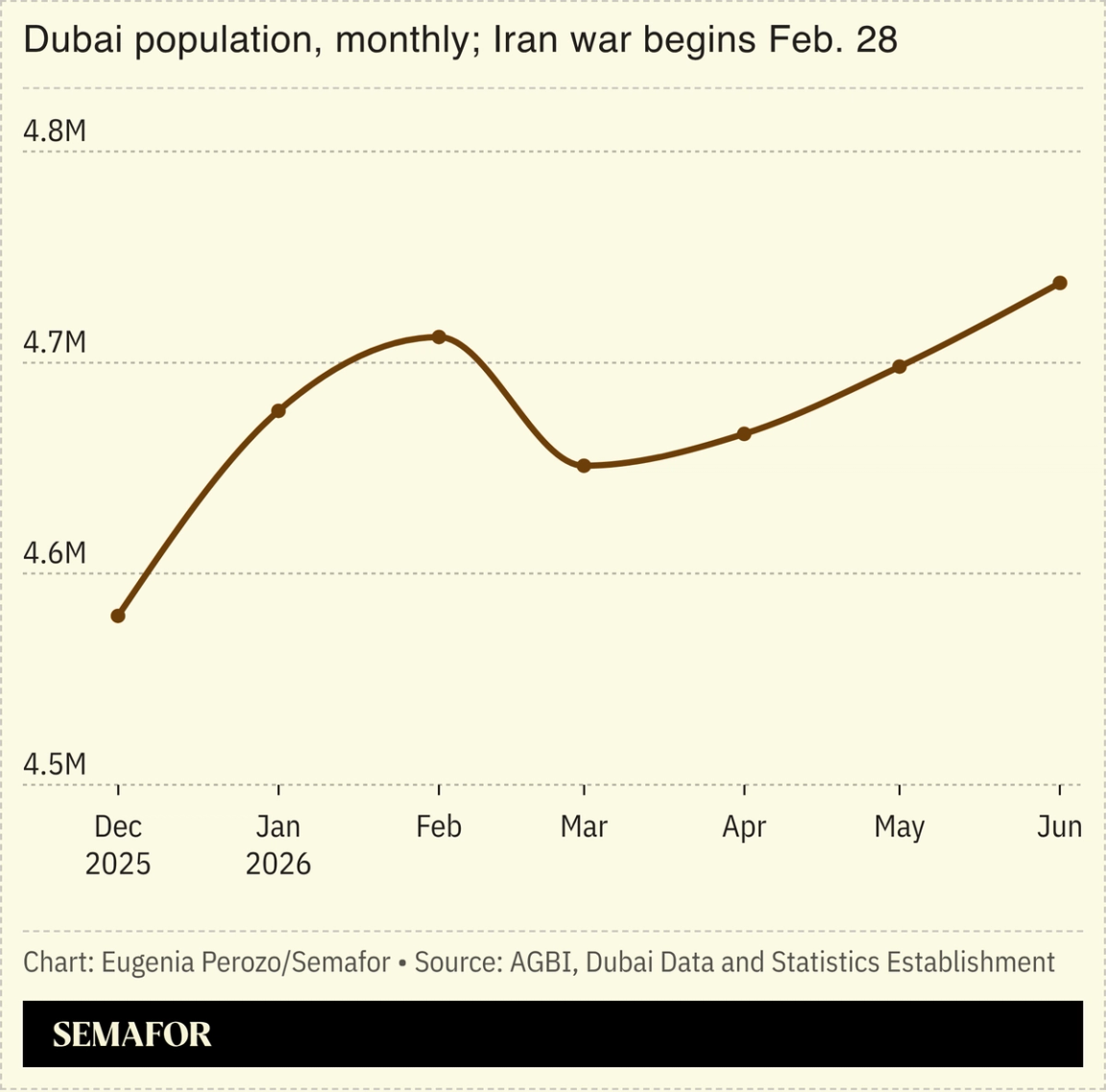 Dubai’s population has surpassed its prewar level, countering the narrative that the Iran conflict would drive out the city’s expats. After an initial exodus — and a brief windfall for armored vehicle escorts and private jet operators — the loss of 61,000 residents was quickly reversed. The population reached a record 4.73 million last month, according to AGBI. Population growth underpins Dubai’s real estate market and its wider economy: Off-plan sales, rental yields, retail, and infrastructure developments all depend on people choosing to settle in the city. A prolonged outflow would have pressured valuations in one of the world’s hottest property markets. Instead, the rapid rebound suggests confidence that Dubai’s appeal as a business hub has endured, despite five months of conflict.
|
|
Türkiye targets wealthy expats |
 Umit Bektas/Reuters Umit Bektas/ReutersTürkiye is honing its pitch to be an international financial center, unveiling tax breaks to attract bankers and investors as the Iran war dims the luster of Gulf hubs. The incentives include minimal inheritance taxes, up to 20 years of overseas income exempt from local tax, and, for wealthy Turkish citizens living abroad, an amnesty for undeclared overseas assets, Bloomberg reported. Investors can also qualify for a Turkish passport by buying at least $400,000 of real estate — an option unavailable in any Gulf country. The measures reinforce President Recep Tayyip Erdoğan’s ambition to attract foreign companies and turn the country into a trade and financial hub. Istanbul in particular offers attractive lifestyle, education, and healthcare options for mobile wealthy individuals. Still, the country can’t match its Gulf rivals on sovereign wealth, zero income tax, business-friendly regulations, and abundant energy resources. |
|
 Checking in- Marriott’s revenue per available room in the Middle East — home to almost 4% of the hotel group’s rooms — declined 43% in the second quarter. Marriott executives expect a more significant impact on earnings in the fourth quarter, when almost a third of the company’s annual revenue from the region is generated. — The Wall Street Journal
- Wynn Resorts said its new hotel and casino in Ras Al Khaimah will now open in September 2027, after being delayed due to supply chain disruptions caused by the Iran war. The CEO told analysts that the company “didn’t underwrite a region with zero geopolitical risk.” — Bloomberg
Deals- The PIF-led deal to acquire US video game-maker EA has closed. The $55 billion leveraged buyout is among the largest ever, and includes Jared Kushner’s Affinity Partners and Silver Lake. Analysts expect major cost-cutting measures to service the debt that made the transaction possible.
Trade- DP World signed an agreement with Kenya’s GulfCap Africa to develop the 222-hectare Mombasa Industrial Park, a special economic zone near the Port of Mombasa. The first phase covers 40 hectares.
Real estate- Demand in Riyadh’s office market is holding steady through the war, with prime rents up 3% in the second quarter and Grade A space near full occupancy. The value of residential transactions fell 27%, however, as buyers shifted toward smaller, cheaper homes. — Arab News
|
|
 Courtesy of Saudi Press Agency Courtesy of Saudi Press AgencyTwo 10-month-old Fijian girls arrived in Riyadh at the end of July on what could be a life-changing journey. Jesibel and Desisia are conjoined from below the sternum to the pelvis; they have been admitted to the King Abdullah Specialist Children’s Hospital, where a team will assess the feasibility of separation surgery. The kingdom has built a global reputation in the specialty through the Saudi Conjoined Twins Program, which has operated since 1990. It has separated 72 pairs of siblings from 28 countries across five continents. Already this year, surgeons parted twins from Morocco, the Philippines, Saudi Arabia, Somalia, and Tanzania. Operations are long and complex, often involving dozens of specialists and nursing staff. The Saudi government picks up the medical bill, as well as families’ travel and accommodation costs. The benefits can flow for decades: In February, Polish twins Olga and Daria visited Riyadh 21 years after undergoing successful separation surgery there. — Dominic Dudley |
|
|


