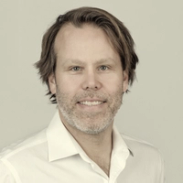
Toby Melville/Reuters Toby Melville/ReutersGoogle DeepMind CEO Demis Hassabis’ departure today from the top job at the company he founded in 2010 and sold to Google in 2014 was at least a year in the making, said two people familiar with his thinking. Hassabis had been drifting away from the day-to-day responsibilities of running the company’s Gemini AI models and its consumer AI strategy, said the people, increasingly shifting them to Koray Kavukcuoglu, the company’s chief AI architect. Hassabis wasn’t pushed out against his will, said both people. Rather, he struggled to get satisfaction out of being in the role of a tech executive, rather than a visionary scientist. Hassabis, who won a Nobel Prize in 2024, has recently been his most animated when talking about Isomorphic Labs, Google’s biotech spinout that he runs. His passions lie in using AI to solve scientific puzzles, like curing diseases and discovering new materials, and in ensuring that AI doesn’t accidentally cause catastrophic harm to humanity. But the move, which coincided with the departure of chief scientist Jeff Dean, sent Google’s stock price down 4% Wednesday, and raised doubts about the company’s standing in the fast-paced AI race. Its AI models are roughly six months behind the frontier on coding ability, where most of the compute power is currently being consumed. In its recent earnings on July 22, it reported revenue up 24% to $120 billion, and cloud revenue up 82%. But its capital expenditures, like just about every large tech company, are at record highs and pushed its free cash flow into negative territory for the first time since its 2004 IPO. The feeling at Google, according to one executive, is that the management change will help accelerate the development of AI, rather than hold it back. While Hassabis had become the face of the company’s AI efforts, he wasn’t focused on the part of the company most associated with its standing in the race. Dean has been a key contributor to Google’s underlying technology for more than two decades, and his departure was received with a sense of sadness by people at the company, including CEO Sundar Pichai, said a person familiar with the matter. But unlike Hassabis, Dean had few direct reports and wasn’t in charge of a major division. “We are at a dynamic moment with so much opportunity ahead,” Pichai wrote in a post on Google’s blog. “With today’s changes we’re going to keep driving our momentum.” I’ve interviewed Hassabis a handful of times since the ChatGPT moment. My most recent conversation with him was in June, and it was clear something had shifted. |