Thanks for reading The Briefing, our nightly column where we break down the day’s news. If you like what you see, I encourage you to subscribe to our reporting here.
Greetings!
A flood of June-quarter earnings updates—from the likes of Uber, DoorDash, Shopify and Disney—was interrupted on Thursday by Google’s announcement that its AI guru, Google DeepMind CEO Demis Hassabis, had been elevated to chair of the AI unit and chief scientist of Google’s parent company, Alphabet. That news coincided with the revelation that several others from DeepMind, including Chief Scientist Jeff Dean, were leaving to start their own firm. Some interpreted the shake-ups as bad news for Google, whose stock fell 4%.
In reality, today’s news doesn’t mean much. Hassabis wasn’t the one running DeepMind on a day-to-day basis. That was really Koray Kavukcuoglu, DeepMind's Chief Technology Officer, who is now formally taking the reins of Google DeepMind. (For more on Kavukcuoglu, see this profile we published a year ago.) Hassabis, in contrast, is the public face of Google DeepMind as well as a visionary scientist, roles he will continue to perform (he’s a Nobel Prize winner, don’t forget). As for Dean, my colleague Erin Woo tells me the chatter internally is that Dean had become less central to Google’s Gemini efforts, even if he remains revered by employees.
The real question about today’s shake-up is whether it changes the list of possible successors to Sundar Pichai, CEO of both Google and Alphabet. Hassabis has been on that list—at least in the minds of smart outsiders—as has Google Cloud chief Thomas Kurian. You might say that if Hassabis prefers the role of scientist to that of divisional CEO, he’d hardly want to be Alphabet’s CEO. He will continue to run Isomorphic Labs, Alphabet’s drug discovery unit, but that’s consistent with the idea that he wants to be a scientist. In other words, today’s news is good for Kurian’s chances.
That said, the question of Pichai’s successor isn’t one that has to be decided any time soon. Pichai is riding high right now. While he has lately faced investor pressure on Google’s aggressive capital expenditure plans, and questions about its latest AI models have circulated, those are short-term quibbles. Stepping back, Pichai has answered his critics by demonstrating that Google can be a leader in AI technology. He’s also rebutted worries that AI would undermine its search cash cow, and meantime cloud is soaring. Pichai is in his early 50s, which means he could be in the job for years to come.
But company boards always need options. Some might argue that Hassabis could still be in the running given that the chief of a company as big as Google doesn’t necessarily make daily operational decisions. The CEO’s job is to plot the company’s course for the future—to ensure it has a future. But the CEO still has to get their hands dirty in operational decisions. Other parts of the job are not exactly fun—remember Pichai’s appearance before Congress a few years ago? For someone who’s more interested in “actively shaping the future” of AI, as Pichai said of Hassabis today, the CEO job is likely not in his future. Maybe he wants to win a second Nobel Prize instead.
Figma’s Slump
Uh-oh. Shares of design firm Figma dropped 15% in after-hours trading on Wednesday, after the company projected a sharp slowdown in revenue growth and a lower profit margin for the third quarter and announced that a couple of longtime executives were leaving.
After reporting 48% growth in the second quarter, 2 percentage points faster than in the first quarter, Figma projected growth of 36% for the third quarter. That’s still strong, but a 12 percentage point slowdown is not to be ignored—particularly at a time when AI-fueled competitors are appearing everywhere (including AI powerhouses like Anthropic). Moreover, Figma projected an operating profit margin of 9% for the full year, compared to 13% for the first six months of the year.
Figma’s explanation focused on the projected profit margin: The company is investing. It has created new products it is still testing and isn’t requiring customers to spend money on. So Figma will have to see how those products mature before it makes them “generally available.” Investors weren’t persuaded.
In Other News
• Shopify stock jumped 18% on Wednesday morning after the e-commerce software service reported better than projected 34% revenue growth for the second quarter.
• Walt Disney Co.’s entertainment streaming service grew 11% in the June quarter, the company reported Wednesday, just a couple of percentage points behind industry leader Netflix. But Disney’s results showed that growth is coming almost entirely from the subscription side rather than advertising, a sign of how competitive the streaming ad market has become.
• Uber CEO Dara Khosrowshahi said the company expects to invest $10 billion in “the coming years” to help pay for adding self-driving cars to its service, both through investments in autonomous vehicle firms and expanding infrastructure for autonomous vehicles such as managing fleets of cars. Uber also reported 12% higher revenue in the second quarter as the volume of its business in both delivery and ride hailing surged.
• DoorDash reported 36% higher revenue for the second quarter, with the growth rate boosted 12 percentage points by its acquisition last fall of European firm Deliveroo.
• Meta Platforms unveiled a new coding model, Muse Code (beta), on Wednesday alongside its latest AI model, Muse Spark 1.2.
• The Trump administration hosted tech companies including OpenAI, Anthropic and Google at the White House on Tuesday to brief them on its new voluntary AI framework, created as part of an early June executive order (more here).
Today on The Information’s TITV
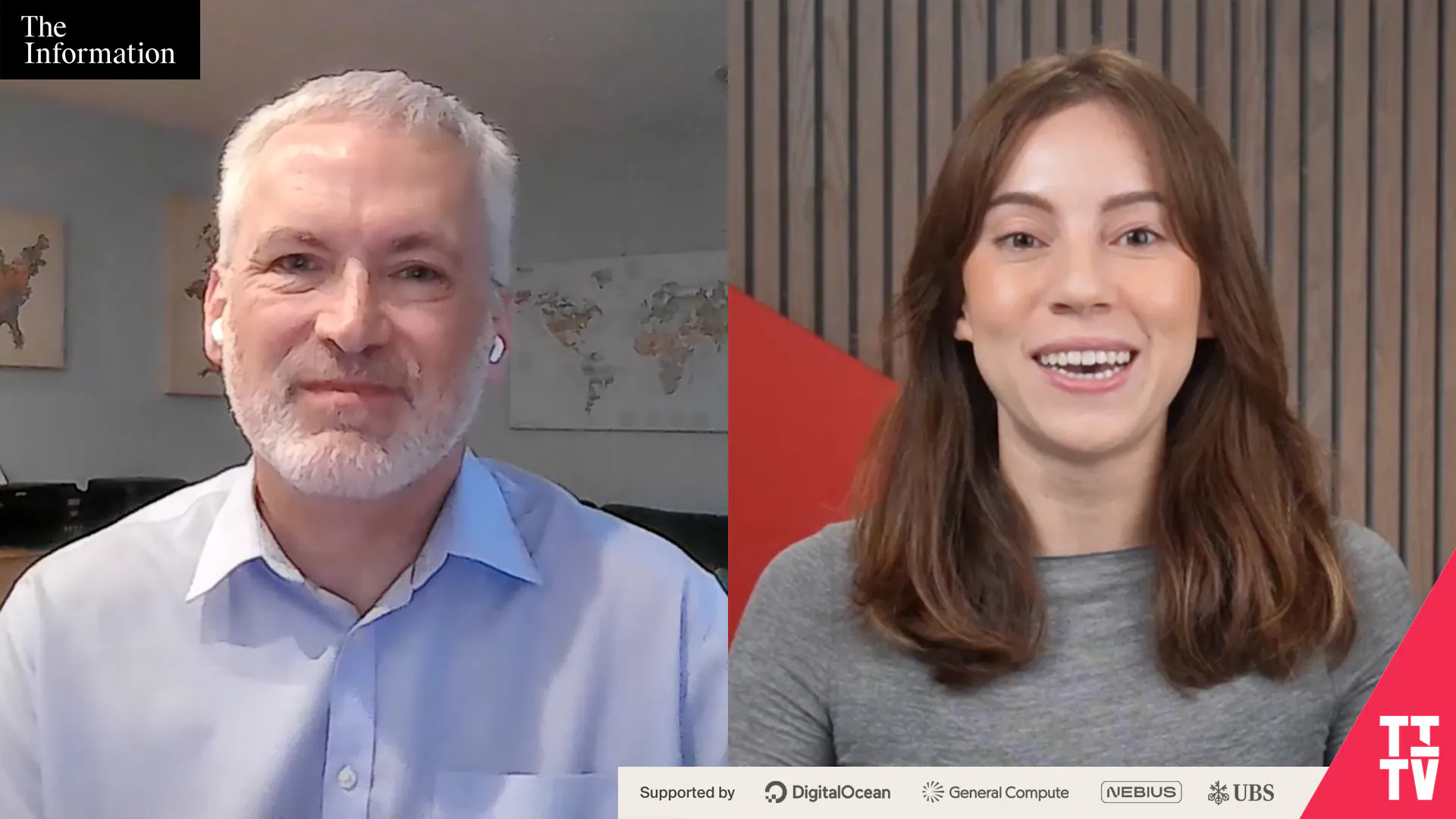
Check out today’s episode of TITV in which we discuss SpaceX earnings and the company’s ambitious plans for Starlink Mobile.
Recommended Newsletter
Start your day with Applied AI, the newsletter from The Information that uncovers how leading businesses are leveraging AI to automate tasks across the board. Subscribe now for free to get it delivered straight to your inbox twice a week.
Join us to explore the real-world shifts, new architectures, and enterprise strategies defining the next era of AI. Secure your spot today to hear directly from top minds at Google DeepMind, OpenAI, Atlassian, and more.
Tickets on sale now: The Information returns to Napa Valley October 27–28 to convene senior women across tech, media, and finance. Join us for two days of intimate, candid conversations with the leaders navigating today’s global shifts.