| | In today’s edition: An expanding regional alliance, a pattern of escalation in Yemen, and ADNOC Gas ͏ ͏ ͏ ͏ ͏ ͏ |
| |  | Gulf |  |
| |
|
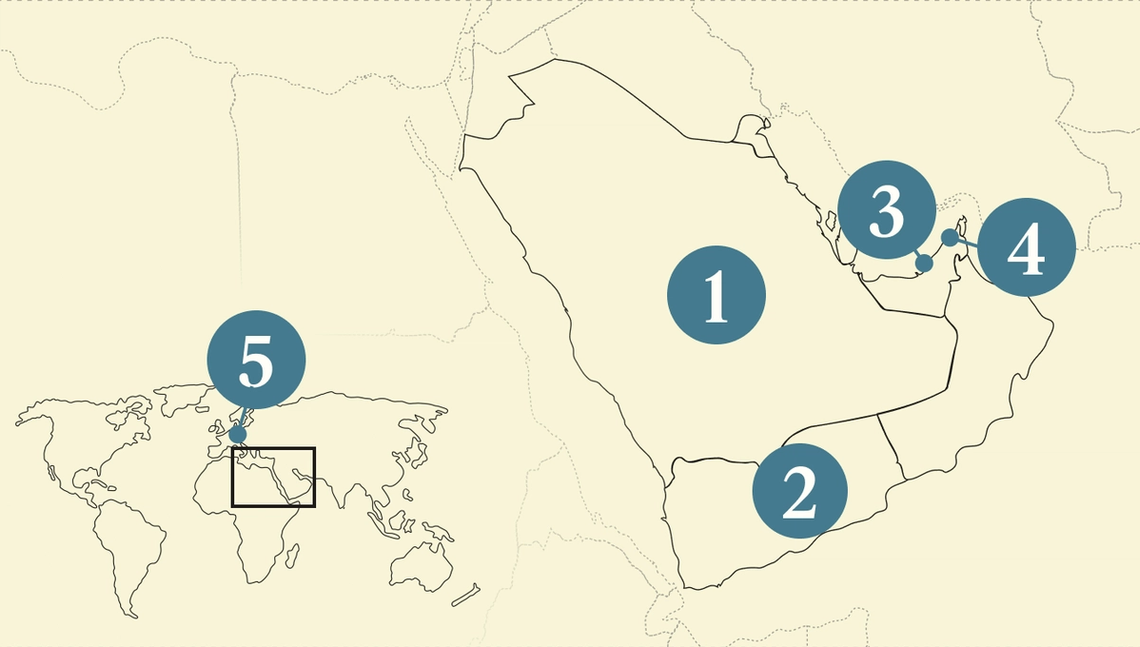 - Mecca pact sinks in
- Escalation in Yemen
- ADNOC’s gas expansion
- Emaar’s mixed results
- DP World’s Eurotrip
 Counting canines in the UAE. |
|
Mecca defense pact may grow |
 Akhtar Soomro/Reuters Akhtar Soomro/ReutersHopes for an end to the Strait of Hormuz crisis clouded over the weekend as Iran issued steep demands and attacked a tanker owned by Abu Dhabi’s ADNOC. In the absence of a peace deal, regional powers are focusing on defense. Turkish Foreign Minister Hakan Fidan said Egypt would likely join the Mecca pact, the security deal between Saudi Arabia, Pakistan, and Türkiye announced on Friday, while Pakistan said the accord was open to any regional state willing to uphold its principles. Iran dismissed it as a “paper agreement” that would not keep Saudi Arabia safe. The agreement is viewed by many analysts as a recognition that the region can no longer solely rely on Washington for security. Months of US strikes have failed to force change inside Iran, and President Donald Trump now says he would rather wait for economic pressure to work than push for a deal, telling Axios: “We are low-keying it.” Tehran is waging its own economic campaign, by dictating terms for reopening Hormuz. — Ed Clowes |
|
Yemen conflict risks reigniting |
 Stringer/Reuters Stringer/ReutersThe risk of the Yemen war fully reigniting is growing, following a series of strikes by the Iran-backed Houthis on targets inside the country and across the border in Saudi Arabia. The Houthis fired on the southern Saudi region of Najran last week and on Saudi Aramco’s Jazan refinery on Sunday. Over the same period, they launched dozens of missiles and drones at what it said were military sites in the center and east of Yemen, and on the Red Sea port of Mokha. The Saudi-backed, internationally recognized government of Yemen said it had retaliated. Dozens of people have been killed in these strikes, and both sides risk falling into a pattern of escalation. The 12-year-old war, largely frozen since 2022, is heating up. The situation in Yemen has its own dynamics independent of the US-Iran war, but the Houthis’ close ties with Iran and attacks on ships are part of a widening, low-intensity conflict. |
|
Domestic market lifts ADNOC Gas |
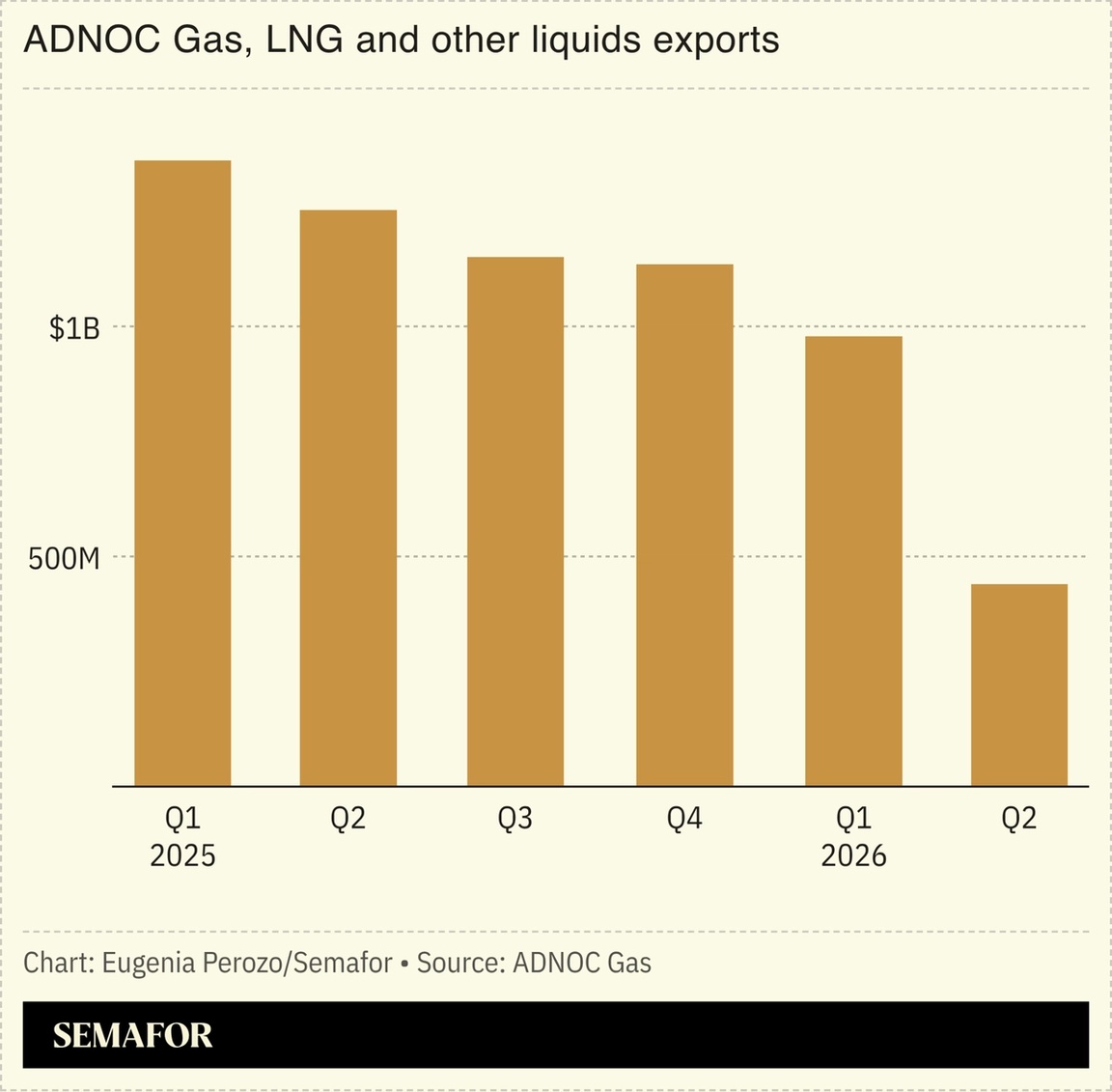 ADNOC Gas hasn’t been able to export much liquefied natural gas or other products since late February, but the company has remained profitable and kept its investment plans intact thanks to domestic demand. The listed unit of Abu Dhabi’s state-owned energy company reported a 52% decline in second-quarter profit to $665 million. The company awarded $8.2 billion in contracts for domestic gas projects, part of $28 billion in planned investment by 2030. Local demand is rising due to population growth, expanding petrochemical and industrial use, and new data centers. The UAE’s departure from OPEC is allowing ADNOC to pump more oil, which also gives it more gas to sell. While the company has remained profitable during the war — and absorbed losses at facilities hit by Iranian strikes — it’s still reliant on passage through the Strait of Hormuz for much of its revenue. ADNOC Gas forecasts full-year earnings of up to $4 billion if normal flows resume through Hormuz by the fourth quarter, down from $5.2 billion last year. — Mohammed Sergie |
|
Dubai developers ride out property slowdown |
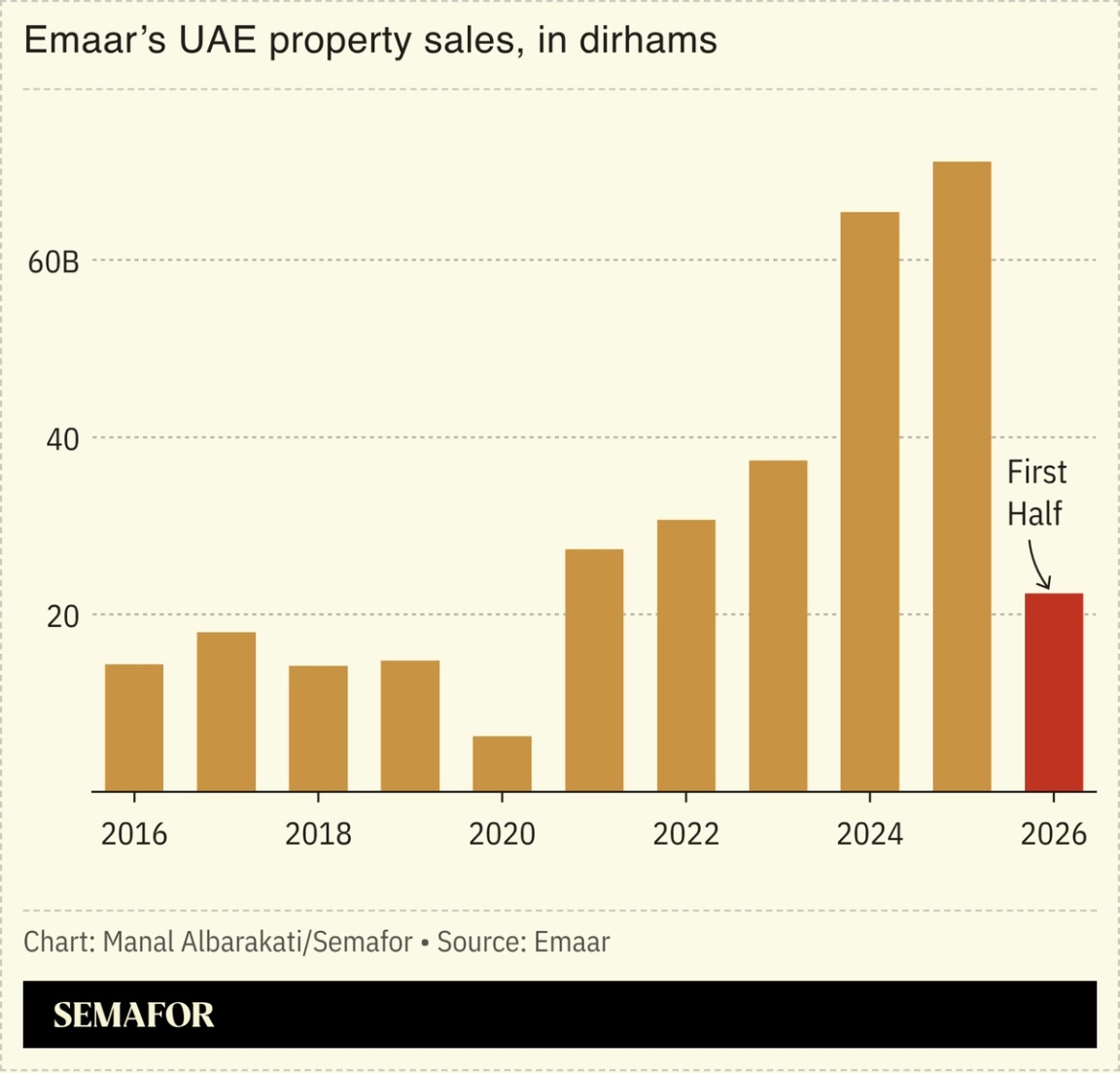 Emaar, whose buildings dot the Dubai skyline, booked a 21% rise in revenue in the first half of the year, despite a slump in new property sales. The developer attributed the 42% dip in new sales to fewer launches compared to last year. Data from the wider market tells a similar story: Sales across Dubai fell by about a third in the second quarter, according to land registry figures, while prices, up almost 70% in the five years before the war, have barely moved, with sellers holding out rather than cutting. Dubai’s property market has broken before: Prices halved after the 2008 crash and fell again from 2014 to 2020. Five months into the US-Iran war, activity has slowed, but prices have remained more stable. Still, the pressure on real estate developers is not just a matter of trying to convince wary buyers. Arada, co-founded by a son of Saudi billionaire Prince Alwaleed bin Talal, blamed wartime delays to building material deliveries for a 29% drop in earnings. — Manal Albarakati |
|
DP World in Western Europe push |
 Yves Herman/Reuters Yves Herman/ReutersDP World is expanding in Western Europe, as demand grows for specialized warehousing and more routes during a fragile time for global supply chains. The Dubai-owned logistics giant plans to build a logistics hub in the Port of Antwerp, set to cost up to €100 million ($116 million), focused on pharmaceuticals and fresh produce. DP World is also acquiring six warehouses from Connecticut-based GXO, which serve supermarket chains in England and Northern Ireland. The Iran war has put DP World on the back foot at home, with activity at Jebel Ali port in Dubai plunging some 90% after the Strait of Hormuz closed, the Financial Times reported. To reduce its dependence on the waterway, the company is planning to develop two terminals on the UAE’s east coast. |
|
 Crime- The US sanctioned a Dubai-based cryptocurrency exchange that was allegedly at the core of a $4 billion Iranian network used to evade sanctions. The firm wasn’t licensed by Dubai’s virtual assets regulator, and one of its owners was deported from the UAE in April. — Reuters
- Suspected Irish organized crime boss Daniel Kinahan was extradited from the UAE to Ireland on charges that he directed a criminal enterprise between 2015 and 2017. — RTE
Defense- The US Army Corps of Engineers awarded Aecom and Black & Veatch a contract to design air defense infrastructure in Kuwait. It is the latest in a run of US-backed defense awards in the country this year, following numerous Iranian strikes on civilian and military targets. — MEED
Energy- Saudi crude exports to the US fell to zero in July, the first full month without American imports from the kingdom since 1985. The US imported around 800,000 barrels a day of oil from Saudi Arabia earlier this year. Venezuela appears to be benefitting from the drop: American refiners imported 500,000 more barrels a day of Venezuelan crude in July than in January. — Bloomberg
- An oil tanker believed to be part of Russia’s “shadow fleet” is leaking crude off Oman’s coast, where it has been grounded for several weeks. Satellite imagery shows a spill covering 800 square kilometers (309 square miles). — AP
|
|
 Rula Rouhana/Reuters Rula Rouhana/ReutersSoaring pet ownership has left Abu Dhabi trying to get a tighter leash on the issue. Its solution: mandatory pet registration. A grace period for databasing dachshunds and dalmatians ended earlier this year and failure to register a prize pooch with the Department of Municipalities and Transport can now cost owners 1,000 dirhams ($272) per animal. The UAE’s pet population increased by almost 60% between 2014 and 2024 to 938,000, according to Euromonitor. Changing attitudes around pet ownership have been a windfall for companies in the pet supplies business. But authorities say patchy data has made it hard to plan vaccination drives and manage the huge stray population. Registration itself is billed as free, but is available only from vets who charge for it. Four Abu Dhabi clinics contacted by Semafor quoted prices ranging from $25 to $68. — Ed Clowes |
|
|


