|
|
|
|
Good morning. After days of intense negotiations, the United States has delayed its 50-per-cent tariffs on some Canadian goods for three days in order to finalize a trade deal. Few details have been released, but let’s dig into what we know so far. |
|
|
|
|
|
|
|
|
|
|
|
|
|
|
|
A truck passes over the Peace Bridge between Canada and the United States, in Fort Erie, Ont., on Tuesday. COLE BURSTON/AFP/Getty Images
|
|
|
|
|
|
|
|
|
|
|
|
|
|
|
|
|
|
|
|
|
|
|
Trump revealed few details, but said that 50-per-cent tariffs – which were set to take effect at 12:01 a.m. ET on Wednesday, and affect some US$20-billion of Canadian goods – would be delayed for three days, in order for both countries to hammer out the final terms of a deal. |
|
|
|
|
He did, however, tease one thing that might be in it: “The great Keystone XL Pipeline, long ago killed by Sleepy Joe Biden, may be awoken from the grave!” |
|
|
|
|
First proposed in 2008, the XL project was shelved in 2021 when then-president Joe Biden revoked a key permit for the pipeline, which had been subject to years of debate and protest. Recently, however, there have been efforts to revive Keystone XL in a different form, including by Calgary’s South Bow Corp. |
|
|
|
|
When these 50-per-cent tariffs were first proposed on July 20, the White House cited discrimination against U.S. dairy, alcoholic beverages and autos. |
|
|
|
|
Late Tuesday, Trump said in a White House proclamation that “Canada has expressed a commitment to remove the discriminations or unreasonable and unequal impositions at issue.” |
|
|
|
|
|
|
|
|
Effectively, Trump is suggesting that Canada will drop provincial bans on American booze, broaden access to import licences in the supply-managed dairy sector and drop retaliatory tariffs on U.S.-made autos, as part of a deal that is likely much broader, given briefings of the talks. |
|
|
|
|
If Canada and the U.S. are unable to finalize a deal, then the threatened 50-per-cent tariffs on Canada would take effect at 12:01 a.m. ET on Saturday. |
|
|
|
|
In a post on X, the Office of the U.S. Trade Representative said: “The deal will include comprehensive market access for all American goods, economic security commitments, digital trade alignment” and other provisions. There was no elaboration on what that could possibly mean. |
|
|
|
|
While communications from American officials were fairly upbeat – the USTR’s X post included “Congratulations Mr. President” – those from Canada were more reserved. |
|
|
|
|
“Substantial progress has been made, although there is important work still to be done,” Prime Minister Mark Carney said in a statement late Tuesday. “While we continue this work, Canada remains focused on building a stronger, more independent, and more competitive economy at home.” |
|
|
|
|
There are, of course, big questions for the days ahead. |
|
|
|
|
For instance, what sort of relief (if any) is coming to key industrial sectors affected by Section 232 tariffs? And will any tariff reductions include the auto and forestry sectors, or is the focus largely on steel and aluminum? |
|
|
|
|
Is Canada making any defence-related spending commitments? How does energy factor into an agreement? What about critical minerals? |
|
|
|
|
And ultimately, how will Carney sell the deal to Premiers? |
|
|
|
|
Trump loves a deadline – especially one that changes. And Canada has a new deadline to ponder: the end of day Friday. |
|
|
|
|
|
|
|
|
|
|
|
|
|
|
|
|
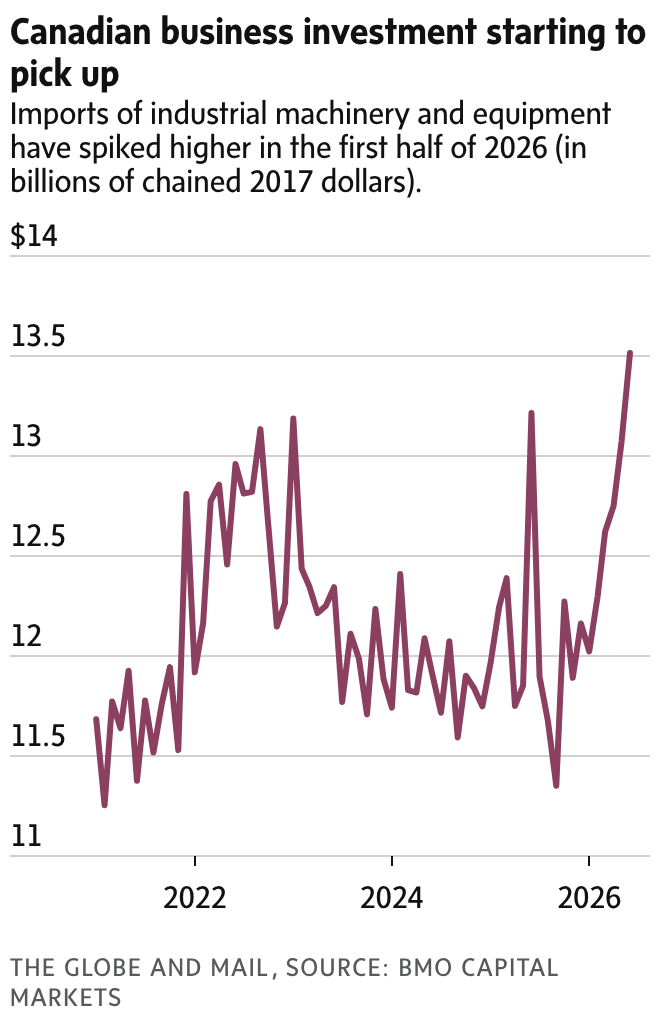
Canadian investment is stirring |
|
|
|
|
|
|
Canadian companies have dramatically underspent their American peers throughout this century, but signs of a turnaround are visible against the backdrop of the trade war. |
|
|
|
|
|
|
|
|
|
|
|
|
|
|
|
|
 |
The Canadian economy is at a hinge moment, where we can leverage everything our workers have learned about manufacturing to build new defensive technologies and capabilities. — Marco Mendicino, former chief of staff to Mark Carney |
|
|
|
|
|
Canadian defence companies are eyeing idle automotive plants and laid-off workers for their expansion plans as vehicle-makers in the country face an uncertain future. |
|
|
|
|
|
|
|
|
|
|
|
|
|
|
|
|
More files we’re following |
|
|