| | In today’s edition: Gulf braces for “economic D-Day,” a startup manufactures drone interceptors in t͏ ͏ ͏ ͏ ͏ ͏ |
| |  Kuwait City Kuwait City |  West Palm Beach West Palm Beach | Buraidah |
 | Gulf |  |
| |
|
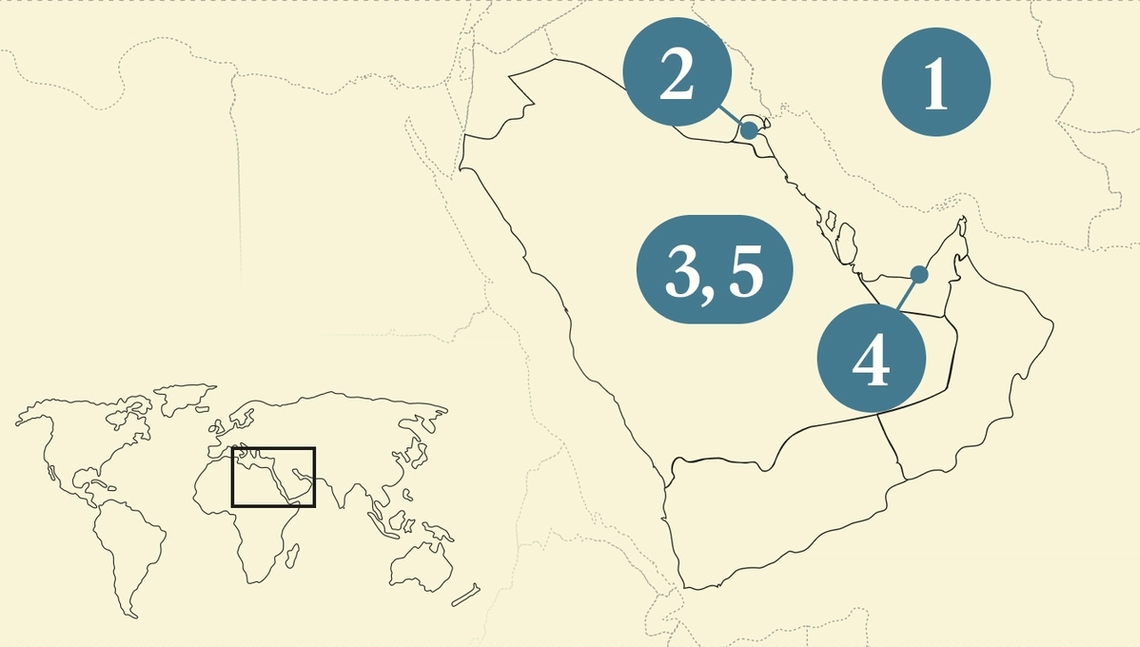 - ‘Economic D-Day’
- Kuwait’s fog of war
- Saudi-backed strait insurance
- UAE-made interceptors
- Dates and falcons draw cash
 MBS closes video game competition in Paris. |
|
US warns of ‘economic D-Day’ |
 Majid Asgaripour/West Asia News Agency/Reuters Majid Asgaripour/West Asia News Agency/ReutersThe US warned of an impending “economic D-Day” against Iran that could envelop some of Washington’s allies and trading partners, such as the Gulf states and China, who have been warned to fall in line. The US Treasury secretary will today unveil a raft of measures against Tehran and its financial and commercial “enablers,” he wrote in the Financial Times. Diplomacy is ostensibly still underway — Pakistan’s leader is due in Iran today, Oman’s foreign minister tomorrow — and Iran’s politicians have called for an end to war with the US. But its powerful security forces are defiant: Iran’s security chief warned Gulf states against joining US efforts, while the Institute for the Study of War noted “there is no indication that economic pressure … has changed [top officials’] anti-concessions position.” |
|
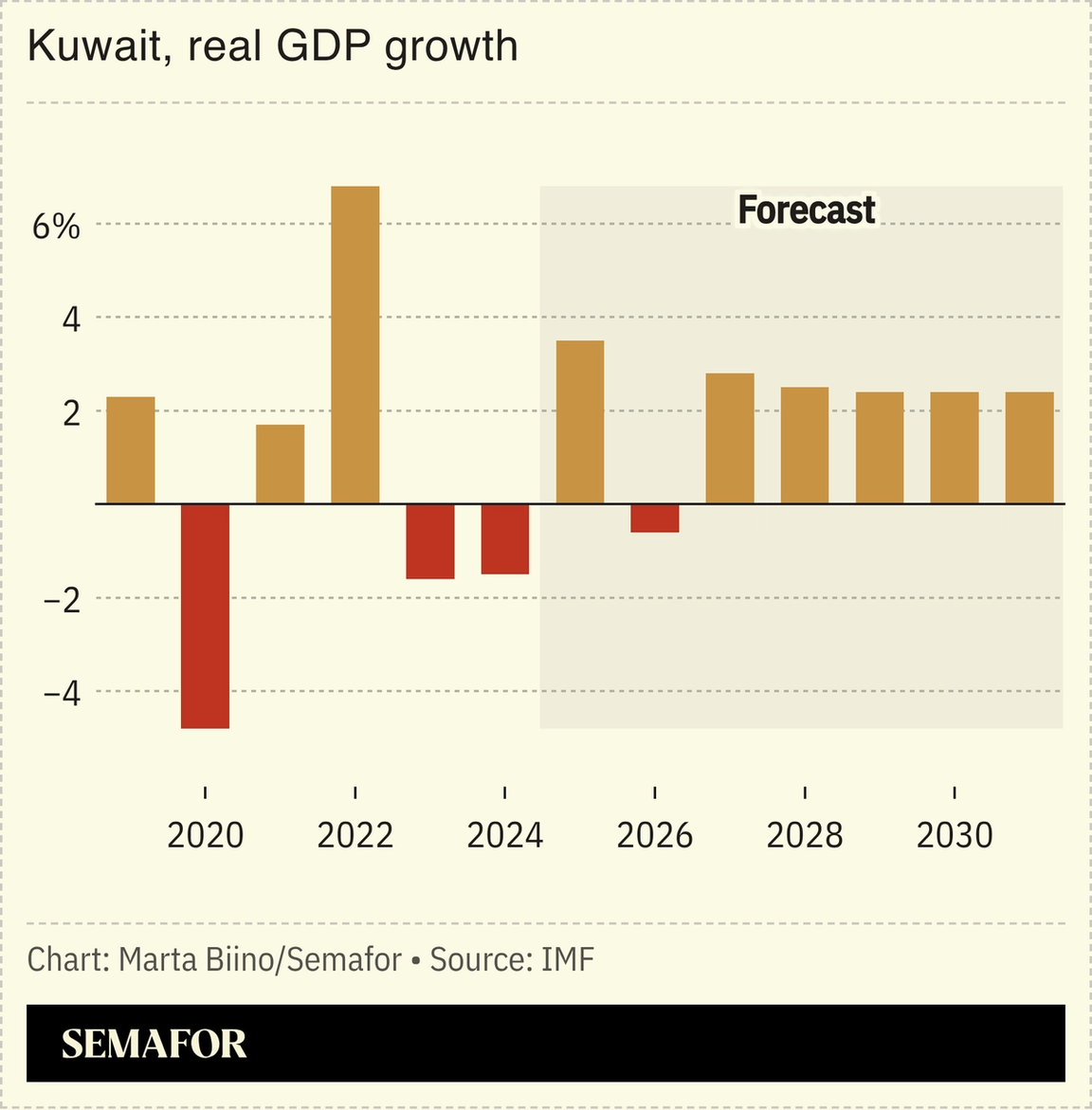 Across the Gulf, the fog of war is heaviest in Kuwait, where Iranian attacks have persisted through the ceasefire, and the country’s oil — still the lifeblood of the economy — remains largely trapped, with few options to bypass the Strait of Hormuz. An anonymous Kuwaiti described for New Lines how the war feels personal in their home country, compared to Saudi Arabia: there, “job opportunities and affordability” preoccupied friends and acquaintances; “Kuwaitis, on the other hand, were much more occupied with the war, the mass citizenship revocation campaign, and the state of politics.” Still, Kuwait’s economy is showing resilience, according to an analyst from the Arab Gulf States Institute, following a handful of positive signs from investors. In July, for example, KKR was among a group of backers of a $16 billion infrastructure deal with the Kuwait Oil Co. (even as its headquarters were shuttered following an Iranian attack), marking the largest foreign direct investment in Kuwait’s history. |
|
Saudi looks to tackle ship insurance |
 Mohammed Benmansour/Reuters Mohammed Benmansour/ReutersSaudi Arabia is considering a plan to establish a new state-backed insurance program for ships in the region as it looks for ways to keep trade flowing. The plan would aim to provide cheaper cover for vessels transiting the Gulf or Red Sea, with as much as 700 million riyals ($186 million) in commercial cover, and additional coverage provided by the Saudi Export-Import Bank, the Financial Times reported. Other Saudi insurers and international firms could also be included. The talks are still at an early stage and may not result in an agreement, the FT said. Shipping traffic through the Strait of Hormuz and the Red Sea remains severely disrupted as the Iran conflict nears the end of its sixth month, and while more oil may be exiting the region than previously thought, higher insurance costs and restricted coverage are impacting trade flows. That’s hitting Gulf economies, which rely on the waterways to export hydrocarbons and import everything from cars and machinery to food and agricultural products. Saudi Arabia has already been forced to reroute oil tankers thousands of miles around Africa to avoid Houthi attacks in the Red Sea, Bloomberg reported. |
|
US firm building antidrone tech in UAE |
 A Powerus drone interceptor. Courtesy of Powerus. A Powerus drone interceptor. Courtesy of Powerus.US-based defense firm Powerus is manufacturing drone interceptors in the UAE, the latest sign of the Gulf looking for new ways to defend itself against Iranian drone attacks. The firm has provided training, components, and software to assemble its Guardian interceptor to an Emirati contractor, The New York Times reported. The UAE facility will make around 30 interceptors a day, with a plan to get up to 100 a day soon. Localization of defense manufacturing has become an urgent priority in the Gulf after the region was pummeled by Iranian drones and missiles in the early months of the war, threatening to exhaust supplies of expensive US-made interceptors. A joint venture between a US defense startup and a Saudi firm is also building a factory near Riyadh to manufacture combat drones modeled on Iran’s Shahed system, Semafor reported in May. |
|
Saudi dates mean business |
 Courtesy of Saudi Press Agency Courtesy of Saudi Press AgencyAlmost every visit to a Saudi household begins the same way, with Arabic coffee and a plate of dates. This month, the world’s largest date carnival opened in Buraidah, a city in Saudi’s central Qassim region. Over 12,000 truckloads have rolled in, and sales passed 98 million riyals ($26 million) in the first 15 days of its 75-day run. Most of what moves is Sukkari, the caramel-sweet variety Qassim’s 11 million palms are known for. The carnival has added a tourist bus, carrying visitors from its main venue through Buraidah’s landmarks with guides narrating the city’s heritage. Meanwhile, in Abu Dhabi, a Bahraini falconer paid 255,000 dirhams ($69,000) for the top bird at the emirate’s annual falcon auction on Sunday; this is a relative bargain, since some have sold for more than a million dollars. |
|
 As AI and emerging technologies reshape the global economy, three billion people remain offline, disconnected from the digital opportunities transforming our world. On Tuesday, September 22 in New York City, The Next 3 Billion will bring together leaders including David Miliband, President and CEO of International Rescue Committee; Dr. Jean Kaseya, Director-General of Africa CDC; Jumoke Oduwole, Minister of Industry, Trade and Investment of Nigeria; Josh Parker, Head of Sustainability, Nvidia; Kara Hurst, Chief Sustainability Officer of Amazon, and more to explore how AI, energy, and global development can expand access, unlock opportunity, and drive inclusive growth across the world’s fastest-growing regions. September 22 | New York City | Delegate Application |
|
 Crypto- Recent police questioning of Binance employees in the UAE is a test of an important relationship between the crypto exchange and the emirates, which has fashioned itself as a hub for digital currencies and investors. — Bloomberg
Defense- Some 1,300 family members of US Navy servicemen and women are in limbo after being evacuated from Bahrain at the start of the war. Officials are still determining the future of the Fifth Fleet, which has been headquartered in Bahrain for over 30 years. — Stars and Stripes
Economy- Qatar cut government department budgets by up to 30% and funding for overseas aid by about 85%. The moves underscore the economic pain wrought by the Iran war as the world’s largest producer of liquefied natural gas has halted production. — Financial Times
Media- The UAE’s media regulator suspended the advertising permit of a resident who called for foreign models to impersonate Emirati women in an Emirati Women’s Day photo shoot. Penalties for content deemed insulting to national identity run to 500,000 dirhams ($136,000) and deportation. — The National
|
|
The Esports World Cup moved from Riyadh to Paris this year, and Crown Prince Mohammed bin Salman followed, watching the final at the Grand Palais alongside French President Emmanuel Macron. The ceremony opened a two-day state visit during which he and Macron are expected to sign deals on energy, transport, and health, and discuss alternative export routes to the blockaded Strait of Hormuz.  Balkis Press/ABACAPRESS.COM Balkis Press/ABACAPRESS.COM
|
|
|


