It's official! Tesla's (TSLA) page for the Solar Roof now redirects to conventional solar panels, as the company pulls the plug on what was once hyped as the next big thing. The Solar Roof, which manufactured custom-made shingles that looked like regular roof tiles, was never able to reach the mass-market scale originally promised. It struggled with pricing, production and installation hurdles, and reported underperformance, while Tesla even settled a class action over changing terms in 2023.
Backdrop: Elon Musk launched the Solar Roof in 2016, just weeks before Tesla executed a controversial $2.6B merger with SolarCity—then the largest residential solar installer in the U.S. SolarCity was folded into Tesla Energy, which produced successful and still dominant products, but the Solar Roof never really went anywhere. At one point, Musk promised 1,000 Solar Roofs per week, but estimates put that number at only a few dozen at its peak, with several thousand in total ever actually built.
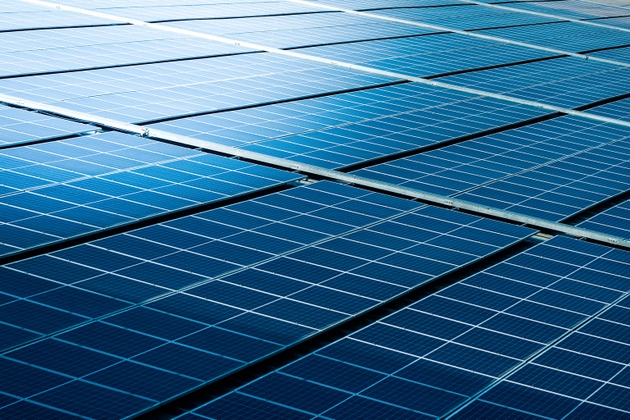
Although Tesla is ditching the product, it is far from giving up on its solar ambitions. In fact, shedding the unprofitable Solar Roof may allow it to double down on other areas of its energy portfolio, like the TSP-420 Solar Panel. Along with the popular Powerwall and Megapacks, solar panels make up Tesla's Energy Segment, which has annual revenues of $13B and makes up nearly a fifth of the company's gross profit. Tesla has even bigger plans for a $10B solar plant in Texas (Project Crystal Sun) that will cover everything from ingots and wafers to cells and assembled modules. Time will tell, but the project is aiming to become the largest solar factory in America, with 100 GW of power per year, supporting nearly 10,000 jobs and production slated for early 2029.
Bulls vs. Bears: Some see the new solar push as a major growth engine that will benefit from a reshoring drive set to bring back manufacturing to the U.S. Others see it as another doomed Tesla (TSLA) project that will have to be subsidized heavily to scale meaningfully, especially given all the Chinese equipment being brought in to make it a reality. While Musk has had major successes like the Model 3 and Y, Falcon 9 and Starlink, he also has his fair share of projects where the chassis was put before the motor. Those include projects like the Boring Company and Hyperloop, as well as failed timelines such as a million robotaxis on the road by 2020, the second-biggest semi-truck brand by 2024, and mass production lines of Optimus robots by 2025. (1 comment)