|
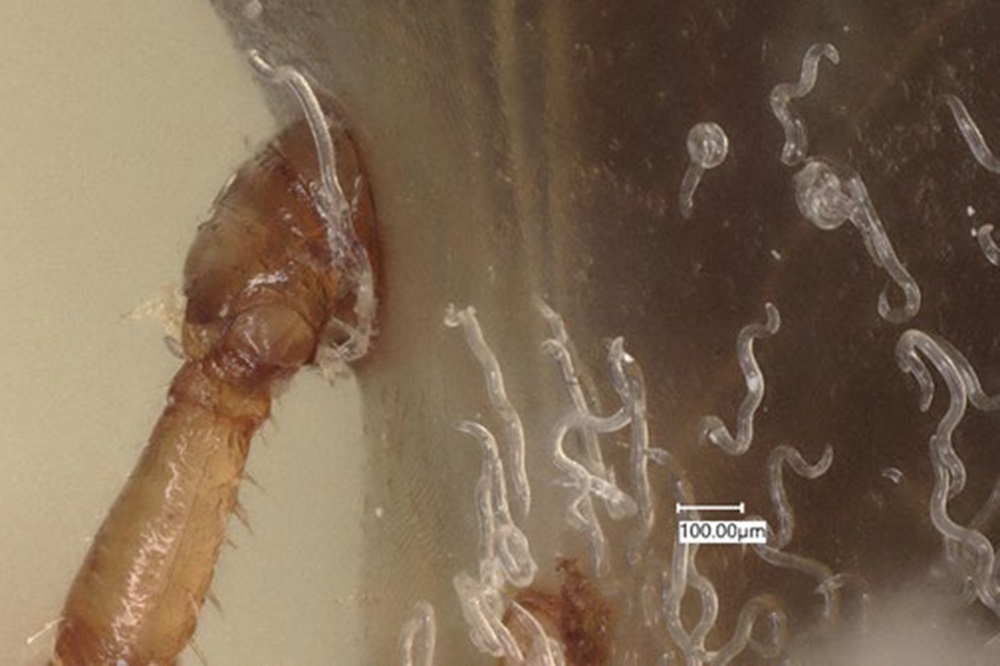
Larval Steinernema riobrave on a cattle fever tick. (Photo by Jason Tidwell).
Can Nematodes Naturally Curb the Spread of Cattle Fever Ticks?
ARS researchers are working on innovative ways to control cattle fever ticks and bovine babesiosis, a malaria-like disease caused by protozoan parasites that infect bovine red blood cells and are transmitted by cattle fever ticks. While bovine babesiosis has been eradicated in the United States, it remains a major issue in Mexico, raising concerns about its potential reappearance. ARS research is showing entomopathogenic nematodes, roundworms that naturally invade and kill insects and ticks, may be an innovative and natural way to control the spread of cattle fever ticks. Learn more...
The Agricultural Research Service is the U.S. Department of Agriculture's chief scientific in-house research agency. Daily, ARS focuses on solutions to agricultural problems affecting America. Each dollar invested in agricultural research results in $20 of economic impact.
|