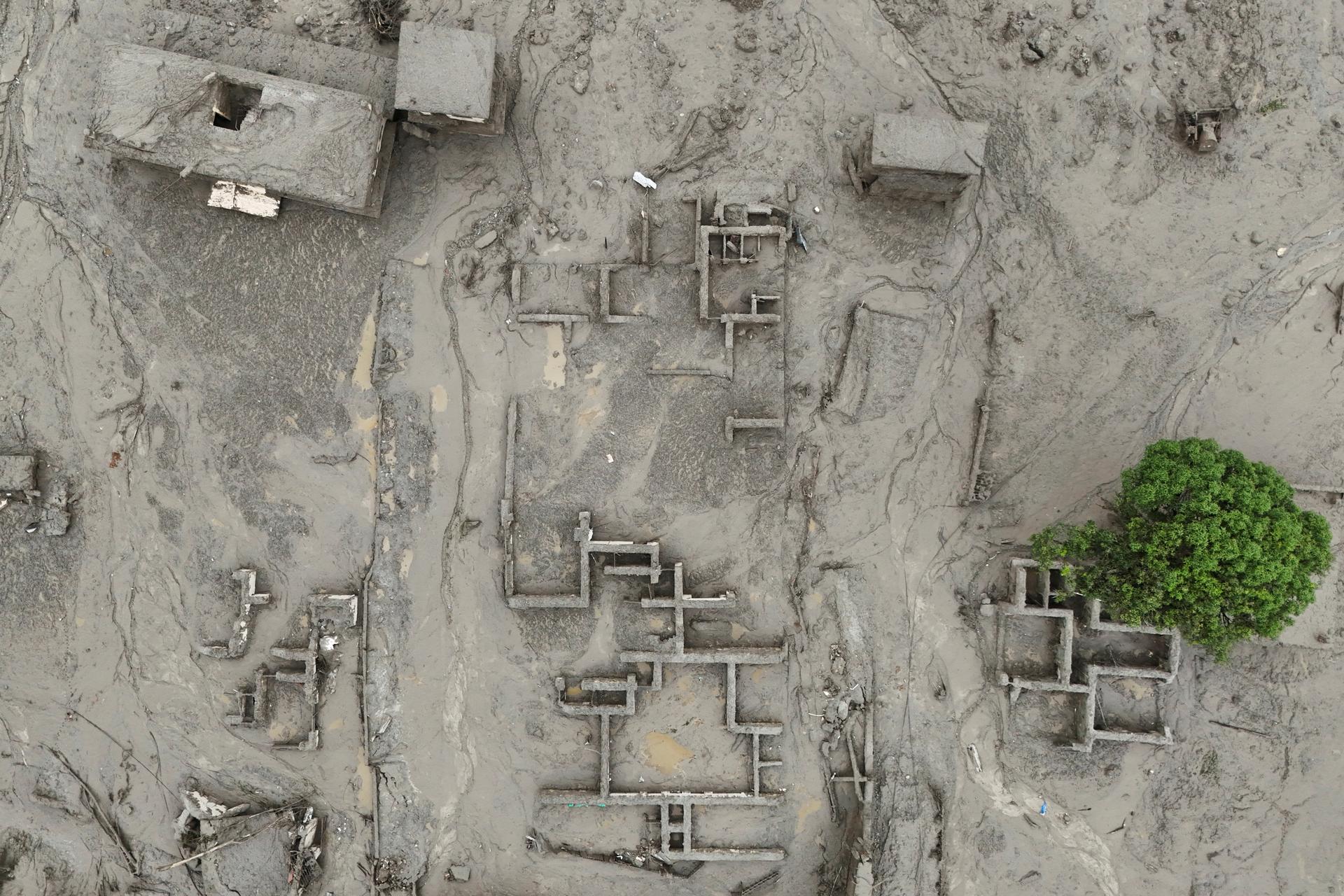
A drone view shows mud covering buildings following a flash flood in Trishuli, Nuwakot district, Nepal, August 27, 2026. REUTERS/Navesh Chitrakar |
-
A deadly flash flood near Nepal's border with Tibet may have been triggered when the lower part of a glacier broke off and crashed on to the valley floor hundreds of metres below, experts said citing satellite imagery from Planet Labs. Follow our live updates.
-
Meta has agreed to pay $18 billion to settle US lawsuits over children's social media addiction while denying any wrongdoing. It emerged with its core business intact. Diana Novak Jones walks through what it means on today's episode of the Reuters World News podcast - listen now.
-
The Iran war has reached its endgame: a costly stalemate. Six months after US and Israeli forces attacked Iran, killing its supreme leader and maiming his son and successor, the Iranian government is under economic siege, but it still holds power and believes it has time on its side. Here are six of the war's probable enduring consequences.
- Companies donated a record $646 million to US political campaigns in the 18 months through June, 40% more than the total spent during the entire 2024 presidential election cycle, according to new data from watchdog group Public Citizen.
-
Democratic-led states and voting rights groups renewed their efforts to block the US Postal Service from imposing new requirements on mail-in voting before ballots go out for the November congressional elections, as ordered by President Donald Trump.
-
A Pentagon review of US troop deployments in Europe will create at least four sets of options for Defense Secretary Pete Hegseth by November 6, well ahead of a December deadline for the review's completion. Read our exclusive.
-
Russian-speaking hackers used SpaceX’s AI coding assistant, Cursor, to help break in to a Belgian chemical company and at least six other firms earlier this year, according to data reviewed by Reuters and a report issued by the startup Gambit Security.
-
After enjoying a summer of well-received measures giving "people some breathing space now", British Prime Minister Andy Burnham faces a much greater test when parliament resumes next week – how to fund some of his more ambitious policies.
|
|
|
|
A human trainer teaches a robot how to package noodles. Humanoids currently lack the intelligence needed for general-purpose work. REUTERS/Laurie Chen |
Inside a training center in southern China, more than 100 humanoid robots stand in neat rows. A dozen human trainers wearing headsets guide some of them through simple tasks – sorting crates, packaging noodles, making coffee. The humanoids are slow and awkward. A novice trainer might get them to produce one usable movement in 300 attempts; an experienced trainer, one in 50.
The facility captures a central tension in China’s humanoid push: Government funding and manufacturing investment are racing ahead of the robots’ ability to operate outside of choreographed demonstrations – like the kung fu routines, dances and boxing matches that have made the machines internet sensations. |
|
|
|
Mourners pay their respects to Dolly Parton after the announcement of her passing, at the Dolly Parton Statue in downtown Sevierville, Tennessee. REUTERS/Megan Varner |
Dolly Parton, the trailblazing country music icon, songwriter and actress who died on Tuesday at age 80, was so much more to millions around the world.
She was a symbol of generosity, whose philanthropic work spanned literacy, disaster relief, medical research and support for marginalized communities and racial justice, transcending the political and cultural divides that reshaped the world around her. Her charitable efforts were informed by an upbringing in profound poverty in rural Tennessee, which later became as central to her public legacy as the songs that made her famous. |
|
|
|
|