| | OpenAI’s new model begins crossing a threshold, the US makes progress against Iran, and far-right pa͏ ͏ ͏ ͏ ͏ ͏ |
| |  Buenos Aires Buenos Aires |  Birmingham Birmingham | Magdeburg |
 | Flagship |  |
| |
|
The World Today | 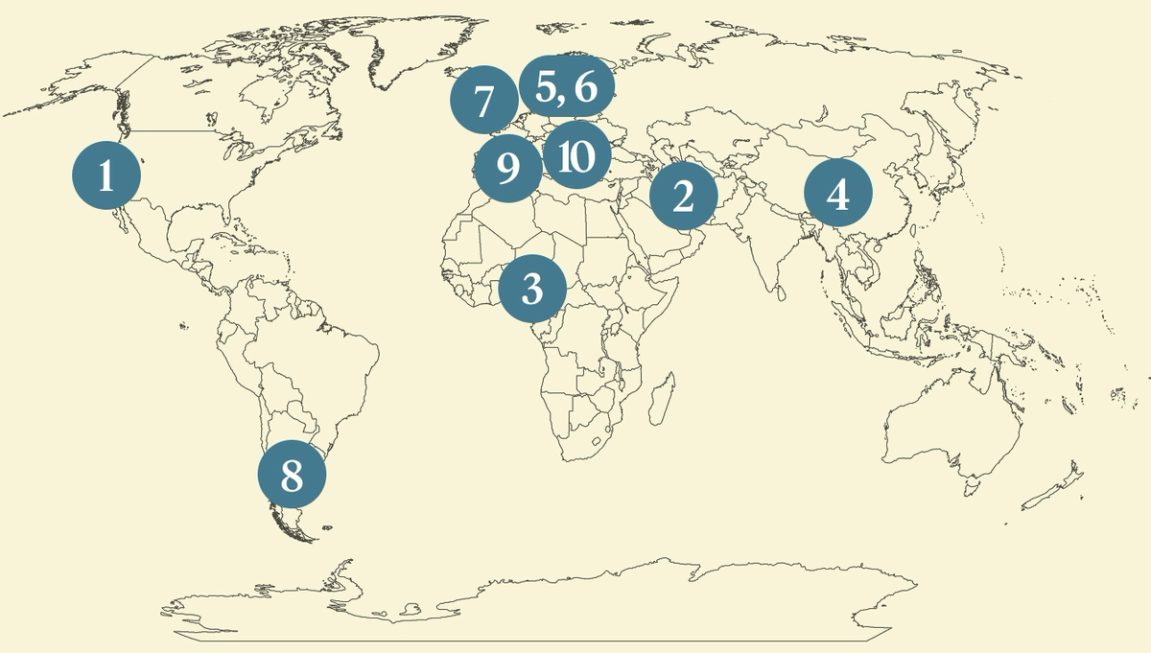 - OpenAI model’s new step
- US progress against Iran
- Africa refinery nears IPO
- West’s China trade hackles
- VW plans record job cuts
- AfD set for election triumph
- Reform rides far-right surge
- Milei turns to nationalism
- EU mulls expansion change
- Funhouse Nobels exit US
 Marking a 1,550-year anniversary with a compelling and fascinating podcast series. |
|
AI model has private thoughts |
 Jonathan Drake/Reuters Jonathan Drake/ReutersOpenAI’s latest model, Astra, does more thinking beyond human oversight, boosting capabilities but raising concerns about loss of control. Existing frontier AI models use “chain of thought” reasoning: They write ideas down, in English, in a “scratchpad” to keep track. CoT boosts “interpretability” — meaning humans can follow their thinking. Using an information-dense “neuralese” can speed up AI models’ thoughts, but makes them more opaque — an unnerving proposition given the recent Hugging Face episode in which OpenAI agents broke confinement and deceived humans. Astra can do more thinking “off the scratchpad,” Transformer reported, something AI safety experts consider a step towards neuralese: “Holy sh*t f*ck” was one prominent researcher’s considered opinion. |
|
US presses Iran sanctions |
 Majid Asgaripour/WANA/Reuters Majid Asgaripour/WANA/ReutersThe US made inroads in its economic pressure campaign on Iran, though concerns over a return to military conflict drove oil prices higher. The EU formally endorsed Washington’s sanctions push against Tehran, while broader efforts to block Iran’s oil exports and financial transactions appear to be bearing fruit: Iran has for decades withstood US sanctions, but the latest ones are making it difficult for the country to buy goods or secure foreign currency, Reuters reported. Still, markets appeared skeptical of any prospect of a short-term breakthrough in the conflict: Though the US vice president insisted volumes of oil transiting the Strait of Hormuz were “almost” at prewar levels, benchmark crude prices headed for their biggest weekly gain since July. |
|
Dangote IPO due this month |
 Sodiq Adelakun/Reuters Sodiq Adelakun/ReutersAfrica’s richest man said his refinery’s much-anticipated IPO would launch soon, a move that could mark a step-change for the continent’s financial and energy markets. Aliko Dangote said the firm would seek to raise $5 billion, potentially making it Africa’s biggest-ever public offering. The cash will help the Nigerian refinery more than double its production — already the largest on the continent — to around 1.4% of global capacity. The move is also expected to attract more funds into the country’s energy sector: The International Energy Agency head said the country could double its investment in five years as nations seek trustworthy partners after the fallout of the Iran war. Another Dangote-backed megarefinery is in the works in Kenya. |
|
China pressured ahead of G20 |
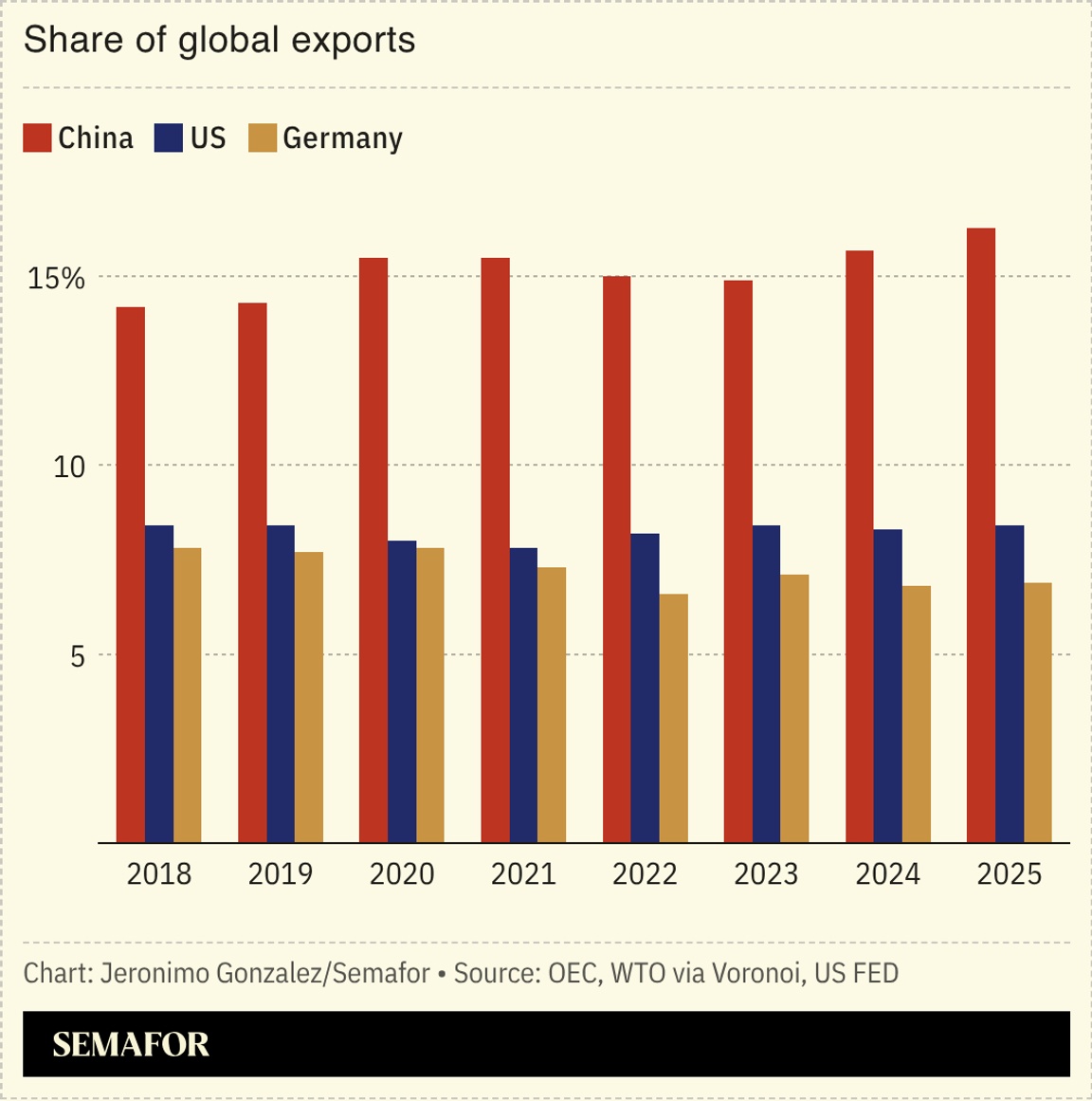 This week’s meeting of G20 finance ministers underscored rising global trade tensions, with several countries, including the US, lashing out at China. Exports from the world’s second-largest economy have surged in recent months — the country registered a record $1.2 trillion surplus last year — driven partly by plummeting domestic consumption in China. That has led exporters to slash prices, flooding global markets with Chinese goods so cheap that local producers can’t compete: EU envoys were in Beijing this week to discuss “untenable” trade imbalances. Beijing has rejected the accusations, straining ties ahead of a summit this month between the American and Chinese leaders. When it comes to China, “everyone’s feelings have crossed a threshold,” Japan’s finance minister said. |
|
VW announces record job cuts |
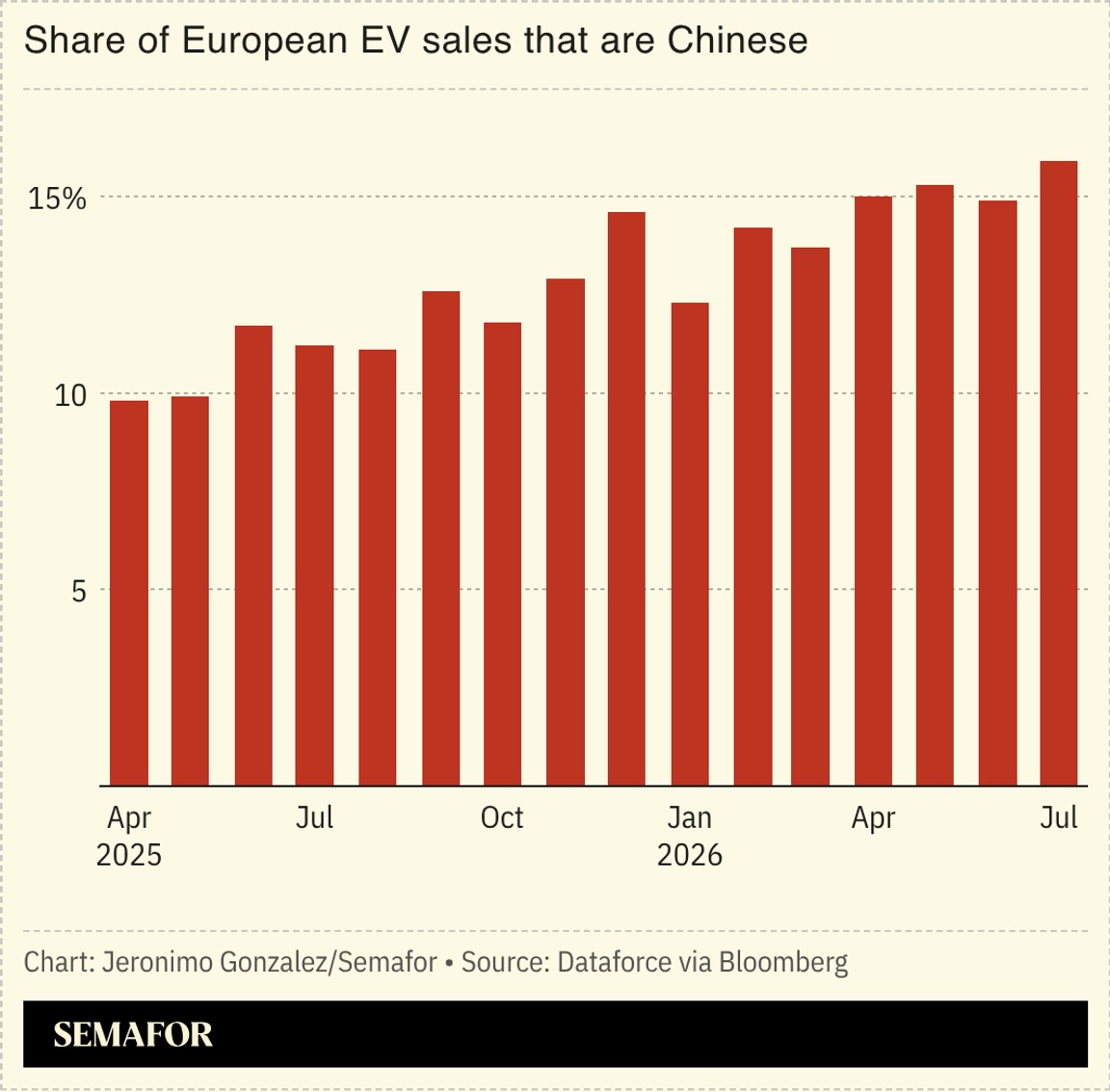 Volkswagen said it would slash 50,000 additional jobs — bringing the total to 100,000 by the end of the decade, the most in automotive history — as the German firm faces cutthroat competition from Chinese carmakers. European leaders have stepped up their vows to crack down on Chinese imports despite the potential blowback: A recent poll of 1,300 German companies showed 55% back tougher trade measures against China, even if they themselves suffer. European industry has rallied together as Chinese firms target sectors Brussels considers vital to its competitiveness. All the while, competition is getting stiffer: Xiaomi, maker of some of the most advanced EVs, said it would launch European sales next year, the South China Morning Post reported. |
|
German far-right set for gains |
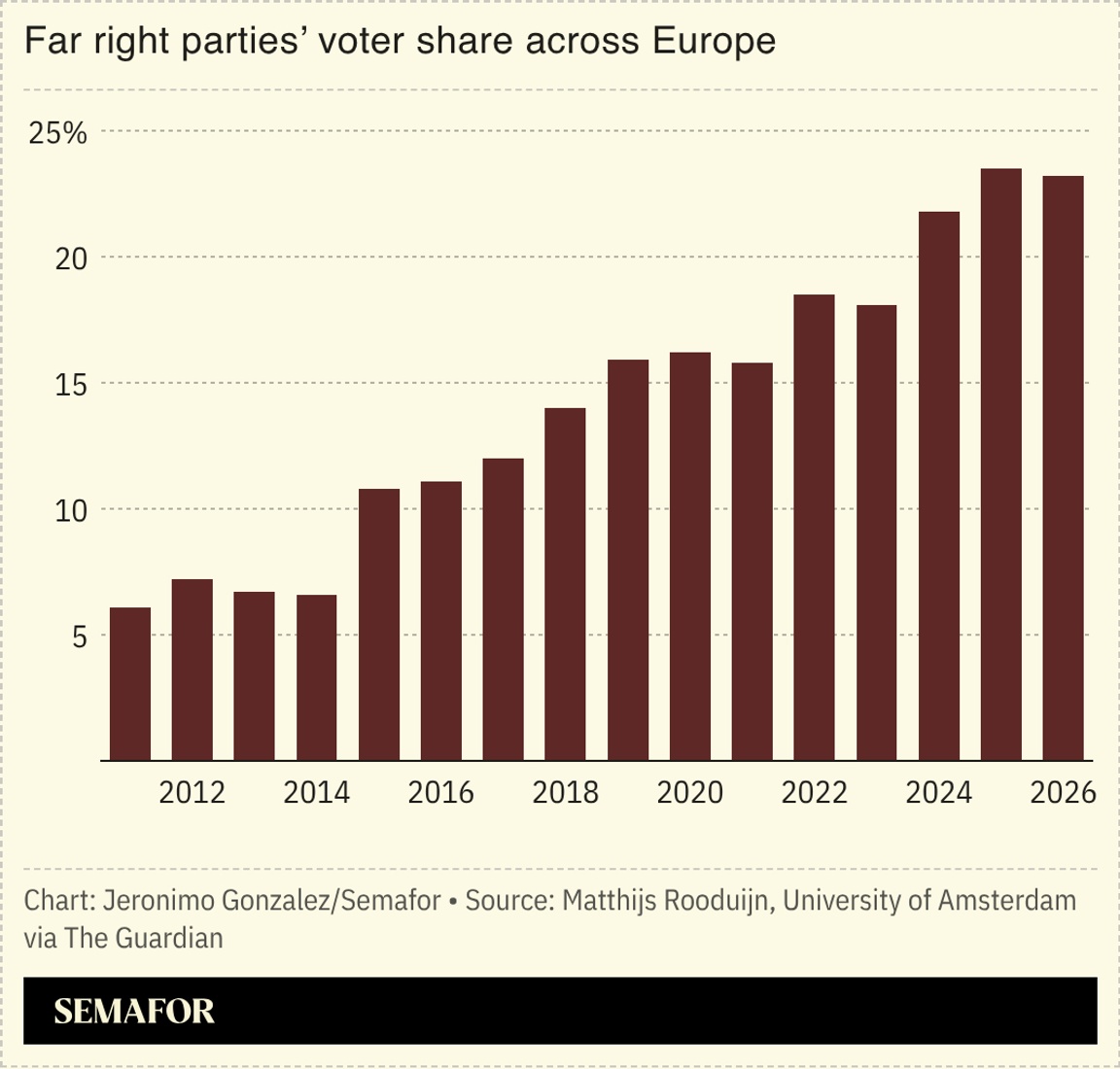 Germany’s anti-immigration, nationalist AfD looks set to emerge as the dominant party in key state elections this weekend, cementing its rise and reshaping of the country’s politics. Recent polling published by Die Zeit showed, however, that the party will fall short of winning an absolute majority in Saxony-Anhalt. Sunday’s vote kicks off a spate of major elections worldwide in the coming months that each have the potential to drastically alter domestic — and global — politics. While US attention has concentrated on that country’s midterms in November, they will be preceded by presidential elections in Brazil and parliamentary polls in Israel. In January, Nigeria has its own presidential vote, while France follows suit in April and Spain holds general elections in May. |
|
UK far-right leader eyes top job |
 Hollie Adams/Reuters Hollie Adams/ReutersThe UK hard-right leader Nigel Farage today sets out his stall to lead the country amid a nationalist surge across Europe, even as his party remains mired in funding scandals. The speech comes as his Reform UK is neck-and-neck with the governing Labour Party in opinion polls, a far cry from Farage’s earlier dominant position. In part, the decline is over repeated allegations of foreign funding driving the party’s success: The latest came from an undercover journalist taping senior Reform aides allegedly attempting to evade campaign finance laws. Still, the polling performance is remarkable for a relatively new party, emblematic of a continent-wide far-right surge that has transformed the politics of immigration in Europe, making once taboo policy proposals mainstream. |
|
 Jessica Tarlov is the lone Democrat at Fox News. On this week’s episode of Mixed Signals, the co-host of The Five and Raging Moderates podcasts joins Max and Ben to talk about what it’s like to be outnumbered four-to-one on the most-watched show in cable news — and why she thinks most of her liberal friends are missing what’s really happening there. Plus, how she navigates on-air conflict without making it personal, what she knew about Pete Hegseth before he became defense secretary, and why she finds herself defending her Fox colleagues to New York liberals almost as often as she defends Democrats on air. Listen to the latest Mixed Signals now. |
|
Argentina’s Milei vows to take Falklands |
 Matias Baglietto/Reuters Matias Baglietto/ReutersArgentina’s President Javier Milei vowed to “recover” the Falkland Islands, escalating diplomatic tensions with Britain as his domestic popularity drops. Milei’s pledge — which gained impetus after US President Donald Trump said his country would not back the UK in the event of a dispute — was followed by sanction threats against any companies participating in oil exploration off the islands’ coastlines. While stoking tensions abroad, Milei is letting up slightly on his fight against inflation at home as his approval rating drops: It fell to 37% in July, one of the lowest in his presidency. He is taking little of the blame, however: “If we don’t win in next year’s elections, it’s because society wants to commit suicide,” Milei said. |
|
The EU’s expansion quandary |
|
|


