| | In today’s edition: Iran’s leverage in the Strait of Hormuz is eroding, NEOM is getting a $1 billion͏ ͏ ͏ ͏ ͏ ͏ |
| |  | Gulf |  |
| |
|
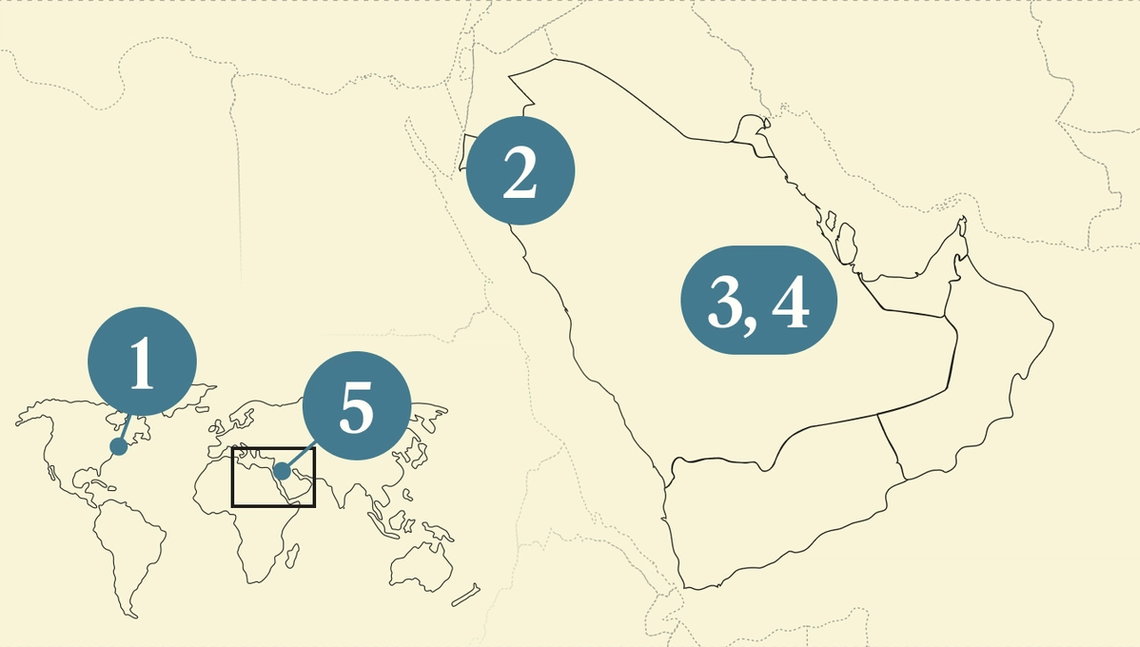 - Who can take the pain
- NEOM’s $1B data center
- HUMAIN CEO on the record…
- … and IPO plans
- Gulf businesses recover
 Revisiting a new regional order: Is the Middle East Asian? |
|
Hormuz leverage in question |
 Amr Alfiky/File Photo/Reuters Amr Alfiky/File Photo/ReutersIran’s ability to use the Strait of Hormuz as leverage is a crucial question as diesel prices are at record highs and winter approaches. For four months, US Navy SEAL divers, robotic boats, and specialized underwater craft have quietly worked to clear mines from the waterway to boost safe transits, the Financial Times reported. By disrupting the main route through the Strait — through which a fifth of the world’s crude and liquefied natural gas passed — Tehran was betting that the loss of oil and gas exports from the Gulf would force Washington to compromise. But $200 oil never materialized, and the US has largely been able to take that card away. The UAE, for its part, is building alternative routes for its energy exports and trade to ensure they are not “held hostage” by the ongoing war with Iran, UAE presidential adviser Anwar Gargash said at the Hili Forum in Abu Dhabi on Monday. Gargash added that “a functional relationship with Iran can and must be restored, but rebuilding trust is another matter.” The easing of energy flows through Hormuz now has analysts debating who benefits from a prolonged conflict. While US President Donald Trump is politically hampered by a deeply unpopular war as he faces midterm elections, the Islamic Republic is grappling with an economic crisis after weeks of no oil exports, writes The Wall Street Journal’s Yaroslav Trofimov. Time may favor the US, but it’s also difficult to predict what can happen in Iran. One analyst told the WSJ that those who are certain about the strength of the regime would be wise to remember “how similar judgments were once made about Mubarak, Ben Ali, Ceaușescu, and even the Soviet Union.” |
|
DataVolt’s NEOM data center |
 Christian Bruna/Reuters Christian Bruna/ReutersAI data center builder DataVolt, linked to Saudi billionaire Mohammed Abunayyan, plans to complete a 100 megawatt facility in NEOM within 13 months, focused entirely on exporting compute capacity. The data center, which will cost around $1 billion, has already broken ground. Rajit Nanda, DataVolt’s chief executive, said in an interview that the timeline would make it the fastest for such a facility in the world. Saudi Arabia aims to become a third global hub for AI, behind the US and China. The kingdom is pouring money into data centers and investing in tech companies that agree to move some of their operations to the country. Developed in partnership with state-controlled HUMAIN, DataVolt’s data center will be the first in NEOM, in northwestern Saudi Arabia. It aims to use existing subsea cables and cheap renewable energy to supply computing power to international customers. The entire 1.5 gigawatt of data center capacity planned at NEOM will be sold abroad, Nanda said. — Matthew Martin |
|
HUMAIN’s superpower ambitions |
 Hamad I Mohammed/Reuters Hamad I Mohammed/ReutersHUMAIN CEO Tareq Amin recognizes Saudi Arabia’s latest effort to transform its economy for what it is: An audacious bet that it can join the US and China as a global AI superpower. Ahead of US President Donald Trump’s visit to the kingdom last year, the Jordanian-American tech executive helped launch the state-backed AI company under Saudi’s Public Investment Fund. The plan was to use the kingdom’s cheap energy, vast land, and sovereign billions to become one of the world’s largest compute hubs. Amin tells Semafor he also wants to position the kingdom as the ‘Switzerland of open source models,’ in the inaugural World View interview in a new, additional Monday edition of Semafor’s Business briefing. He also talks about the challenge of trying to build frontier AI models, and how he wants to reduce HUMAIN’s reliance on the kingdom’s sovereign wealth fund, its largest shareholder, and open up to more global investors. — Matthew Martin |
|
 Hamad I Mohanmmed/Reuters Hamad I Mohanmmed/ReutersHUMAIN’s CEO kept himself in the news over the weekend after posting on LinkedIn that he was hiring a team to prepare the barely two-year-old company for an initial public offering. The state-backed AI firm is looking for “top-tier management consulting experience, strong financial and strategic depth, and experience working on investor-facing strategy and IPO preparation,” Amin said. Amin first mentioned the IPO plan in October, stating his aim was to list HUMAIN in Saudi Arabia and New York by 2029. Public Investment Fund, which launched HUMAIN and is majority shareholder, has been putting pressure on companies it created to reduce how much state-backed funding they require amid a cash squeeze and falling returns. But the path to an IPO for a young company is not always straightforward in Riyadh: They generally need to show a track record of profitability unless they can get waivers from the market regulator. In the short term, slowing government spending and the Iran war has led Saudi companies to abandon listing plans, leading them to look for other ways to attract foreign capital. |
|
Gulf businesses adapt to Iran war |
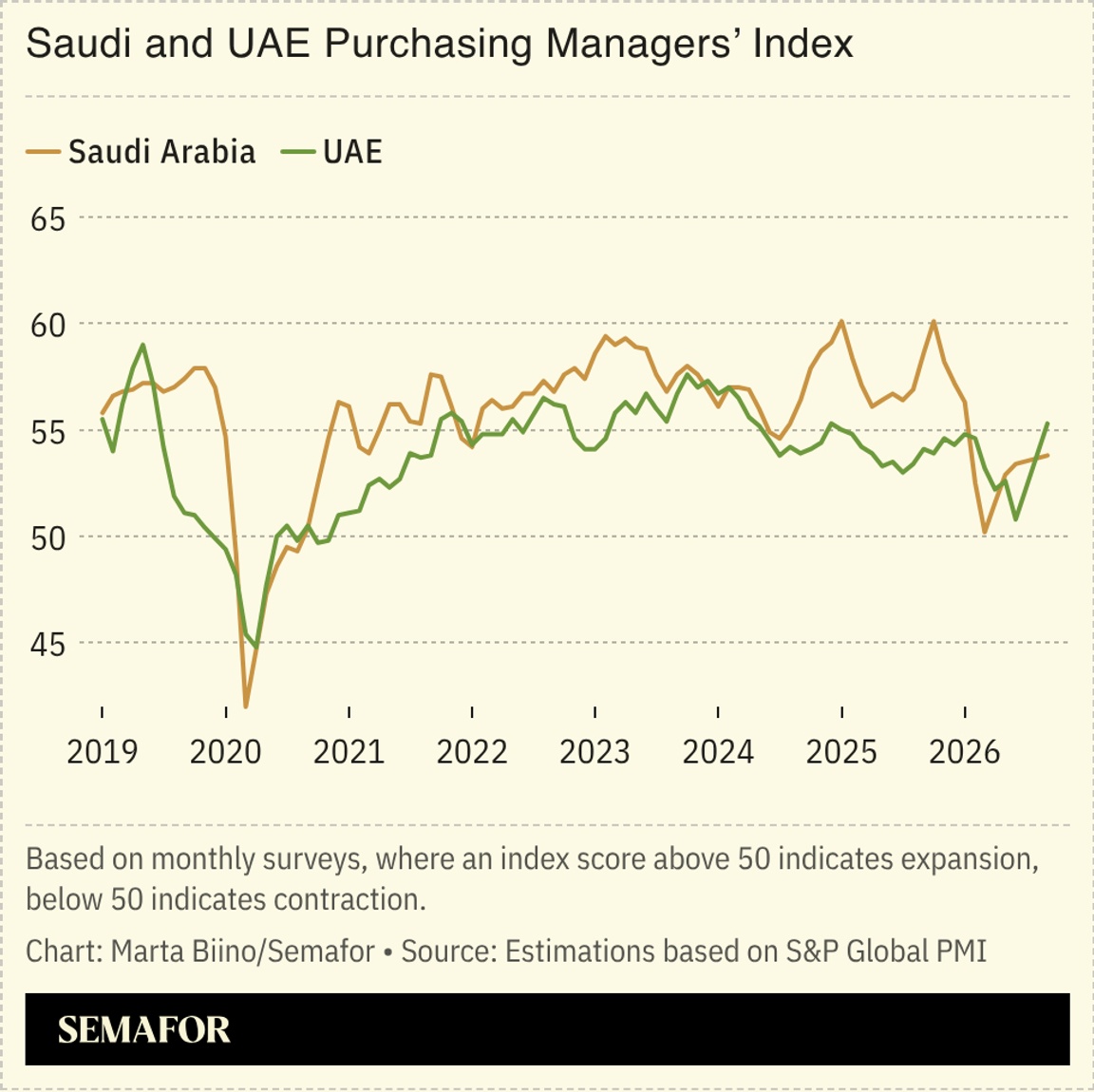 The UAE’s non-oil private sector expanded at its quickest rate in 20 months in August, suggesting businesses are learning to better cope with the war (though they still aren’t hiring.) The Purchasing Managers’ Index compiled by S&P Global — which measures activity in the non-oil private sector — rose to 55.3 from 52.7 in July, extending a sharp recovery from June, when war disruption pushed the index close to contraction. Companies are rebuilding inventories at the fastest pace in nearly three years and turning to local suppliers to reduce exposure to supply shocks. Employment, however, fell for the second time in three months, suggesting firms remain reluctant to make longer-term commitments while the conflict grinds on. The recovery is spreading across the Gulf: Saudi Arabia’s PMI reached a six-month high, but remains below its long-run trend, while Kuwait recorded its strongest output and new-order growth since February. — Ed Clowes |
|
 Checking In- Weekly flights between Russia and the UAE are set to more than triple from mid-year lows, after Moscow lifted its wartime travel advisory and restrictions on package tours. Russian tourists in the UAE could reach a million people this year, down from 1.7 million in 2025, helped by an Emirati marketing push on the streets of Moscow. — AGBI
Deals- Saudi real estate platform AQAR will invest up to $480,000 in Doushesh, a Syrian classifieds startup founded last year. Gulf capital has been pouring into Syria’s real estate and infrastructure since the country reopened for business, but this is a rare investment in the nascent startup scene.
- Cloud-computing and data center developer Crusoe reportedly raised $3 billion at a $30 billion valuation in a round that included Mubadala Capital. The company has contracts with Meta Platforms, Microsoft, and OpenAI, and won a $13 billion contract to provide computing capacity to trading firm Jane Street. — Bloomberg
Defense- South Korea is weighing a military contribution to keeping the Strait of Hormuz open, with options including a maritime patrol aircraft, a logistics support vessel, or a mine-clearance unit. Seoul’s presidential office said Friday that nothing has been decided yet. — Reuters
- The US approved a $5 billion weapons sale to Saudi Arabia, which will include more than 10,000 extended-range JDAM kits that turn ordinary bombs into precision-guided ones, plus the bombs themselves. The kingdom is restocking an arsenal depleted by months of war with Iran. Washington also cleared the sale of $750 million in tank engines.
|
|
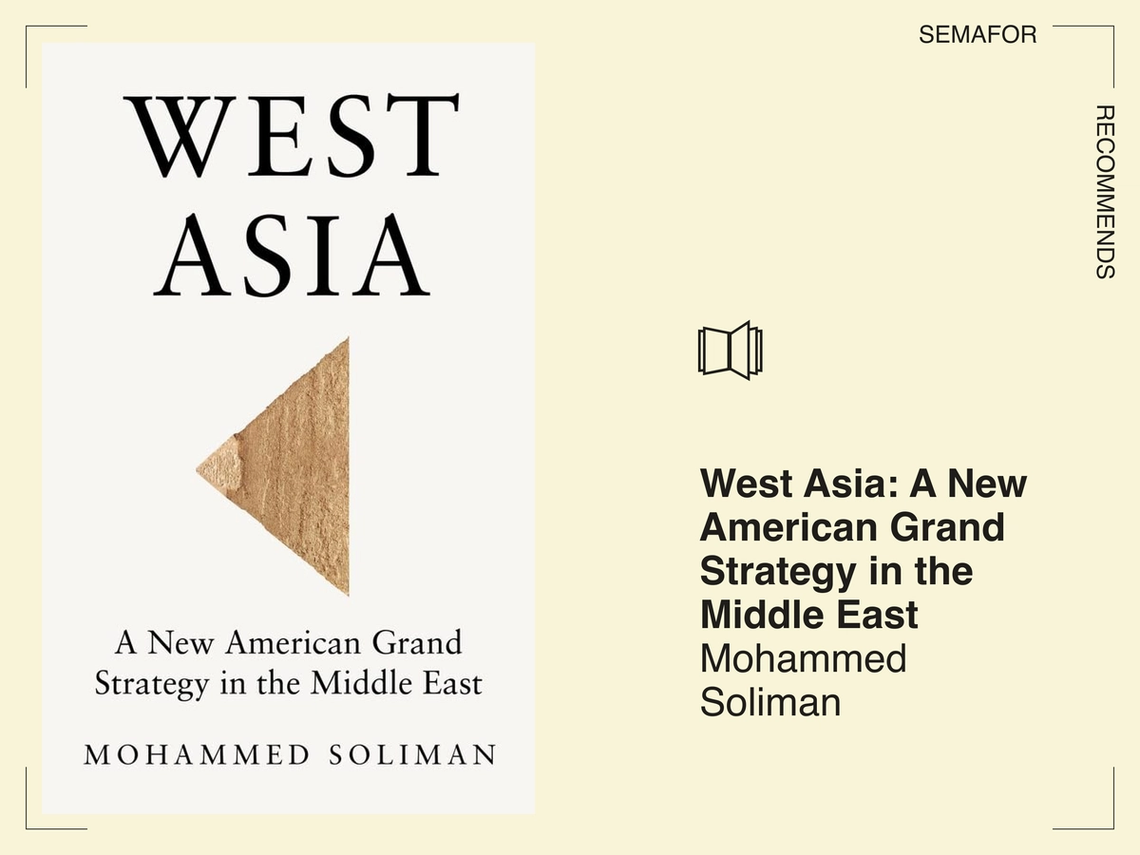 The Middle East is Asian. So argues Mohammed Soliman in West Asia: A New American Grand Strategy in the Middle East. As analysts and diplomats debate a new regional order, the 2025 book by the senior fellow at the Middle East Institute is worth a look. Following the Arab Spring and the growth of Gulf sovereign wealth funds, Cairo, Baghdad, Damascus — the traditional centers of power in the Arab world — gave way in influence and power to Gulf capitals Abu Dhabi, Riyadh, and Doha. What has emerged is a part of a Eurasian mega-continent that can counterbalance Russian and Chinese influence — if the US can forgo its nation-building ways to become copilots with these new regional powers. Foreign Affairs described the book as “sometimes perplexing but always provocative.” |
|
|


