| | Canada’s retaliatory tariffs against the US are set to kick in, Malaysia considers using Huawei chip͏ ͏ ͏ ͏ ͏ ͏ |
| |  MONTREAL MONTREAL |  MUNICH MUNICH |  KUALA LUMPUR KUALA LUMPUR |
 | Flagship |  |
| |
|
The World Today | 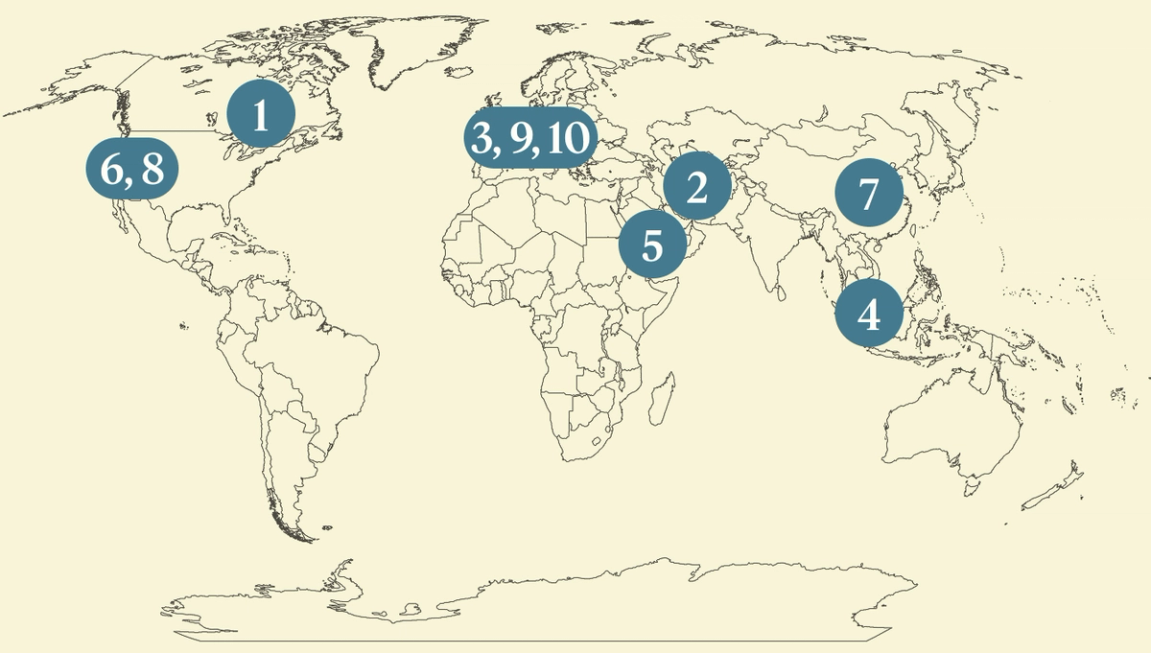 - Canada tariffs to hit
- Rising fuel prices
- AfD win reverberates
- China’s chip access
- Saudi’s big AI bet
- No AI jobpocalypse
- AI hurts Chinese grads
- Eyeing AI-proof assets
- Politics of friendship
- Oktoberfest brouhaha
 A new book explores the ‘Hinterlands’ from where the next big geopolitical shock may surface. |
|
Canada’s US tariffs to take effect |
 Evelyn Hockstein/Reuters Evelyn Hockstein/ReutersCanada’s retaliatory tariffs against $27.6 billion worth of US goods will kick in after midnight on Tuesday, as the prospects for averting a tit-for-tat trade war appeared dim. The White House has vowed to respond with fresh measures against Ottawa, possibly by banning certain Canadian goods, and US President Donald Trump on Monday threatened to bar sales from a Montreal plane manufacturer, potentially halving its customer base. No negotiations are currently scheduled, underscoring the stark deterioration in ties between the two allies, though the dispute is best seen “as part of an ongoing negotiation,” a Financial Times columnist argued: “It’s not an irrevocable break at this moment, and it’s not likely to become one.” |
|
US, Iran feel pain from energy disruptions |
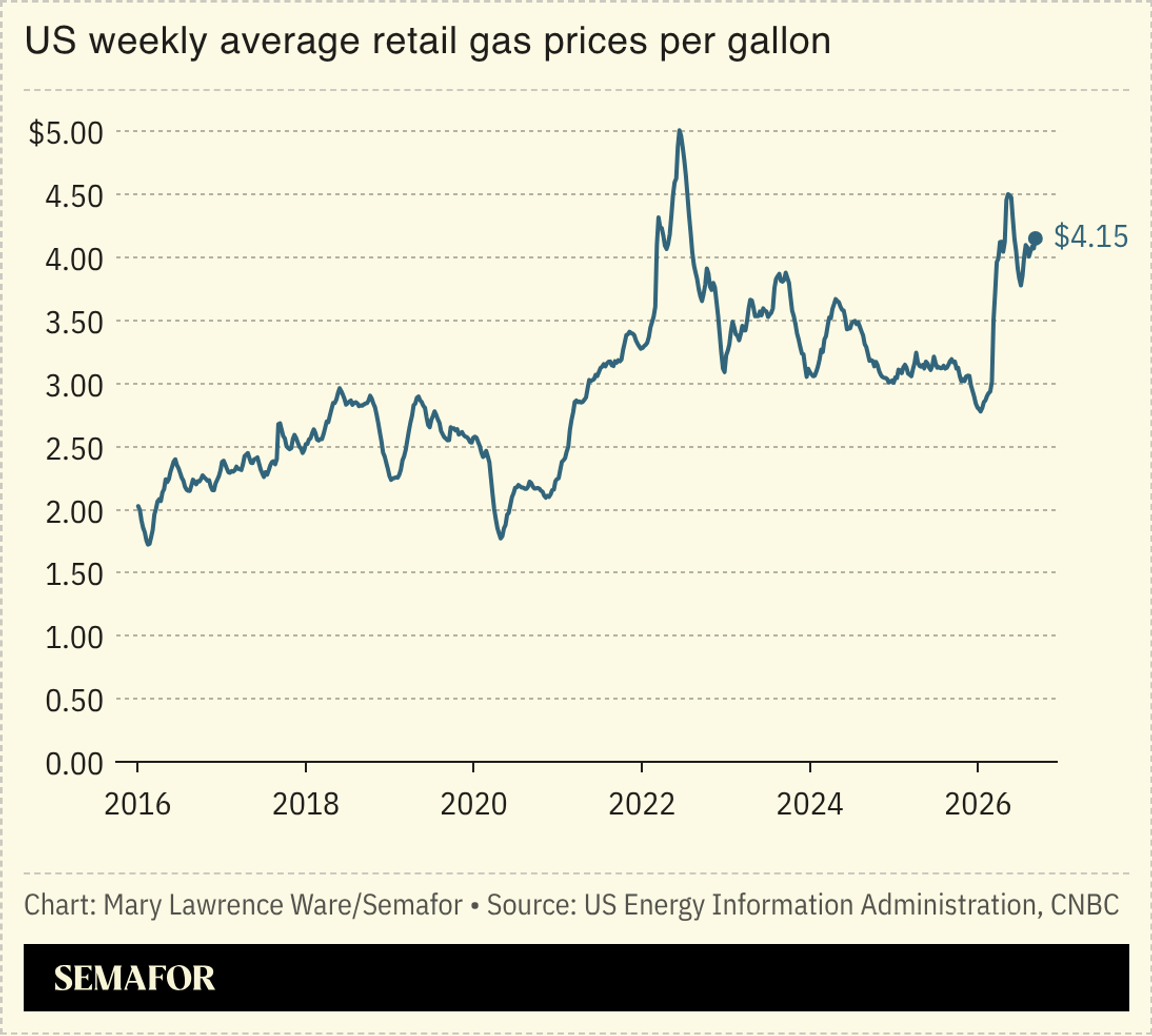 US gas prices hit record highs and Iran doubled the price of fuel consumed over quota, as energy disruptions hit at the pump in both countries. Tehran announced a new “exclusion zone” in the Strait of Hormuz amid reports that its grip on the key waterway, and its negotiating leverage, is diminishing: The US has quietly worked to clear mines for months, and traffic last week approached pre-war levels, before sharply falling again after new strikes. Iran feels it has “not yet achieved its key objectives in the conflict,” ISW analysts wrote, increasing the likelihood of escalation. The Gulf’s energy infrastructure is “sprawling, accessible, and exposed,” Iran’s lead negotiator wrote Monday, and “American oil and gas companies… share that exposure.” |
|
AfD win could portend rightist surge |
 Fabrizio Bensch/Reuters Fabrizio Bensch/ReutersThe nationalist AfD’s landslide victory in a German state on Sunday could portend a far-right surge across Europe, analysts argued. In France, Italy, and Spain, all of which will hold elections in the next 16 months, rightist candidates are benefiting from a cost-of-living crisis and the inability of incumbent parties to address affordability concerns: “Developed Europe is going through a version of sophisticated state failure,” a Eurasia Group analyst told The New York Times. The AfD’s win shocked politicians in France, where far-right leader Marine Le Pen is leading the polls in next year’s presidential race. The global right’s “most immediate hope for changing Europe still lies in France, not Germany,” the Financial Times’ chief foreign affairs columnist wrote. |
|
Malaysia eyes Huawei chips |
 Go Nakamura/Reuters Go Nakamura/ReutersMalaysia is considering using Huawei chips to power its sovereign AI efforts, Bloomberg reported, in what would be the first known instance of a foreign government choosing Chinese accelerators over American ones. Though Washington has warned that using Chinese chips could violate export restrictions, Huawei’s steep discounts offer cheaper compute amid a global memory shortage that could persist through 2030. Beijing’s inroads into Malaysia, which already hosts US data centers, boost its efforts to become a global AI supplier of choice, as the West tightens China’s access to advanced chips: In May, Belgium arrested a Chinese citizen suspected of stealing chip technology, while a Chinese tech firm, blacklisted by the US, reportedly exploited loopholes to ship Nvidia chips to China’s AI companies. |
|
Saudi’s AI superpower ambitions |
 Hamad I Mohammed/Reuters Hamad I Mohammed/ReutersThe CEO of HUMAIN, Saudi Arabia’s state-backed AI company, wants to position the kingdom as the “Switzerland” of open source models, sidestepping the dueling ambitions of the US and China, he told Semafor’s Matthew Martin. Tareq Amin’s firm is at the center of Saudi’s bet that it can join the US and China as a global AI superpower: HUMAIN plans to launch a large venture capital fund to “accelerate the pace of investment,” Amin said. The company recently announced a deal to provide compute to a US startup that serves open-source AI models, and has also partnered with AI data center builder DataVolt to complete a 100-megawatt facility in NEOM within 13 months, Semafor reported. |
|
Reevaluating AI jobs doomerism |
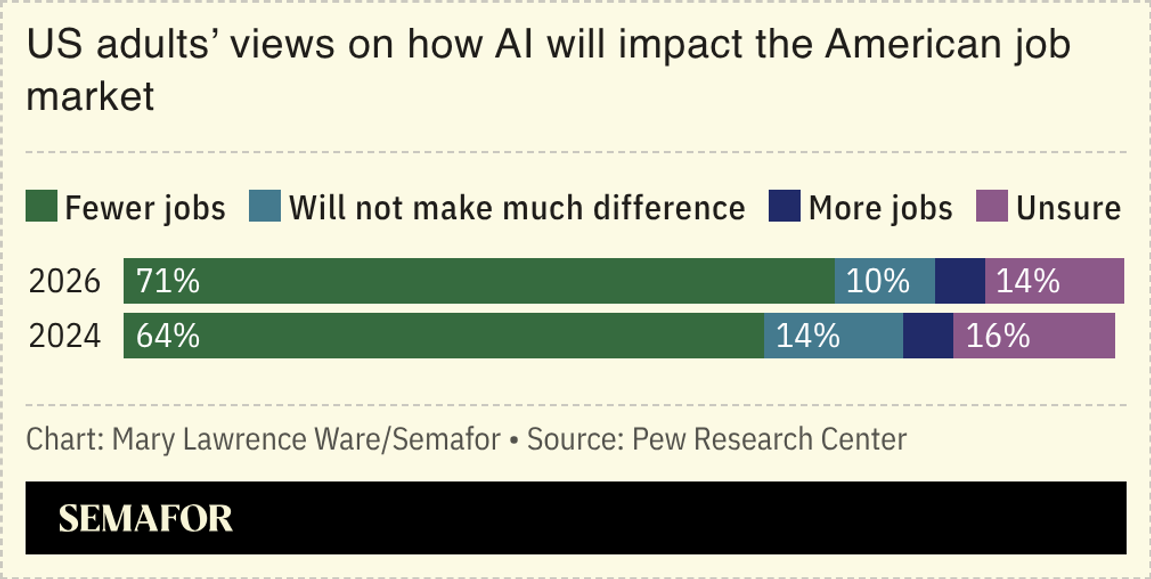 The latest US employment figures have failed to show an AI-driven surge in job losses, multiple analysts noted, suggesting theories of a “jobpocalypse” are premature, or misunderstood the effects of AI to begin with. “It’s a good bet that AI will eventually make some occupations obsolete,” but so far it’s “extremely hard” to identify any, the economist Noah Smith wrote, suggesting that like previous technological revolutions AI could add as many or even more jobs than it destroys. The Economist, meanwhile, touted an “AI jobs boom,” estimating the tech has created 1 million new US jobs. Despite a white-collar hiring lull that some attribute to AI, the job market for US workers without college degrees is white-hot, The Wall Street Journal reported. |
|
AI upends China’s job market |
 China Daily via Reuters China Daily via ReutersAI is hurting China’s already weak graduate job market. An estimated 12.7 million graduates will join the workforce this year, the largest cohort yet. But “the supply of… graduate jobs has not kept pace” with ballooning college attendance rates, The New York Times reported. AI’s impact, already being felt in manufacturing and food delivery, is now hitting white-collar work: “Listings for traditional roles are dwindling” and some graduates have applied for hundreds of jobs without success. Other countries have more unusual, if structurally similar, problems: AI is eating Kenya’s essay-farm industry, in which well-educated youths help Westerners cheat on university papers, The Times wrote: “Why pay a freelancer in Kenya when ChatGPT could do the job?” |
|
Investors eye AI-proof assets |
 Peter Cziborra/Action Images via Reuters Peter Cziborra/Action Images via ReutersInvestors looking for AI-proof assets are pouring money into sports. Jeff Bezos bought a stake in English soccer giant Liverpool FC, while other investors have backed leading US sports franchises from the LA Lakers to the Minnesota Timberwolves. Venture firms have placed bets on mixed martial arts, winter sports, and padel. “People want to watch actual real humans play sports,” one investor told The Wall Street Journal, with sports teams less vulnerable to AI’s impacts on the workforce. The dash for opportunities insulated from AI isn’t limited to sports: One fund, run by tennis star Serena Williams, is focusing on travel, wellness, and physical products such as toys, reasoning that our increasingly screen-based life will make real-world experiences more valuable. |
|
Institutionalizing friendship in France |
 Kim Kyung-Hoon/Reuters Kim Kyung-Hoon/ReutersA left-wing French politician wants to enshrine friendship in law. MP Clémence Guetté argued that family links such as marriage and parenthood should not be the only legally recognized relationships, and that friends should be able to inherit, live together in public housing, and be granted rights to parental or bereavement leave. The “comrade” is a longstanding ideal in French revolutionary thought, Le Monde noted, but is hard to square with statist, high-tax models — for one thing, it could “create a potentially unlimited new ‘tax loophole.’” But expansions of the family model have happened before, notably the “civil partnership” that granted the rights of marriage without the name in several countries, often paving the way for same-sex marriages. |
|
Munich’s Oktoberfest beer cartel |
|
|


