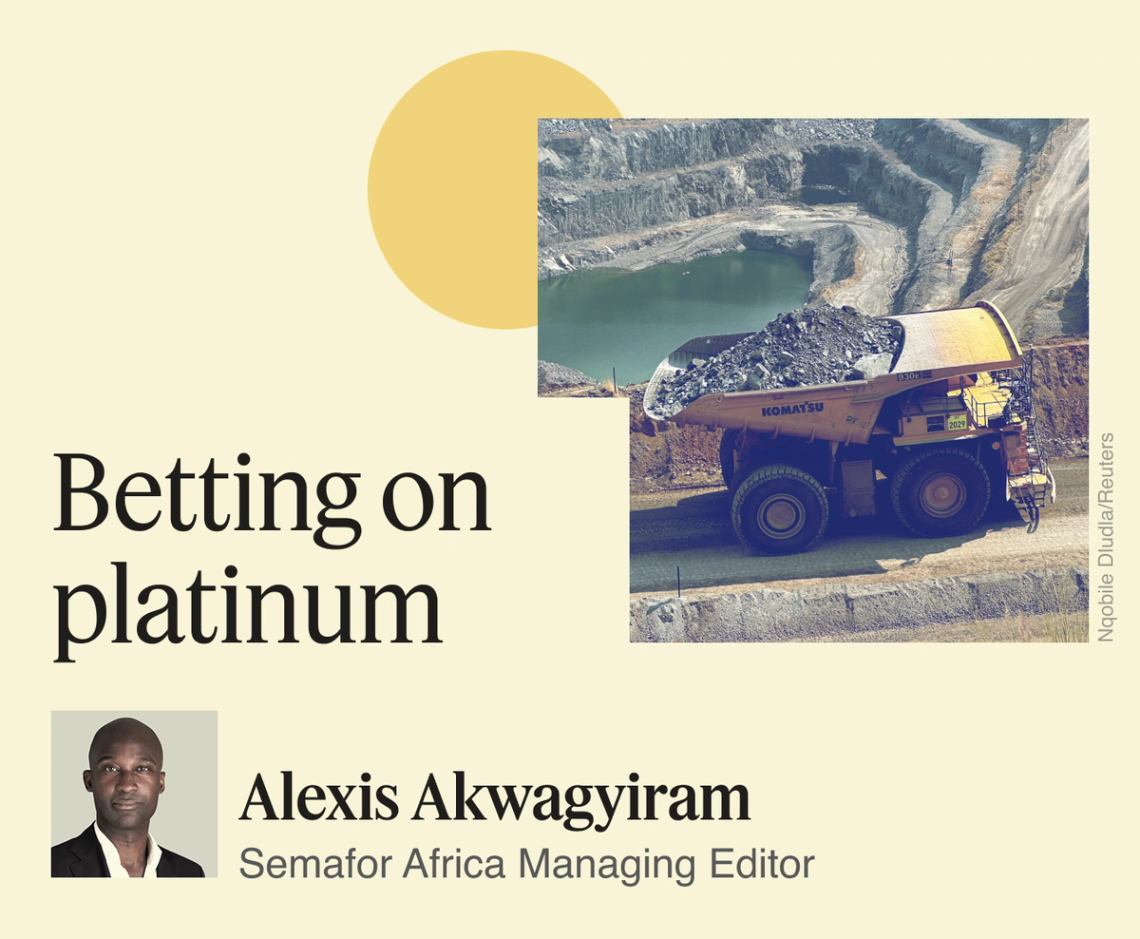
 Mineral resources, trade, and geopolitics are inextricably linked in the Trump administration’s dealings with African countries. In recent weeks, Washington has announced financing for a uranium project in Niger, an agreement to develop Kenya’s critical minerals processing industry, plus hundreds of millions of dollars for digital infrastructure providers. These moves are part of a wider push to secure access to key minerals and compete with China. South Africa is conspicuously absent from such agreements, despite being rich in minerals and boasting an industrial base that is unrivalled in sub-Saharan Africa. Instead, its relationship with the US has deteriorated for more than a year over Washington’s accusations that Pretoria is carrying out “government-sponsored discrimination” against its minority Afrikaner community. Our reporting today sheds light on trade talks now going on behind closed doors: South Africa is using its position as the world’s top platinum producer as leverage, pitching opportunities for commercial agreements. Pretoria’s calculation is that trade and access to mineral resources are vital to the White House, so much so that the Trump administration could be open to deals that help South Africa expand local mineral processing to add value to goods and create jobs. The US needs platinum, and related metals, for everything from its automotive industry to data center hardware and defense equipment — and, crucially, more than 40% of it comes from South Africa. But China also needs platinum to develop green hydrogen as a form of clean energy and to build a network of state-run data centers. And it’s taking a very different approach: While Washington slapped a 30% import duty on South African goods last year as part of a wider strategy of trade pressure, Beijing scrapped levies on the African nation’s imports entirely. When US President Donald Trump holds talks with China’s leader Xi Jinping in Washington this week, much of what they discuss — from AI to energy — is likely to hinge on Africa’s natural resources. Their very different relationship with South Africa speaks volumes. |