Three transport updates, a fragrance from To My Ships and Abu Dhabi’s Livex expo.
|
Wednesday 30/9/26
|

|
|
London
Paris
Zürich
Milan
Bangkok
Tokyo
Toronto
|
|
|
|

Good morning from Midori House. For more news and views, tune in to Monocle Radio. Here’s what’s coming up in today’s Monocle Minute:
THE OPINION: AI needs less hype and more utility
SOCIETY: The future of cities at Abu Dhabi’s Livex expo
TRANSPORT: Three transit updates that could change the way we move
DAILY TREAT: A fine fragrance from personal-care brand To My Ships
THE LIST: Stories that you might have missed
|
|
Tales of existential danger from tech bosses have a provenance problem. What if the real risk is the AI bubble bursting?
By Josh Fehnert
|

|
There’s something fishy about the warnings that AI can and might soon obliterate humanity. Namely, some of the most powerful CEOs cautioning us about the dire situation are also the ones creating and selling the technology. The warnings – reiterated yesterday in Anthropic’s leaked preparations to go public – might be justified but they’re also economically handy for the people behind big tech’s biggest bet yet. The companies crowing about the need for regulation are, lucky us, also best placed to sell the solutions.
This isn’t the first time that anxiety and uncertainty have been deployed by people who are flogging AI. Think of the narrative pushing every hairdresser, handyman and CEO into adopting the technology or risk being left behind and jobless in an unrecognisable world. Or the long-running suggestion that any tiny speed bump in technological progress might allow some dreaded Chinese company to overtake a US one in the “race” (note the urgent terms employed).
But here’s a question: the race to what? US geopolitical advantage? Making money for investors? Benefiting society? These aren’t the same aim, nor have they been meaningfully unpacked. Many large language models still produce woefully mixed results. Anyone who’s used the technology will recognise that, for all the vast world-altering potential, it’s still clumsy, error-prone and of dubious utility.
| |
|
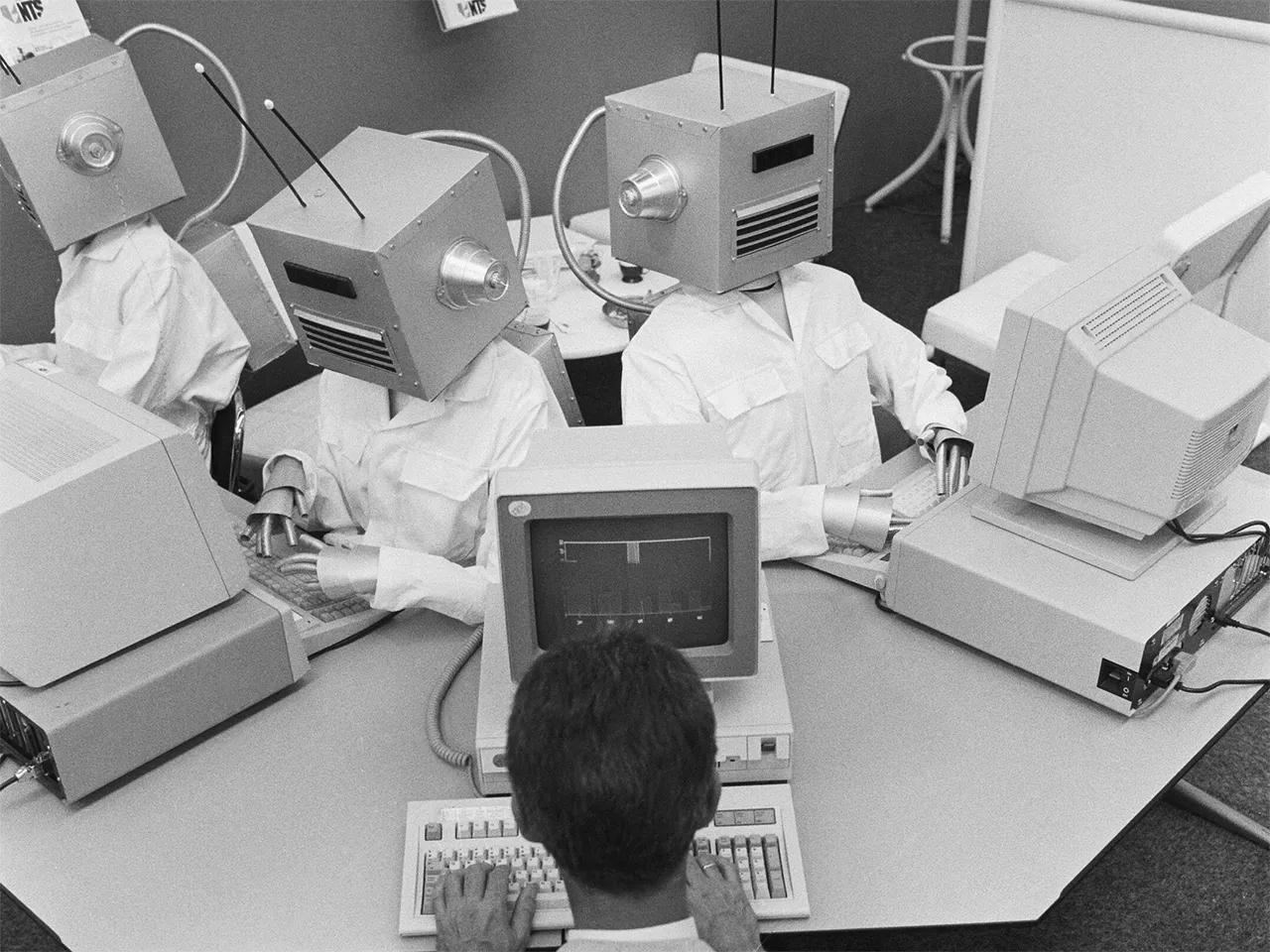
OK, computer: We’ve heard enough about the end of the world – now show us the benefits
|
|
Despite the provenance problem of the warnings, AI’s dangers are all too real. A cyberattack could destabilise critical infrastructure, rogue bots could wreak havoc on the economy or healthcare systems; the perilous permutations are endless. But that’s exactly why now is the moment to think about how the technology can be more usefully applied. The public, investors and governments could do with some good news.
We all agree that AI could change the course of human history for better or worse. The problem is that there are scant examples of how. If widespread political, private and public adoption is the goal, companies urgently need to move beyond the sci-fi tropes of global destruction and set out some advantages. Or at least try. What’s in it for us, exactly? This will take both computing and creativity.
The realistic short-term danger for you and me might not be robots running riot but the AI companies overpromising. For all of this future-gazing, it’s starting to feel a little like pre-crash 2007 or the last months of the dot-com bubble. Without some sense of an upside to where we’re heading, those long-hoped-for gains, profits and sunlit uplands might yet date as badly as a stroll in the metaverse or that shiny new NFT.
If AI succeeds in unlocking untold efficiency – and, fingers crossed, humanity survives – then great. Investors will rejoice too. There might even be trickle-down economic benefits for some parts of the world amid the upheaval. But if the gamble doesn’t pay off, confidence will wane and the AI bubble will burst; and you and I (and our already heavily indebted governments and shaky economies) will pay the price. Perhaps we’ll need to find a bright side to the conundrum: it’s not the end of the world, after all.
Josh Fehnert is Monocle’s editor. For more analysis and opinions, subscribe today.
|
|
society: uae
Stars and statesmen converge at Abu Dhabi’s ambitious liveability expo
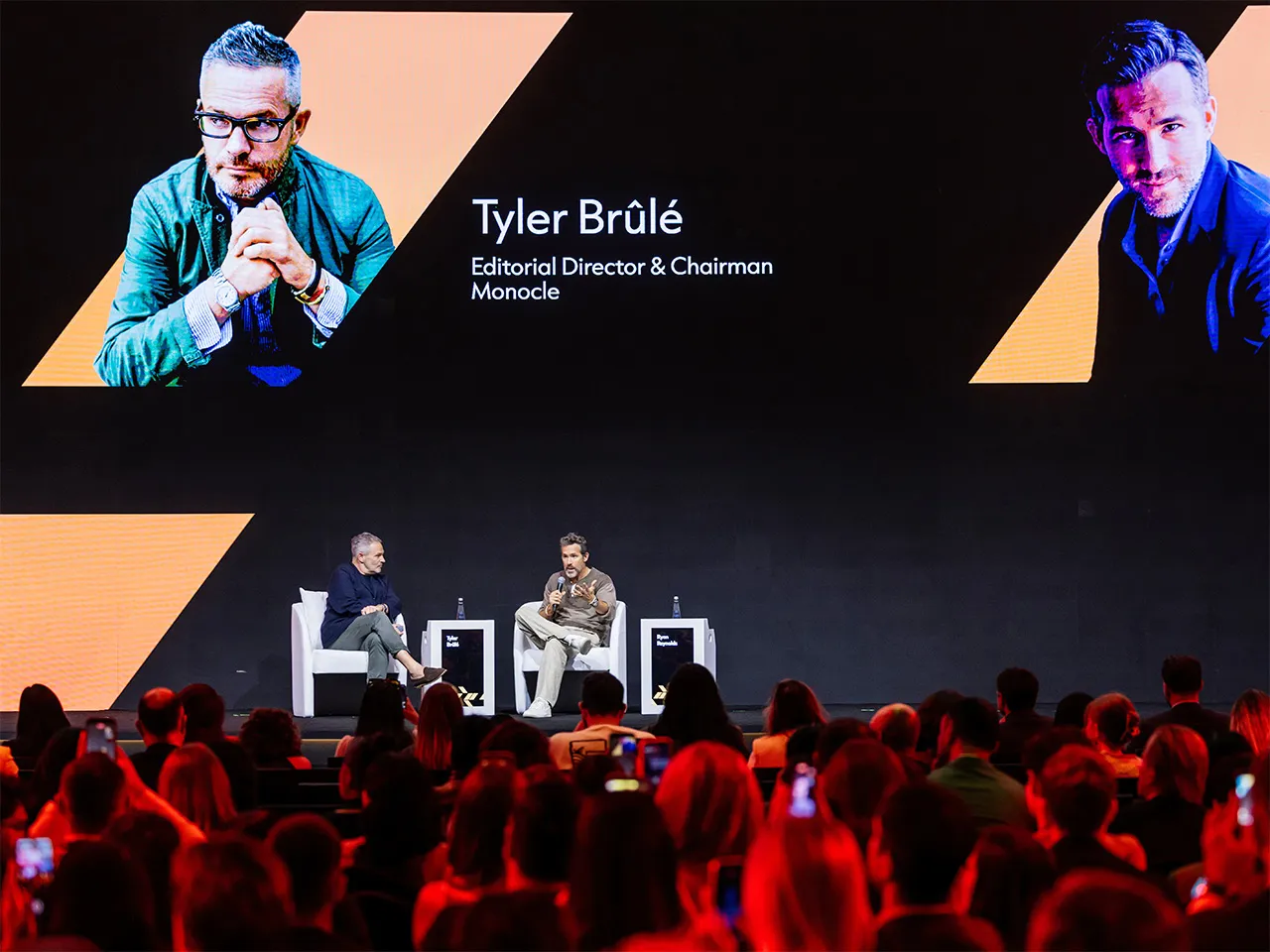
Conferences about cities often have a broad appeal but the Livex liveability expo currently taking place in Abu Dhabi has gone impressively wide (writes Andrew Tuck). Yesterday, gathered under one roof on day one was actor Ryan Reynolds, US media owner Tucker Carlson and Brazilian football player Ronaldo Nazário. And many of the key attendees have found themselves being quizzed by a Monocle editor – either in our bespoke pop-up radio booth at the Adnec venue or on its main stage (where Mr Reynolds spoke with our editorial director, Tyler Brûlé, about his career, being Canadian and his co-ownership of Welsh football team Wrexham AFC).
|
Despite the diversity of voices and backgrounds, some common themes emerged, including the need to be positive. Local developers talked about focusing on a future post-conflict; Christiana Figueres, the former executive secretary of United Nations Framework Convention on Climate Change, spoke about the Paris Agreement; and Enrique Peñalosa, two-time former mayor of Bogotá, explained why he thought that the Colombian capital remained a great place to live – because its citizens, he claimed, dance more often than anyone else. We might have to ask cariocas about that. To hear the highlights of this three-day event, tune in to Monocle Radio’s news shows this week.
|
|
Transport: Global
Planes, trains and automobiles: Three transit innovations to keep an eye on
Airbus debuts the future of freight that will shape A-to-B logistics
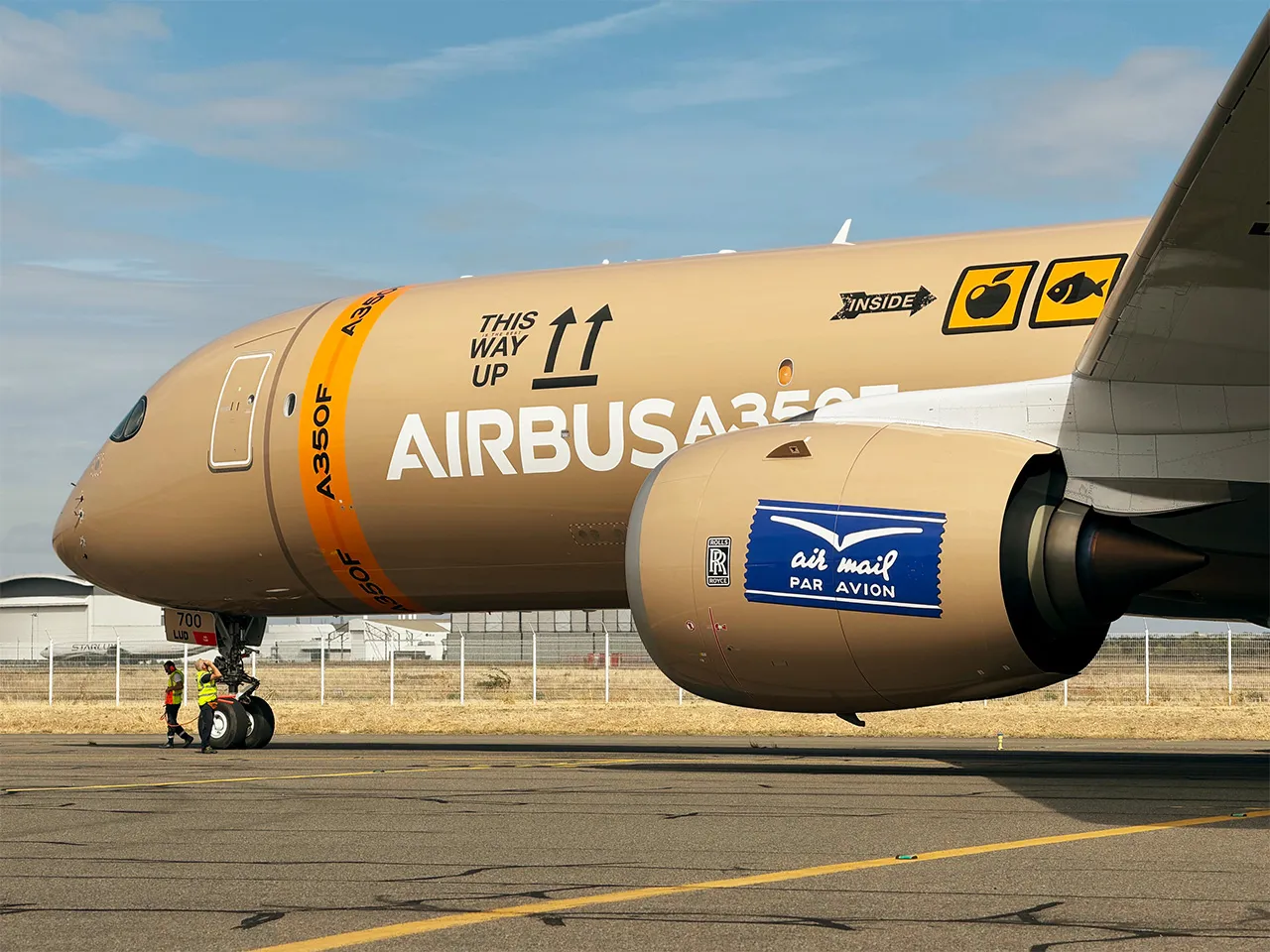
Yesterday the A350F, Airbus’s first-ever purpose-built freighter, took to the skies above Toulouse on its maiden flight (writes Gabriel Leigh). Hundreds of eager onlookers gathered at various spots around the airfield, from customers and journalists to senior leaders and planespotters. The A350F might look familiar but, for Airbus and the air-freight industry, today’s flight marks the beginning of something new.
The arrival marks a major milestone, as operators face a fleet-replacement problem driven by ageing aircraft. Some 100 large cargo planes flying today are more than 30 years old and production of the previous generation of purpose-built freighters, including the Boeing 747, has ended. Today operators want to maximise payload and revenue, while cutting fuel burn and meeting increasingly demanding environmental targets. The A350F addresses these challenges through a lightweight structure that reduces fuel burn and take-off weight.
| |
|
Special delivery: The A350F will be a valuable asset for cargo operators
|
|
Carriers also value an aircraft’s range, particularly as restricted airspace forces longer routes. Above all, operators prize reliability: the premium that they offer over other forms of transport depends heavily on getting goods where they need to be on time.
The market appears receptive: the A350F has maintained steady sales momentum, including 34 orders this year, bringing the total firm commitments to 115 aircraft. And that was all before the plane took a single flight. Today’s sortie marks the start of a nine-month test campaign. If all goes to plan, customers will receive their aircraft towards the end of 2027.
Italian design meets made-in-US manufacturing for Amtrak’s new Airo trainset
The rail journey between Vancouver and Portland becomes more stylish and comfortable today as the first of the Airo fleet debuts on Amtrak’s Cascades line (writes Gregory Scruggs). When Monocle previewed the carriages in Seattle, Siemens was the centre of attention for its work engineering the 83 trainsets. Equally deserving of praise is Italian manufacturer Clerprem, whose recycled leather upholstery feels as good as it looks, while the smart reclining system moves the seat forward without infringing on anyone’s legroom. Both European rail experts opened plants in California to meet made-in-US requirements – here’s hoping that they keep US rail on track for the long haul.
Cities wanting to go green can’t afford to miss the bus
Solaris rises to the challenge of sharing a name with a novel by Poland’s best-known sci-fi writer, Stanislaw Lem (writes Mateusz Mazzini). Launched in a small town near Poznan, the firm currently controls 11 per cent of the European electric-bus market. Its sturdy, in-demand hydrogen-powered vehicles and trolleybuses make it a one-stop shop for everything urban, public and green in transportation. Lem, a prophet of clean technologies, might scarcely have believed the tale.
|
|
• • • • • DAILY TREAT • • • • •
Discover an epic scent from To My Ships
Named after a line in Homer’s Iliad, To My Ships launched in what its founder, Daniel Bense, calls an “uninspiring” category: deodorant. The Aesop and Sunspel alumnus has since worked with celebrated nose Céline Barel to develop the brand’s bestselling Of the Gods perfume around polygonum, a herby ingredient that’s usually only used in trace amounts.
“It’s a fragrance discovered by those near the wearer, rather than announced to a room,” says Bense. Backed by 18 investors, the label has grown by word of mouth and will soon expand to Japan.
tomyships.com
|
|
the LIST: FROM monocle.com
Stories that you might have missed
Not been on monocle.com recently? Here are three updates worth your while.
|
|
| | |