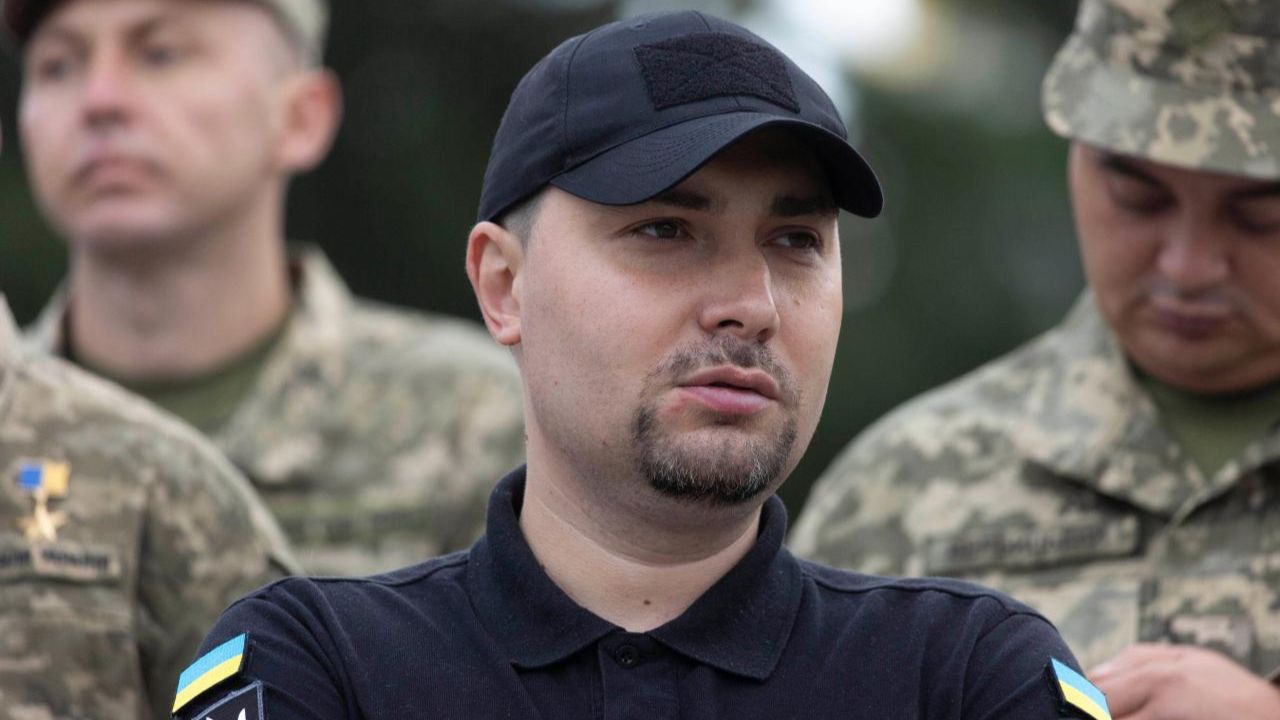
Good morning. This is Mared Gwyn in Brussels, where Euronews’ Defence and Space Summit is just about to get underway – more on that below. Also in this edition: an exclusive interview with the head of President Zelenskyy’s office, Kyrylo Budanov.
Defence in focus in downtown Brussels: NATO Secretary-General Mark Rutte, Bulgarian Prime Minister Ruman Radev and European Commissioner for Defence and Space Andrius Kubilius are among the headline guests at Euronews’ Defence and Space Summit, taking place today at Brussels’ Albert Hall.
Europe on alert: The summit comes as Ukraine heads into its fifth wartime winter and European officials warn of escalating Russian hybrid warfare, including sabotage, arson, and frequent drone incursions.
Just yesterday, Estonia accused Russia of carrying out an arson attack in August against a major drone manufacturer, prompting the NATO alliance to vow not to let the escalating threats curb support for Kyiv.
Follow the summit live on Euronews, and keep an eye out for breaking news from the summit on euronews.com.
Kyiv’s budget gap: The summit also comes amid growing urgency over Ukraine’s finances. On Tuesday, Kyiv urged the EU to tap into immobilised Russian assets to help plug the country's financial and military shortfall next year, which could hit a staggering $78 billion (€68.77 billion) if allies fail to step up their contributions, my colleague Jorge Liboreiro reports.
Sergii Marchenko, Ukraine's finance minister, made the push on Tuesday as he met with representatives from allied donors and financial institutions in Brussels. He argued that using the pool of Russian assets would be both a practical and fair solution to meet Ukraine's wartime costs, protect its debt sustainability and ensure accountability for Moscow's aggression, according to officials with knowledge of the private discussions.
The EU holds €210 billion of these sovereign assets, most of it in Euroclear, a depository in Brussels. The minister recognised the topic was politically difficult and encouraged the bloc to consider a centralised, legally sound framework. Jorge breaks down the dire financial situation.
VDL on Western Balkan tour: Meanwhile, Commission President Ursula von der Leyen kicks off her annual Western Balkans tour in Albania today, before heading to Kosovo and Montenegro on Thursday and North Macedonia on Friday, my colleague Luca Bertuzzi reports.
The reduced itinerary this year will see the President skip both Serbia and Bosnia and Herzegovina due to upcoming elections in both countries. But that decision also comes after von der Leyen used her annual agenda-setting speech in Strasbourg to express horror at the glorification of convicted war criminal Ratko Mladić in his Belgrade funeral.
EU officials noted that she delivered that part of her speech in French, interpreting it as a pointed message to French President Emmanuel Macron, who warmly welcomed Serbian President Aleksandar Vučić in early September.
The visit also comes at a pivotal moment for EU enlargement, Luca explains. To accommodate the trip, the Commission has postponed the publication of its pre-enlargement policy reviews – plans to reform the accession process and prepare the EU’s decision-making for a larger bloc – from 30 September to 6 October.
Montenegro, the accession frontrunner, faces a crunch period to resolve its bilateral dispute with Croatia if it is to meet its ambition of becoming the EU’s 28th member by 2028. The Commission is seeking to mediate between the two countries.
Albania, meanwhile, is expected to receive formal backing for its ambition to complete accession preparations by the end of 2027, with an upcoming roadmap designed to keep Tirana’s reform momentum on track.
Von der Leyen will also face questions in Kosovo and North Macedonia over why the accession roadmaps she announced in her State of the Union address will cover only Montenegro, Albania, Moldova and Ukraine, leaving the two countries out.
|