Since the 2020 police killing of George Floyd, programs that send unarmed responders to some 911 calls instead of police have quietly grown — from just six in 2020 to nearly 100 today.
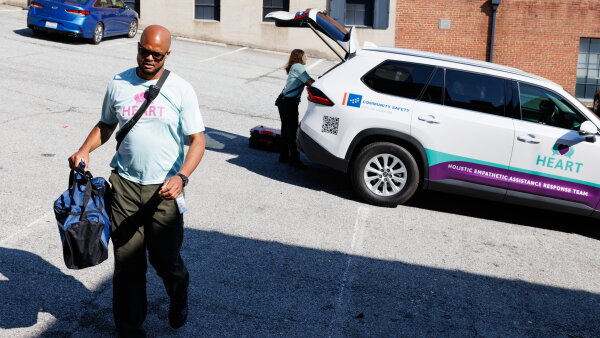
I wanted to understand what it takes to do that work well, so I spent a few days with the community response program in Durham, N.C.
From the back of their minivan, I watched responders handle 911 calls about things like trespassing and panhandling. They doled out bottled water, snacks and fresh socks, and defused some tough situations: An agitated man refusing to leave a parking lot, a paranoid man asking to go to the hospital, a woman needing a safer place to live.
But they often had few long-term solutions to offer.
Researchers told me this tension is common. The goal after 2020 was to avoid more police killings, not solve problems like homelessness. Now, Durham and dozens of other cities are wrestling with this bigger question: Is success resolving the crisis? Or is it to offer a path to stability, so that eventually fewer 911 calls are made in the first place?
Read my full reporting here. And if you have a story or tip about policing and public safety in your city or elsewhere, you can reach me on the encrypted messaging app Signal at mma.05. |