Supreme class in Japanese bullet trains, Tarvas hiking shoes and stories that you might have missed.
|
Thursday 1/10/26
|

|
|
London
Paris
Zürich
Milan
Bangkok
Tokyo
Toronto
|
|
|
|

Good morning. The latest issue of ‘Monocle: The Entrepreneurs’ is on newsstands, in store and online. Our 10th edition travels across the globe to visit start-ups pushing bright ideas and businesses reviving forgotten crafts. It might just prove why starting a company is always worth the risk. But before you get your next big idea rolling, here’s today’s Monocle Minute:
THE OPINION: Western Europe should replicate Japan’s soft spot for mascots
TRANSPORT: Tokyo’s shinkansen unveil supreme-class seating
DAILY TREAT: Tarvas hiking shoes are a step ahead
FROM MONOCLE.COM: Tucker Carlson’s fears for the future
THE LIST: Stories that you might have missed
|
|
Western Europe has more scope for soft power – in the form of plush mascots
By Florian Siebeck
|

|
A curious gathering took place on a recent afternoon at Frankfurt’s Dippemess, the city’s historic funfair. It represented the basketball club, the ice-hockey team, the rubbish collectors, the public-transport operator and the youth fire brigade. Even Germany’s central bank had sent someone along. The only unusual thing was that none of them had come in human form. Frankfurt was holding its annual mascot summit.
Bembli – a plush, oversized version of the grey-and-blue stoneware jug traditionally used to serve Frankfurt’s Apfelwein cider – hosted the gathering. The idea had been dreamt up rather spontaneously at last year’s event. “It seemed obvious: mascots just bring good vibes,” Patrick Hausmann, one of the organisers, told the Frankfurter Allgemeine Zeitung. This year, 15 local plush stars turned up.
Some, such as Dunking Kong the gorilla and Trevor the lion, are seasoned professionals, accustomed to working the crowds at basketball and ice-hockey games. Others keep a lower profile. Lisa, the public-transport operator’s mouse, leaves her burrow only once or twice a year. Some of the mascots are animals (or close enough): a meerkat, an eagle, a bee and a dragon. One is quite literally a walking euro.
| |
|
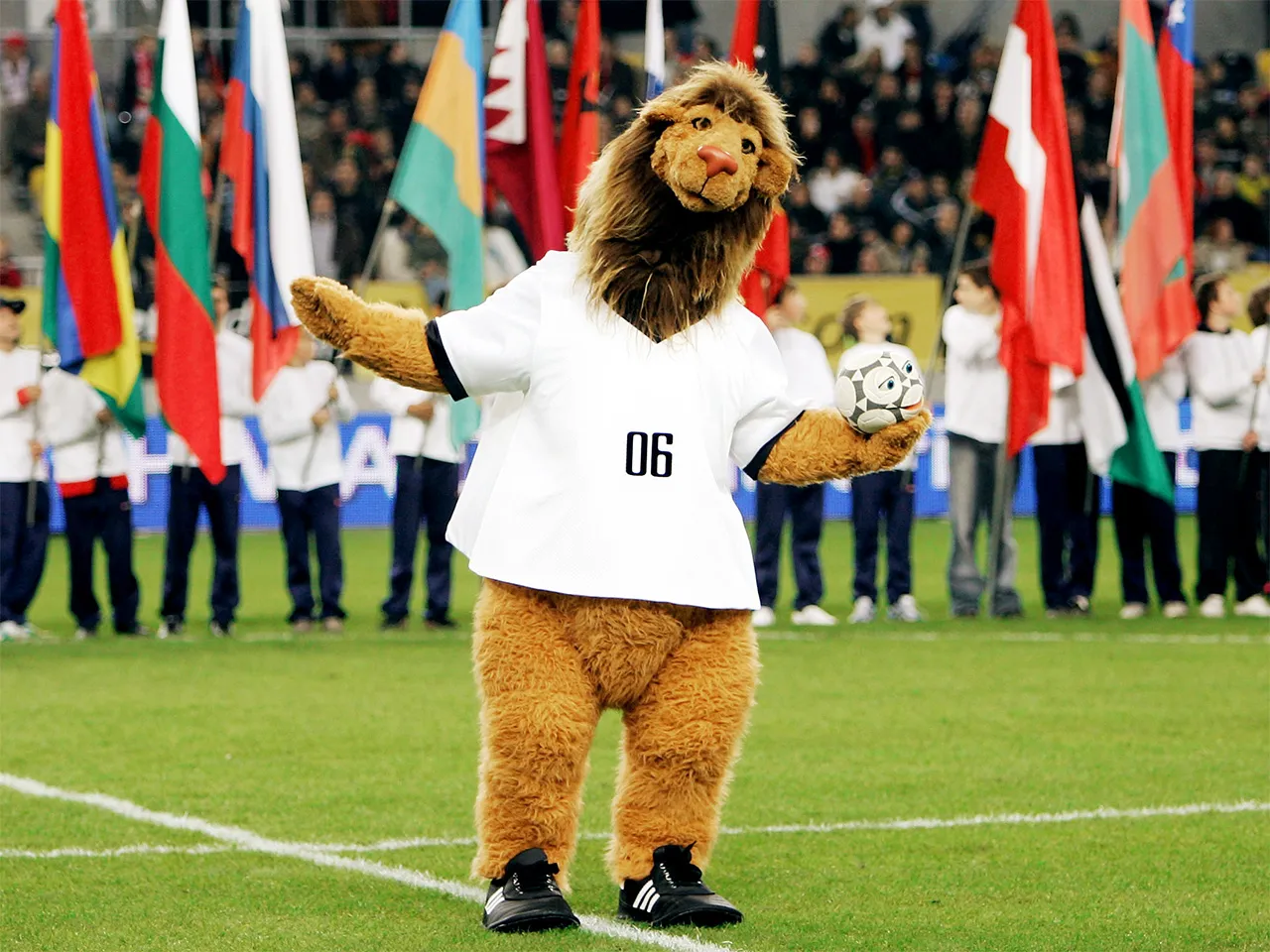
Mane attraction: World Cup 2006 mascot Goleo VI
|
|
Germany has had a complicated relationship with mascots. Things started promisingly with Waldi, the striped dachshund created by Elena Winschermann under Otl Aicher – the designer behind Lufthansa’s landmark 1960s corporate identity – for the 1972 Munich Olympics. Cheerful and resolutely unheroic, he became an ambassador for the friendlier postwar Germany. The country’s last big mascot, Goleo VI, fared less well: the shaggy lion of the 2006 World Cup wore a Germany shirt but, conspicuously, no trousers – a fact that prompted a weeklong national debate.
Goleo VI more or less killed off Germany’s remaining enthusiasm for mascots, which was a pity because the country once had a rich cast of them. Organisations that had long kept one on the payroll – including many of the nation’s regional broadcasters – retired their mascots in the following years or simply let them fade away. As marketing moved online, the slow-burning characters fell out of fashion, replaced by influencers with ready-made audiences.
At about the same time, ironically, Japan went in the opposite direction: from the mid-2000s, local mascots began multiplying at extraordinary speed, complete with dance competitions and popularity contests. Its yuru-chara (“loose characters”) represent almost everything: cities and prefectures, police departments and railway companies, tax offices and even prisons.
Some yuru-chara have become celebrities in their own right. Kumamon, the rosy-cheeked black bear created to promote the city Kumamoto, has become a national figure who has even been sent abroad. Funassyi, an unofficial pear fairy from Funabashi, built a career on being deliberately chaotic and even landed a deal with Universal Music Japan. And when JR East announced that its much-loved Suica Penguin would be retired in March 2027, fans reacted as though a celebrity had died.
In Japan, mascots are part of the civic PR playbook. Alongside promoting tourism, they make institutions feel less remote, giving otherwise abstract organisations a face. It might be a particularly good moment for Western cities to take note. At a time when urban identity is wavering and trust in institutions is wearing thin, people are looking for things that feel tangible and unmistakably local. A slightly ridiculous creature can do more for civic affection than a six-figure branding exercise.
Western Europe has a few lessons to take from Japan. First, institutions need to tolerate a little silliness. Western city governments and companies often worry that being playful means not being taken seriously but Japan demonstrates that credibility and absurdity can happily coexist. Second, keep it local and stick with it. The best Japanese mascots are long-term characters, rooted in local food, folklore, history and in-jokes. And third, let adults enjoy them too. Japan has made kawaii aesthetics perfectly respectable beyond childhood. Mascots shouldn’t only be wheeled out for school fêtes and funfairs but allowed into everyday life.
For mascots to catch on in the West, this admittedly might require a rethink but Frankfurt’s gathering offered a glimpse of what it might look like. People stopped for photographs with the mascots or simply lingered around them. There was no awkward small talk and no need to explain. Several of the city’s furry ambassadors have stories of grown adults approaching them for a long hug simply because they were having a bad day. Try getting that from a fancy logo.
Florian Siebeck is Monocle’s Frankfurt correspondent. For more opinion, analysis and insight, subscribe to Monocle today.
|
|
transport: Japan
Japanese bullet trains introduce new supreme-class seats
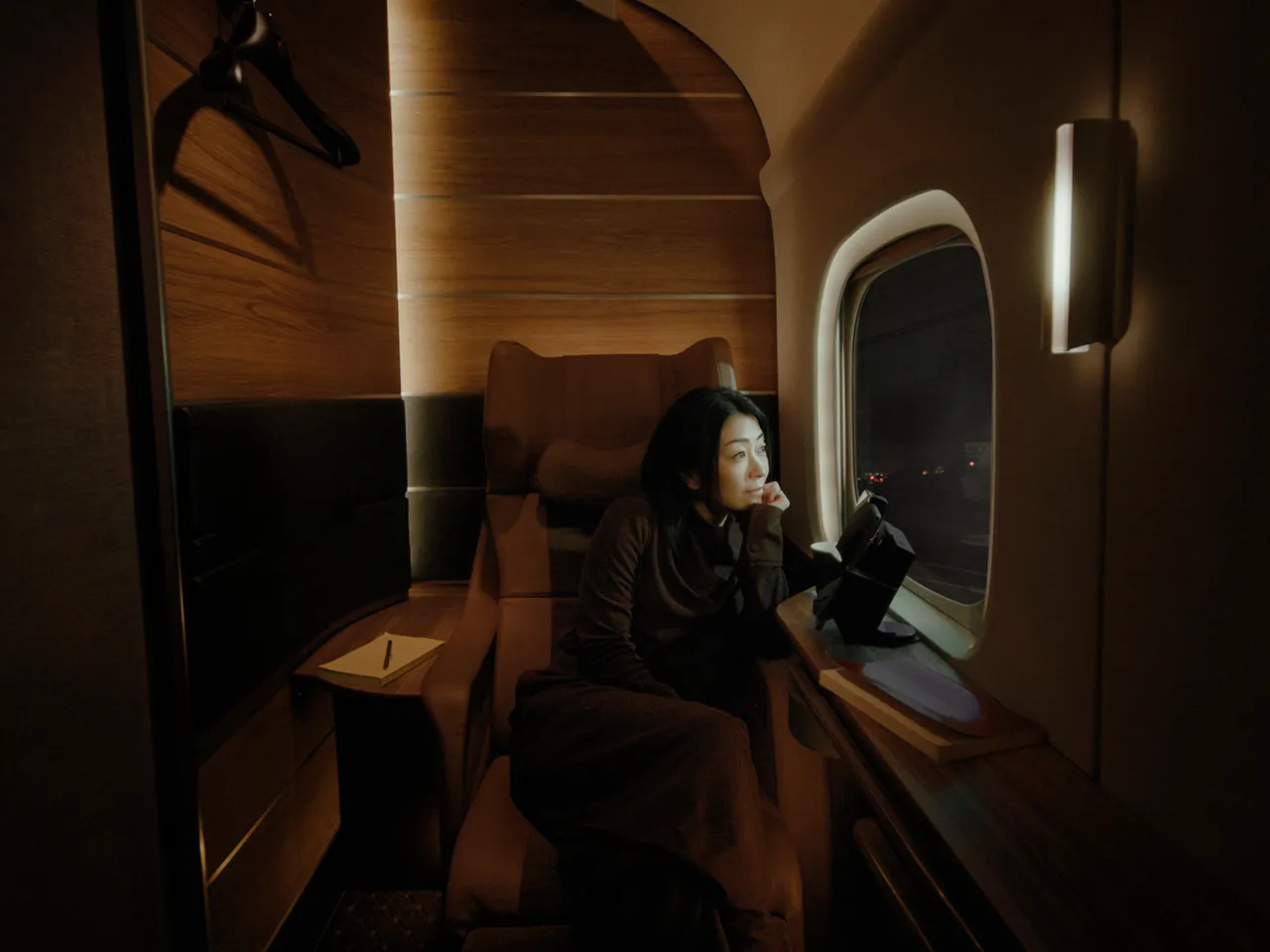
High-speed bullet trains (shinkansen) heading west from Tokyo to Osaka and Fukuoka have a new ultra first-class service from today: supreme class (writes Fiona Wilson). The snug private cabins come with a reclining heated seat, lockable door and personal tablet that allows the passenger to control the lighting and airflow. Also on offer is dedicated internet access, a bluetooth speaker built into the headrest and space for luggage. In the next fiscal year, semi-private supreme class swivel seats with hard shells will follow cabins for one or two.
| |
|
In the fast lane: A new supreme-class cabin
|
|
The Green Car – the business class option on this route – will receive an upgrade next year too. An ad campaign featuring a new song, “Intentions”, by Japanese pop star Utada Hikaru, who says that she was inspired by Virginia Woolf’s A Room of One’s Own, has trailed the supreme class service. JR Central president Shunsuke Niwa says that the team wanted to focus on the experience as much as the journey itself. “For passengers, travel time is incredibly valuable,” he says. “We want to make the time spent on the shinkansen a worthwhile part of a wonderful day.” Solitude on Japan’s busiest bullet-train artery doesn’t come cheap but there will be plenty of takers.
|
|
• • • • • DAILY TREAT • • • • •
Stride into autumn in Tarvas hiking shoes

Finnish shoemaker Tarvas has found its footing at the top of the crossover between hiking boots and trainers. With its topographical layering of leather, rubber and mudguard, the brand’s Easy Hiker is now a recognisable silhouette on the streets of Paris, Tokyo and beyond.
The Wanderer is the Hiker’s slender cousin. With a generous Vibram sole and a Jacques Solovière-like upper side that forms a calfskin pleat through its centre, it’s ideal for both the fleet-footed city flâneur and the forest trail explorer. If you can’t decide, the Explorer and new Derby shapes provide a middle ground with a more classic look. Picking which style might be your only uphill battle for a while.
tarvas.com
|
|
from monocle.com: usa
‘My perspective changes constantly’: Tucker Carlson on trust in media and the Iran war
Tucker Carlson is a journalist who often ends up becoming the news – perhaps most famously when Fox News fired him from his successful show, Tucker Carlson Tonight, in 2023 (writes Andrew Tuck). His views on everything from climate change (not a threat) to Israel (he believes that the country has dragged the US into an unnecessary war) have also kept his name in the headlines. Today he runs The Tucker Carlson Show, available on the likes of Youtube and X, where he has interviewed white nationalist Nick Fuentes and Vladimir Putin.
While it’s easy to see Carlson as just a right-wing protagonist and fire-starter, he no longer supports Donald Trump, is opposed to the Iran war and recently spoke out in support of left-wing Democratic Senate contender Abdul el-Sayed.
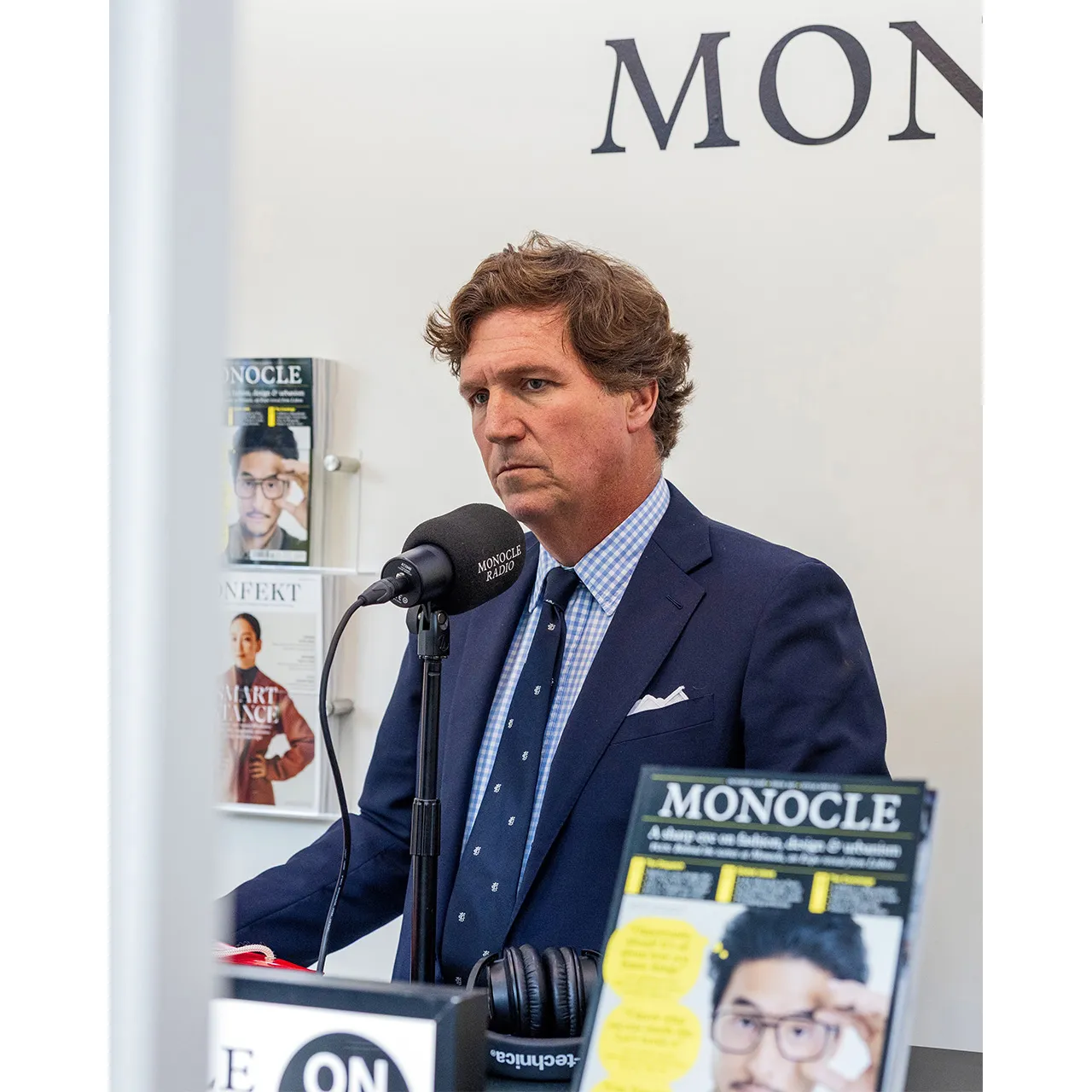
Monocle caught up with Carlson at the Livex Liveability and Investment Exhibition in Abu Dhabi to discuss the mid-terms, Trump, threats of war and being a media owner.
|
|
the LIST: FROM monocle.com
Entrepreneurial tales to tuck into
If you’re yet to pluck a copy of the latest Monocle: The Entrepreneurs special off the newsstand, here are three reads to get you started.
|
|
| | |