|
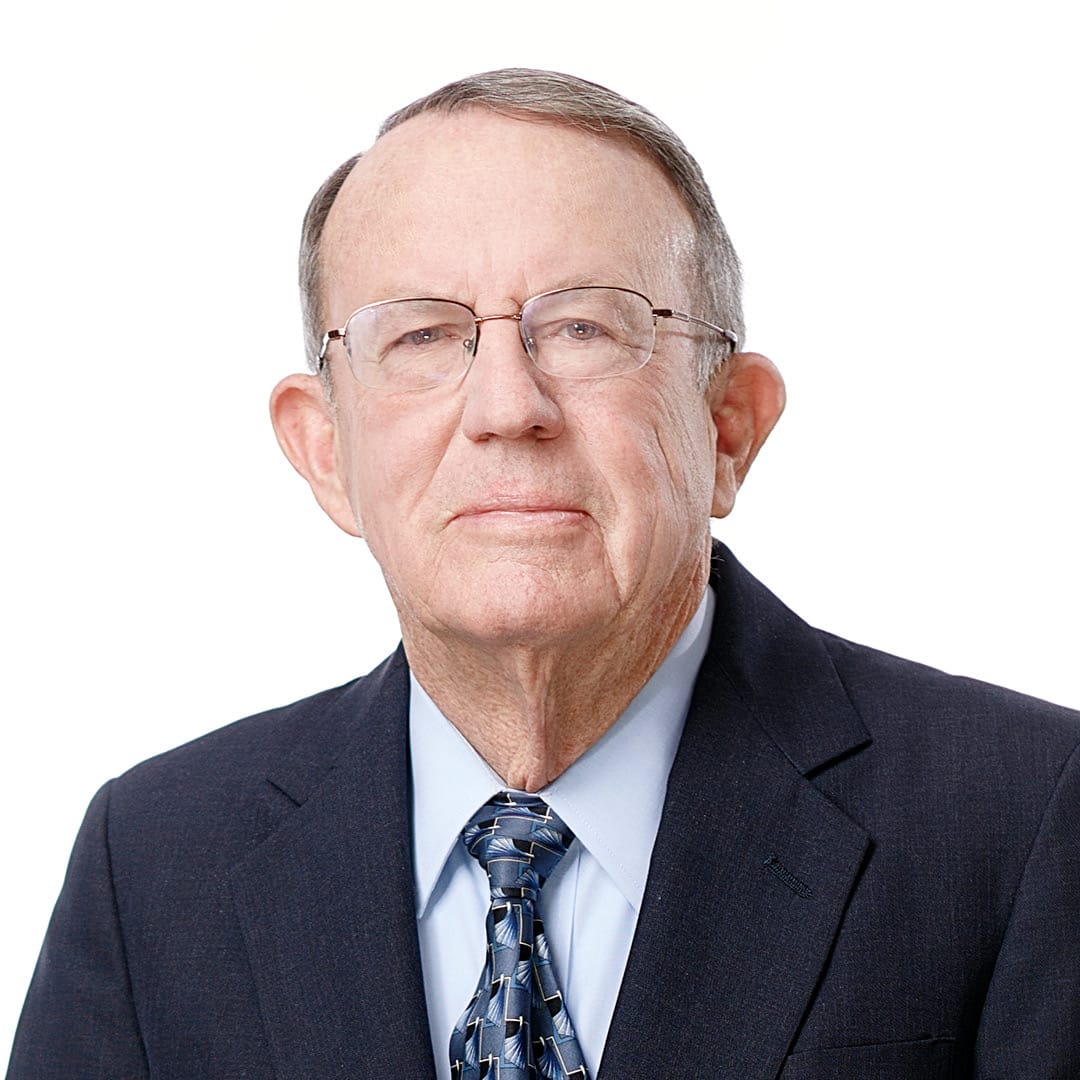
By Stephanie Rasmuson Raymond Ruddy has spent much of his life building organizations in business, philanthropy and the pro-life movement. A longtime Massachusetts businessman and philanthropist, Ruddy helped lead Maximus from a small government consulting company into a major government services corporation. Today, at 82, he remains a member of Maximus's board of directors and is involved with the Massachusetts Family Institute and national pro-life initiatives. His path from corporate executive to philanthropist grew from lessons learned much earlier in life: the importance of hard work, responsibility, faith and service to others. Ruddy was born in 1943 and spent his early childhood in Hartford, Connecticut, before his family moved to West Hartford when he was in elementary school. His father worked as a buyer for G. Fox & Co., the prominent Hartford department store, while his mother was a homemaker. Ruddy grew up with a brother and sister. His father also provided an early example of service, remaining involved with his church and the YMCA while working full time. “He stressed the need to take care of other people and be charitable,” Ruddy said. Throughout high school, Ruddy competed in three sports. He captained the cross-country, wrestling, and track and field teams. Work was another regular part of his upbringing. Ruddy took Christmas jobs at G. Fox and the post office and spent his summers caddying, mowing lawns, maintaining tennis courts, and making deliveries. One of those jobs — driving a Charles Chips truck and selling potato chips and cookies door-to-door — gave him an early lesson in sales. “I learned that I wasn't afraid to do sales work,” Ruddy said. Ruddy went on to study economics at the College of the Holy Cross before earning an MBA from the Wharton School at the University of Pennsylvania. After graduate school, he joined IBM in sales, working with retail businesses in Philadelphia. He later joined the Touche Ross & Co. Boston office, where he built a career in management consulting and eventually rose to associate national director of consulting. Early in his time at the firm's Boston office, rather than waiting for assignments, he started reaching out to government agencies and pursuing opportunities. “I got out there and started making calls. I started seeing people and government officials…telling them what the firm did and so forth,” Ruddy said. As he began selling consulting projects, he was soon asked to manage them as well. “I just kept asking question after question after question,” Ruddy said. “And after a while they gained some respect that I knew what I was doing, when really all I was doing was asking questions.” Those years prepared Ruddy for the next major chapter of his career. He first encountered Maximus while trying to acquire the company for Touche Ross & Co. Instead, Maximus founder David Mastran began talking with Ruddy about joining the company. After roughly a year and a half of discussions, Ruddy joined Maximus in 1985. Maximus is a government services company that works with federal, state and local agencies to administer public programs, particularly in health and human services. Founded in 1975, the company provides services ranging from program administration and technology solutions to helping people access government benefits and services. At the time, the company had only about 23 full-time-equivalent employees. In a small operation, titles mattered less than getting the work done. Ruddy took on responsibilities ranging from corporate finance and information technology to consulting and executive leadership. He served as chairman of the Maximus board from 1985 to 2001 and president of its Consulting Group from 1989 to 2000. He also remembers performing some decidedly less corporate tasks, including emptying the trash and opening the office blinds. Over the following years, Maximus expanded substantially. Ruddy helped lead significant financial transactions, including positioning the company for its 1997 initial public offering. Today, Maximus works with government agencies in the United States and abroad, particularly administering health and human services programs. Ruddy retired from the company in 2001 and returned to its board as a director in 2004. Looking back, he said the people whose livelihoods were connected to the company's growth remain among his proudest accomplishments. “One of the most proud things for me is the people,” Ruddy said. Retirement also let Ruddy devote himself to an area he believed had received too little of his attention during his business career. “I particularly wanted to be involved in charitable things,” Ruddy said. Ruddy and his wife, Marilyn, established the Gerard Health Foundation in 2001. The foundation's work centered on a goal Ruddy describes simply: saving lives. That mission extended beyond the pro-life movement. Ruddy supported efforts addressing hydrocephalus in children, clean drinking water in Guatemala and HIV/AIDS in Africa. He traveled to Uganda about a dozen times through his humanitarian work. His approach to philanthropy reflected the discipline of his corporate career. When the foundation sought proposals from charitable organizations, Ruddy said it received 312 responses. Potential recipients were examined based on their leadership, finances, programs and ability to produce results before the list was narrowed substantially. “The main reason why we decided to support them is that we felt that they could save the most lives possible,” Ruddy said. Organizations receiving support were expected to establish objectives, work plans and measurable outcomes. Ruddy wanted to know not simply where money was going, but what it accomplished. “What gets measured gets done,” Ruddy said. “All of the business things that I’ve learned have been applied to our charity work.” Among the causes that became especially important to Ruddy was the pro-life movement. He said that his Catholic faith has been foundational to that commitment and to his broader charitable work. “Faith has been the major underlying factor,” Ruddy said. Ruddy's involvement has included supporting pregnancy resource centers in Massachusetts as well as work with national pro-life organizations and leaders. More recently, he has worked with Leonard Leo and Princeton University professor Robert P. George through the Life Leadership Conference, an organization established in 2025 to coordinate organizations and donors within the pro-life movement. For Ruddy, the movement's strategy has changed significantly following the U.S. Supreme Court's 2022 decision in Dobbs v. Jackson Women's Health Organization, which overturned Roe v. Wade. Subsequent abortion-policy battles have taken place through state legislatures, courts and ballot measures. Ruddy said those developments have reinforced his belief that legal and political efforts alone are not enough. “We really have to change hearts and minds,” Ruddy said. “And I think that's the challenge today.” Ruddy is a trustee of Massachusetts Family Institute, a leading faith-based public-policy organization founded in 1991 that advocates on issues including pro-life, religious liberty, parental rights, marriage and family. Ruddy said he first became a financial supporter before later joining the organization's board. His connection to Massachusetts, however, is rooted as much in family as in business or philanthropy. Ruddy met his wife, Marilyn, while he was a student at Holy Cross and she attended Marymount College in New York. The two were introduced at a dance and dated for five years, through Ruddy's remaining undergraduate years and his time in graduate school. They married after he completed his MBA. Ruddy describes Marilyn as an instrumental partner in the charitable work they have undertaken together. They have three children and eight grandchildren, with their family remaining closely tied to Massachusetts. Their daughter Carolyn has also become involved with Massachusetts Family Institute, representing what Ruddy sees as another generation willing to carry forward charitable and pro-life work. “We're a very close family,” Ruddy said. Massachusetts has also presented challenges for some of the causes Ruddy supports. He described the Commonwealth as a difficult environment for the pro-life movement, but said setbacks have not changed his determination to keep working. For Ruddy, perseverance comes from the conviction behind the cause — and from seeing tangible results in other areas of his philanthropy, where medical treatment or access to clean water show an immediate measure of lives helped. Still, when Ruddy considers his legacy, his first measure of a life well lived is not corporate growth, philanthropy or advocacy. It is family. “Mother Teresa once said, 'If you wanna change the world, start with your family,'” Ruddy said. Ruddy hopes his children and grandchildren remember his willingness to act — through a business career that helped build Maximus, charitable work meant to save lives and causes he continues to pursue over two decades after leaving full-time corporate work. “I want them to say that I was a doer, and that I tried.”
|