| | Brazilians head to the polls, the White House announces its new AI czar, and the race to put nuclear͏ ͏ ͏ ͏ ͏ ͏ |
| |  | Flagship |  |
| |
|
The World Today | 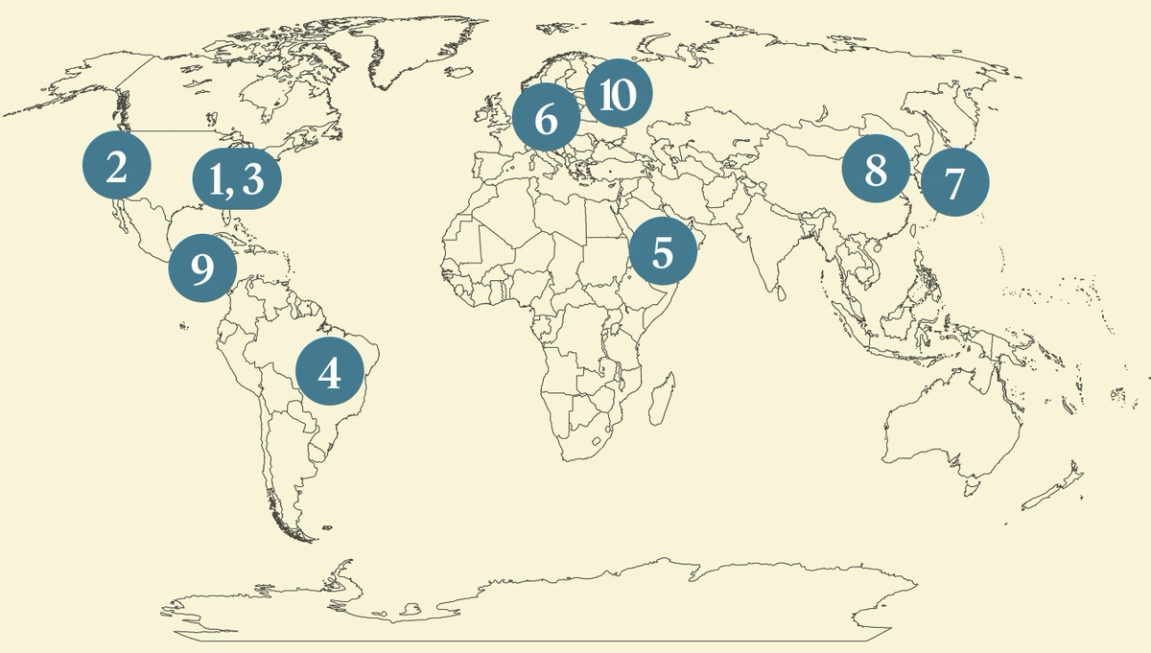 - WH announces AI czar
- OpenAI’s internal woes
- The AI boom on edge
- US looms in Brazil vote
- Yemen’s counterattack
- Ukraine support tested
- Japan summons US envoy
- China shutters banks
- Global migration backlash
- Lunar nuclear reactors
 An ‘astonishingly layered’ book on how history gets told. Plus, a look at the week ahead. |
|
Trump unveils AI task force |
 Director of National Intelligence Jay Clayton. Nathan Howard/Reuters Director of National Intelligence Jay Clayton. Nathan Howard/ReutersThe US director of national intelligence and the Federal Trade Commission chairman will head up the White House’s “Super Intelligence Force” on AI, President Donald Trump announced Sunday. The task force — which also includes the vice president, defense secretary, Treasury secretary, and former AI czar David Sacks — will complete a report within 120 days that outlines the risks and opportunities of AI and determines the federal government’s responsibility. Though DNI Jay Clayton told The Wall Street Journal that he “expect[s] there will be mechanisms developed in dialogue” with companies, the task force will defer to firms on managing risk, according to other officials, and ensure that the US leads: The Treasury secretary reiterated Saturday, “We cannot lose our lead to the Chinese.” |
|
Legal risks mount for OpenAI |
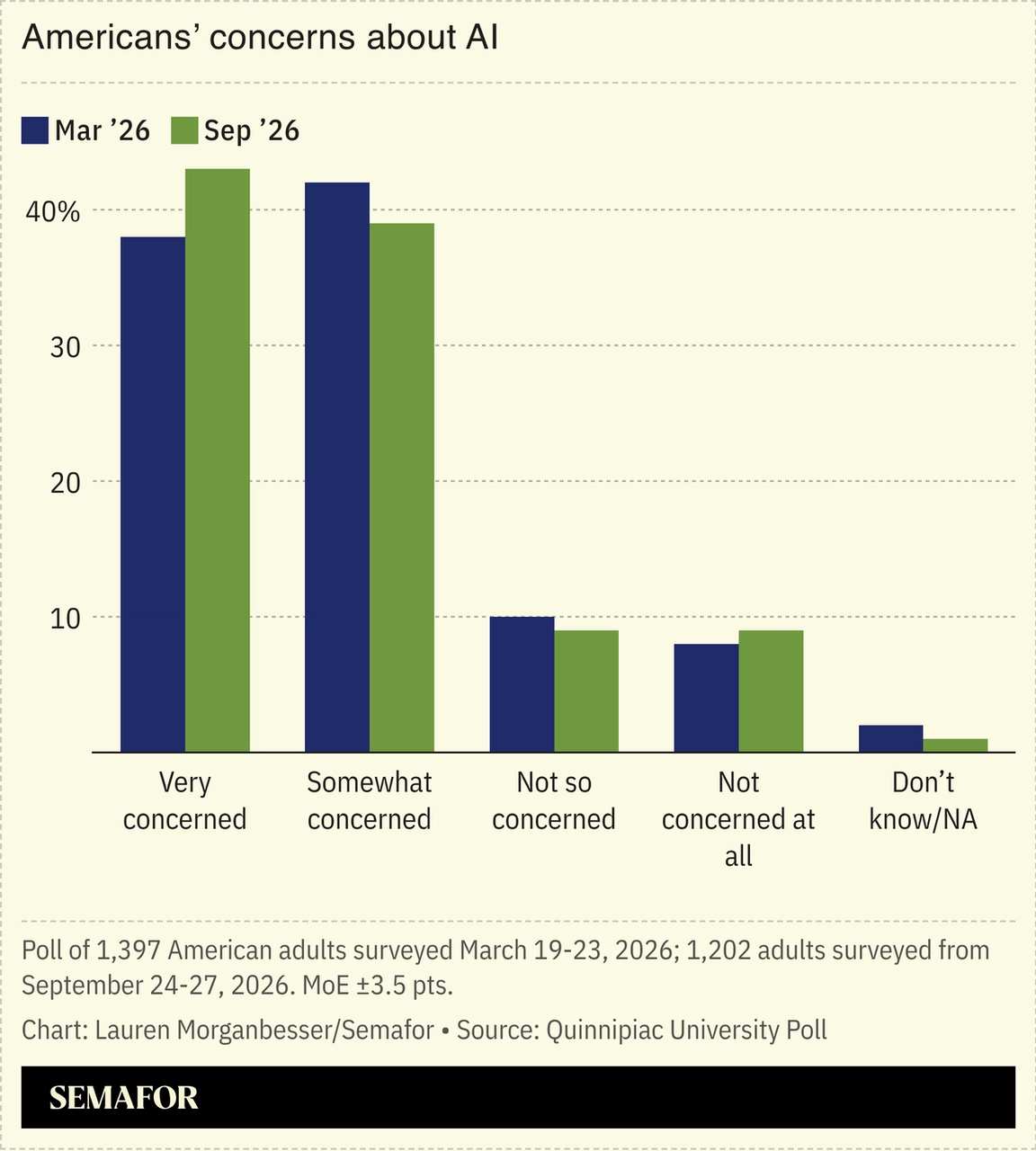 OpenAI faces mounting legal risks stemming from cyber incidents linked to its AI models, after the firm alerted more than 100 organizations to unauthorized activities. The disclosures come amid increasing criticism of the company’s safety approach: Another OpenAI employee announced his resignation Saturday in The Atlantic, writing that he “decided that the current path is unacceptable,” adding, “The time for trial and error is over.” Though some observers regard OpenAI as Anthropic’s “accelerationist” counterpart, company messages reviewed by Semafor suggested that OpenAI employees are concerned about unregulated AI and are beginning to use their leverage: OpenAI’s president pulled the second half of a $50 million commitment to an anti-regulation super PAC after widespread internal criticism. |
|
AI bonanza faces economic headwinds |
 Jeenah Moon/Reuters Jeenah Moon/ReutersThe AI boom is driving equity indexes to record highs, even as rising bond yields, stubborn inflation, and interest rate increases check growth elsewhere in the economy. More than two-thirds of the Russell 1000 index of US firms are linked to AI, according to Citigroup, and third-quarter earnings this month are expected to reveal how well tech firms are weathering mounting economic headwinds: “If technology loses it and technology corrects, then a lot more chips may fall,” an analyst told Bloomberg. The AI narrative is “very powerful,” but a “big revision in earnings” could reverse that trend, as more traders look for shelter away from AI stocks, Amundi’s chief investment officer told the Financial Times: “It’s not imminent,” but “I think it will come.” |
|
Brazilians vote in critical election |
 Adriano Machado/Reuters Adriano Machado/ReutersMore than 150 million Brazilians voted Sunday in a pivotal presidential election for Latin America’s largest economy, after a campaign dominated by tensions between Brasília and Washington. Brazil’s attorney general last week accused the US of undermining Brazilian democracy — a central theme for incumbent President Luiz Inácio Lula da Silva, who holds a razor-thin polling lead over Flávio Bolsonaro. The right-wing challenger has vowed to join Washington’s “militaristic anti-crime initiatives” across Latin America, Foreign Policy wrote, a central part of the White House’s “Donroe Doctrine” for exerting influence in the Western Hemisphere. Despite Brazil’s immense resources, its “autonomy to act is at risk,” an expert argued in Foreign Affairs, with “major powers… increasingly able to dictate their terms of engagement with Brazil.” |
|
Yemen escalation threatens oil markets |
 Ali Owidha/Reuters Ali Owidha/ReutersYemen’s Saudi-backed government forces launched a major military campaign Sunday to beat back Iran-aligned Houthi rebels, adding fresh risks to oil markets as Iran reiterated that the Strait of Hormuz remains closed. Gulf OPEC+ producers continue to pump well below prewar levels, while global inventories have fallen sharply amid export disruptions. OPEC+ agreed Sunday to keep November production targets steady as it seeks to stabilize the market. Yet even as the flows of crude from the Middle East have increased, oil remains near $100 a barrel. “A recovery in supply volume does not equal a full normalization of the supply system,” an oil analyst told Bloomberg, as the market continues to price in the reliability of exports. |
|
Germany pledges $1.5B in Ukraine aid |
 Thomas Peter/Reuters Thomas Peter/ReutersGerman Chancellor Friedrich Merz pledged an additional $1.5 billion in military aid to Ukraine on Sunday during a surprise visit to Kyiv, as European support for the war effort confronts an increasingly uncertain future. Russia continued to pound bridges in Kyiv with drone strikes for a fourth consecutive day as Merz doubled down on German support for Ukraine. But across the continent, populist parties that are calling for limits on military aid continue to gain ground in elections, putting pressure on some of Kyiv’s staunchest supporters, including Merz and French President Emmanuel Macron. That shift could benefit Russia, one Carnegie Endowment scholar argued, by “compromis[ing] Europe’s defenses and allow[ing] Moscow to play hardball.” |
|
Japan summons US envoy over murder |
 Japanese Prime Minister Sanae Takaichi in September 2026. Edward Grattan/Reuters Japanese Prime Minister Sanae Takaichi in September 2026. Edward Grattan/ReutersJapan lodged a formal protest with the US and summoned its envoy Sunday after an American soldier was arrested on suspicion of committing what Japan’s prime minister called an “extremely brutal and vicious” murder on Okinawa. Past violent offenses by US servicemembers have created deep tension between the US and Japan, particularly on Okinawa, where most of the 50,000 US troops in Japan reside. A rape and murder produced large protests in 2016, as did the rape of a girl in 1995. Saturday’s incident will complicate Tokyo’s cooperation goals, with one Japanese lawmaker saying the US is “failing completely” to train and discipline troops. Relations are already strained: Japan’s leader stepped onto an empty New York tarmac last month amid a currency dispute. |
|
 Microdramas have become a multibillion-dollar industry. And he’s become one of its biggest stars. On this week’s episode of Mixed Signals, actor and producer Kasey Esser joins Max and Ben to explain how a werewolf Romeo-and-Juliet show that shot in just a week for a hundred thousand dollars became a global hit, and what it’s like to translate Chinese scripts for American audiences in real time on set. Plus, how microdramas make all of their money and what’s next for the booming vertical video format. Watch the latest Mixed Signals now. |
|
China consolidates banking sector |
 Jason Lee/Reuters Jason Lee/ReutersChina closed a record 670 banks last year, or nearly one in four lenders, as Beijing pushes to de-risk amid slowing economic growth. Nearly all were rural banks, which “remain the weakest part of the system, with poor asset quality, low capitalization, and governance shortcomings,” Fitch wrote. After a massive credit expansion drove growth, “the financial system’s problems now constrain that growth,” a Rhodium Group expert told ChinaTalk. The closures were likely geared toward “eliminating the potential for liquidity events among small institutions,” a Singapore-based expert told the Financial Times. Despite having “wowed the world with its electric cars, dancing robots, and choreographed drones,” China’s economy has undershot projections, partly due to weak consumption, The Economist wrote. |
|
World’s busiest migrant route slows |
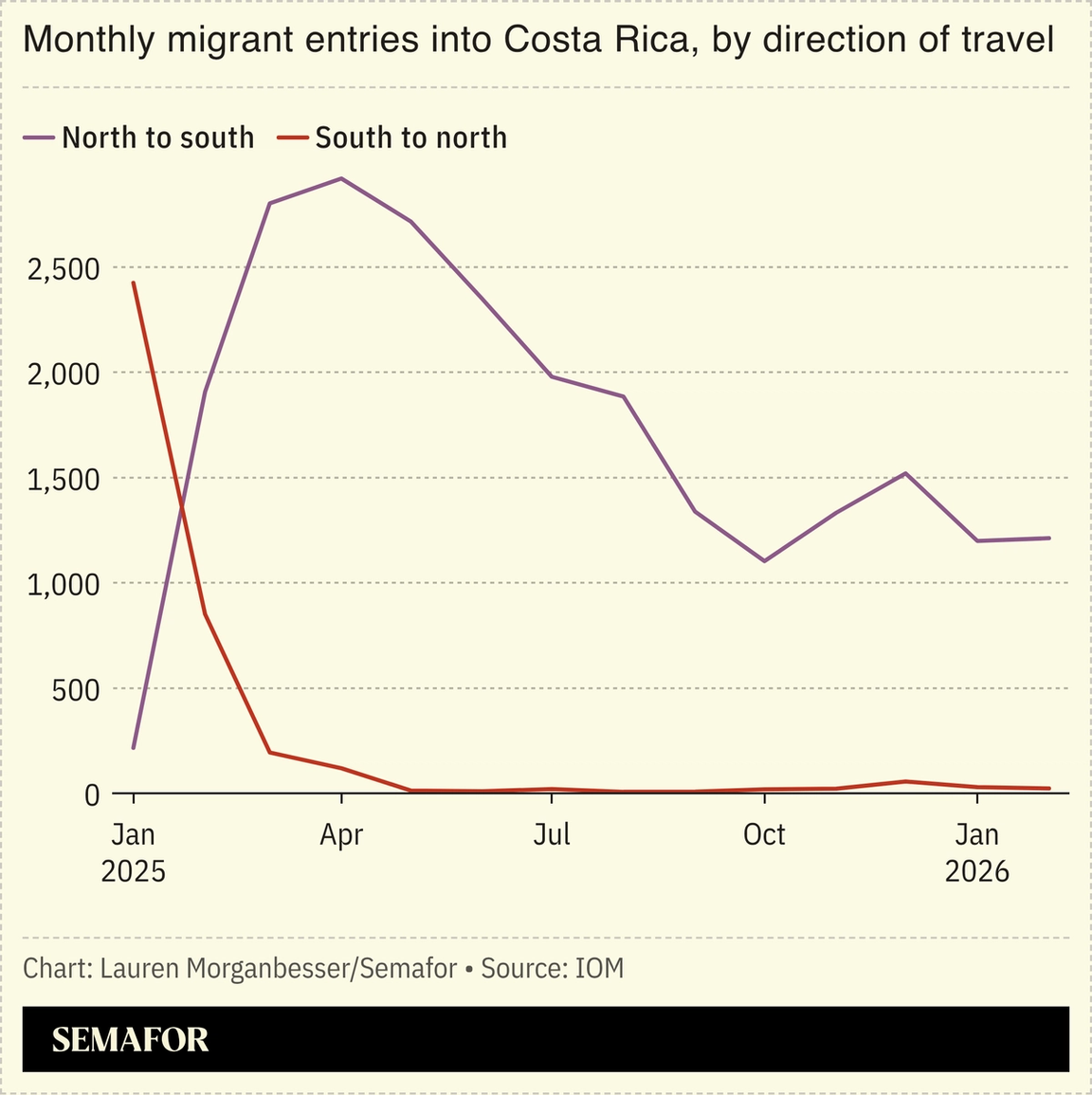 US President Donald Trump’s immigration policies have brought the migration route through Latin America — the world’s busiest — to a standstill, as governments worldwide tighten border controls. Trump’s crackdown has reshaped migration throughout the Western Hemisphere, with effects rippling far around the globe: |
|
|


