
|
 |


As the Supreme Court begins its new term, the Justices have made public their decision to decline to hear a number of cases lawyers had been eagerly awaiting. That included one involving felons’ rights to possess firearms and a pair of COVID-19 vaccine mandate cases. The Justices also declined to hear a case involving whether schools could prohibit students from wearing “Let’s Go Brandon” sweatshirts.
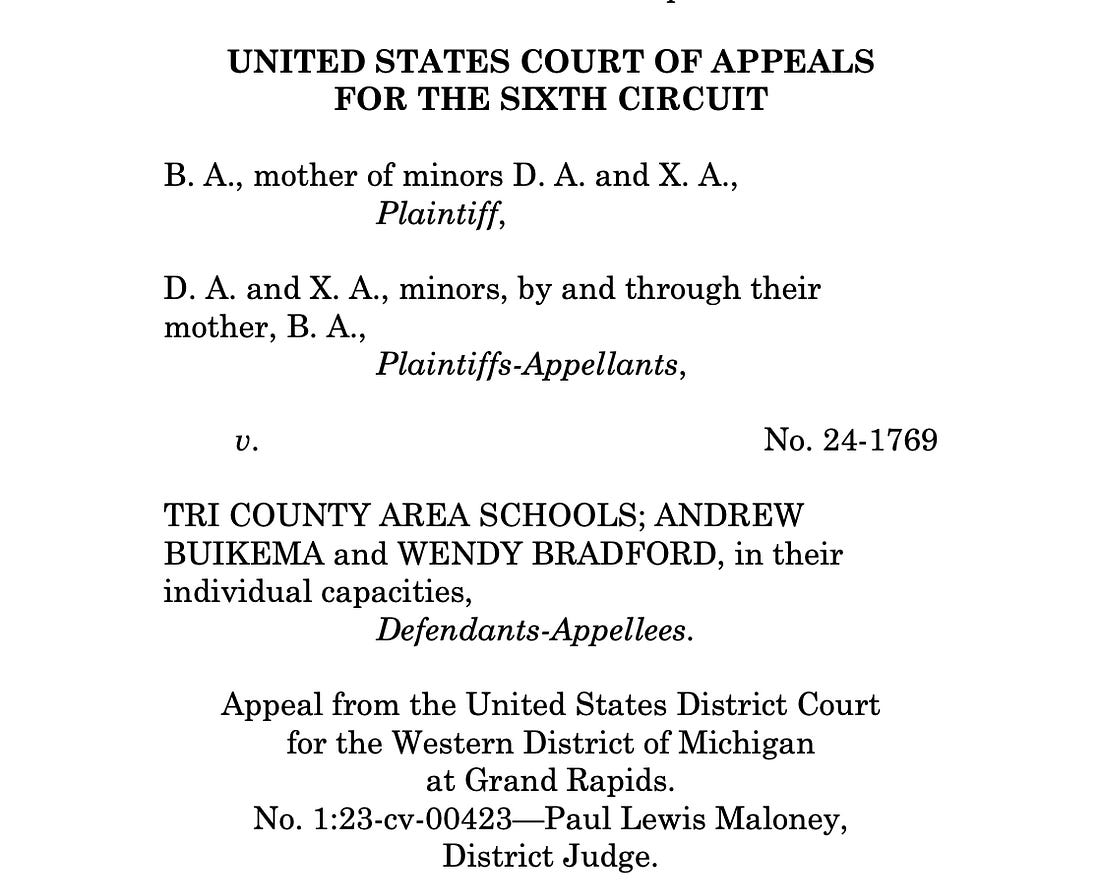
D.A. v. Tri County Area Schools involves a mom who got mad when the middle school her sixth and eighth grade boys, D.A. and X.A., attended refused to permit them to wear the “Let’s Go Brandon” sweatshirts she bought them for Christmas. She sued.
 |
According to PBS, the phrase “Let’s Go Brandon” “originated in 2021, when people in the crowd at a NASCAR race chanted the obscenity directed at President Biden and a TV sports reporter said they were calling out ‘Let’s Go, Brandon,’ apparently believing they were chanting for driver Brandon Brown, who had just won a race.”
Tacky? Sure. Appropriate for kids of that age? Arguably not. Protected by the First Amendment? In society at large, yes. But this case involved a school.
When the Sixth Circuit Court of Appeals decided the case, it explained the origin of the lawsuit like this: “Two middle schoolers in Michigan wore sweatshirts emblazoned with the phrase ‘Let’s Go Brandon’ to school. Based on the commonly understood meaning of the slogan, the school administrators determined that the sweatshirts were inappropriate for the school environment. They asked the students to remove the sweatshirts, and fearing punishment, the students complied. But they still wanted to wear the sweatshirts at school to express their disapproval of then-President Joe Biden’s administration and its policies. So, through their mother, the students sued the school district and several school administrators, alleging that the school deprived them of their First Amendment rights.”
District Judge Paul Maloney in Western Michigan ruled in favor of the school district. The Court of Appeals writes that he concluded that the school “could reasonably prohibit the sweatshirts since they were vulgar speech. Because the school reasonably understood the slogan ‘Let’s Go Brandon’ to be vulgar, we affirm.” That’s the decision the mom and sons were hoping the Supreme Court would reverse.
Vulgarity isn’t usually a reason to ban speech, but it can be different when you’re at school. The Supreme Court held in 1969 in Tinker v. Des Moines that public school students do not “shed their constitutional rights to freedom of speech or expression at the schoolhouse gate.” The plaintiffs in Tinker wore black armbands to silently protest the Vietnam War. The Court found that was “pure speech” that was protected by the Constitution and that “the wearing of armbands in the circumstances of this case was entirely divorced from actually or potentially disruptive conduct by those participating in it.”
Tinker involved students who were punished based on the political content of their speech, and the Court went to pains to point out that others, including students who wore the Iron Cross associated with Naziism were not similarly punished. In D.A., the Sixth Circuit concluded the school district’s actions were about regulation of vulgarity, not punishment of a political viewpoint. In a case after Tinker, Bethel School District v. Fraser, the Supreme Court ruled in 1986 that the First Amendment doesn’t prevent public school officials from disciplining students for lewd, indecent, or plainly offensive speech. According to the Court of Appeals, the “Let’s Go Brandon” sweatshirts had to go.
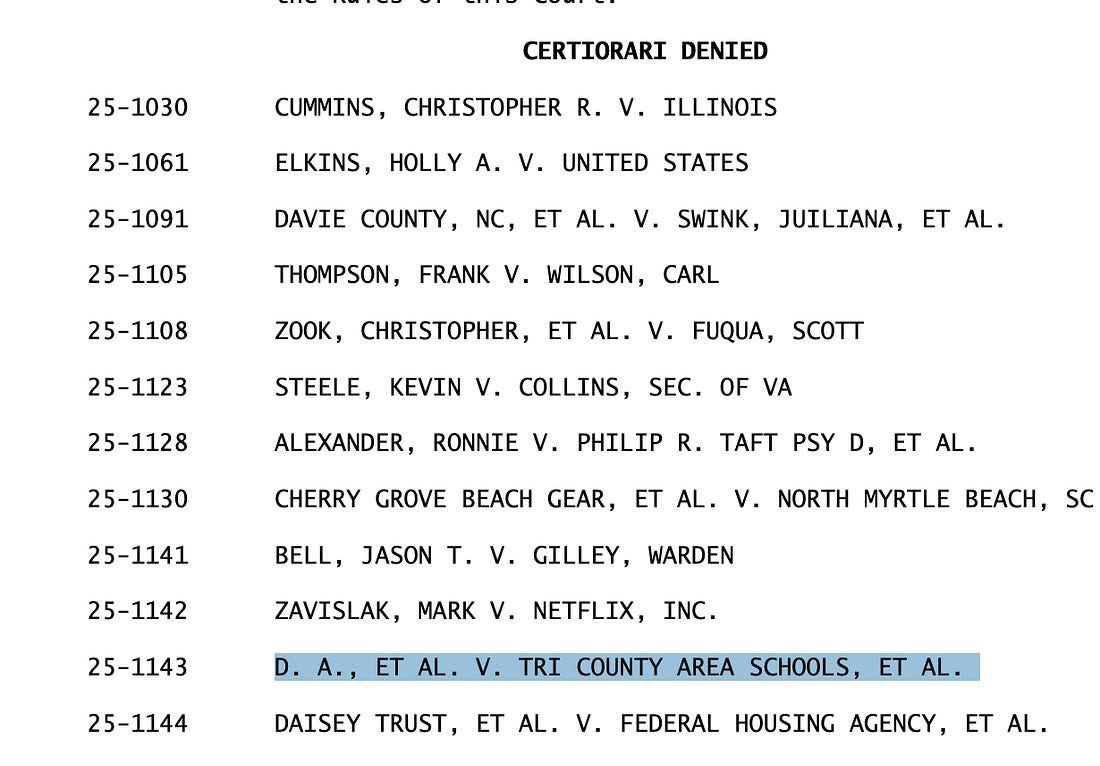
Typically, when the Supreme Court decides not to hear a case, it means the Justices found no reason to disturb the lower court’s decision—no new novel issues of law that they have not already decided that need to be explored. The Justices don’t have to explain why they “deny” certiorari (or cert), meaning they won’t hear the case. Sometimes they do, but usually, we learn of their decision as we did here, with a single line in a list of cases where cert has been similarly denied. Denying further review means that the Sixth Circuit decision is good law. No “Let’s Go Brandon” sweatshirts in school for the boys.
 |
Apparently, the Supreme Court agreed with the Sixth Circuit that Tinker doesn’t apply, that this was vulgar speech, not pure political speech. But the Court’s language in Tinker is still compelling for people who care about the right to free speech, even for school kids. In that case, the district court feared there might be a disturbance because of the anti-Vietnam black armbands, even though none had materialized. The Supreme Court held that “in our system, undifferentiated fear or apprehension of disturbance is not enough to overcome the right to freedom of expression. Any departure from absolute regimentation may cause trouble. Any variation from the majority's opinion may inspire fear. Any word spoken, in class, in the lunchroom, or on the campus, that deviates from the views of another person may start an argument or cause a disturbance. But our Constitution says we must take this risk … and our history says that it is this sort of hazardous freedom -- this kind of openness -- that is the basis of our national strength and of the independence and vigor of Americans who grow up and live in this relatively permissive, often disputatious, society.”
That was the Court in 1969. Did the Court get it right in 2026?
When the President is the chief vulgarian in the country, it can be hard to apply any kind of standard. Trump uses, and seems to be normalizing, language that was not considered appropriate for a president or in politics, to say nothing of in the classroom. Parents certainly have an interest in preserving the environment their kids go to school in, and the Court has spoken, at least for now, about what it considers vulgar. But sometimes the best response to bad speech isn’t prohibiting it; it’s more speech.
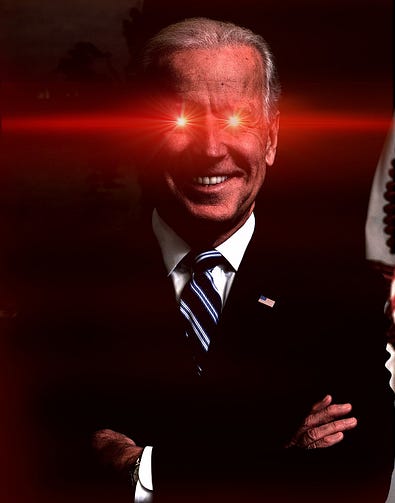
As Republicans were snickering about their “clever” dig at the President, Democrats subverted “Let's Go Brandon” with “Dark Brandon” memes. “Dark Brandon” was a powerful, smiling, superhero Joe Biden, with red laser beams for eyes. The insult became praise. Dark Brandon memes circulated widely. Even Donald Trump complained about them, arguing in a court filing in advance of one of his arraignments that a “Dark Brandon” post Biden made on social media was a thinly veiled reference to Trump’s prosecution.
 |
Justice Louis Brandeis believed in exposing falsehoods and fallacies through discussion and education, or as it came to be known, counter-argument rather than censorship. As he wrote in his concurring opinion in Whitney v. California in 1927, “the remedy to be applied is more speech, not enforced silence.” It’s not about whether you like the speech or not; it’s about whether the First Amendment protects it and whether we value our free speech rights, even if we don’t like the speaker or their message.
If you don’t like what someone is saying, engage in a little civil discourse. Have a conversation. In school or out of school, the free marketplace of ideas, when done right, strengthens our nation. And when the response to “Let’s go Brandon” is a meme that makes us laugh, all the better. The First Amendment is one thing that really does make America great. But the Supreme Court has spoken, or rather, not spoken, so the Sixth Circuit’s decision is now the law of the land. At least in schools, if not in the Oval Office, vulgarity can be banned.
If you find yourself reading Civil Discourse regularly, and you value having it in your inbox, I hope yo