The Democratic Socialists of America have seen their membership more than double to 126,000 over the past two years, a surge that has thrust them into the spotlight during midterm elections, making them a target for Republicans and part of a political identity crisis for Democrats.
A look inside an Austin, Texas, chapter of DSA shows a buzzing community, buoyed by victories across the country. Plus, new polling on AI and a reporter dispatch on covering the data center debate in Texas. |
|
|
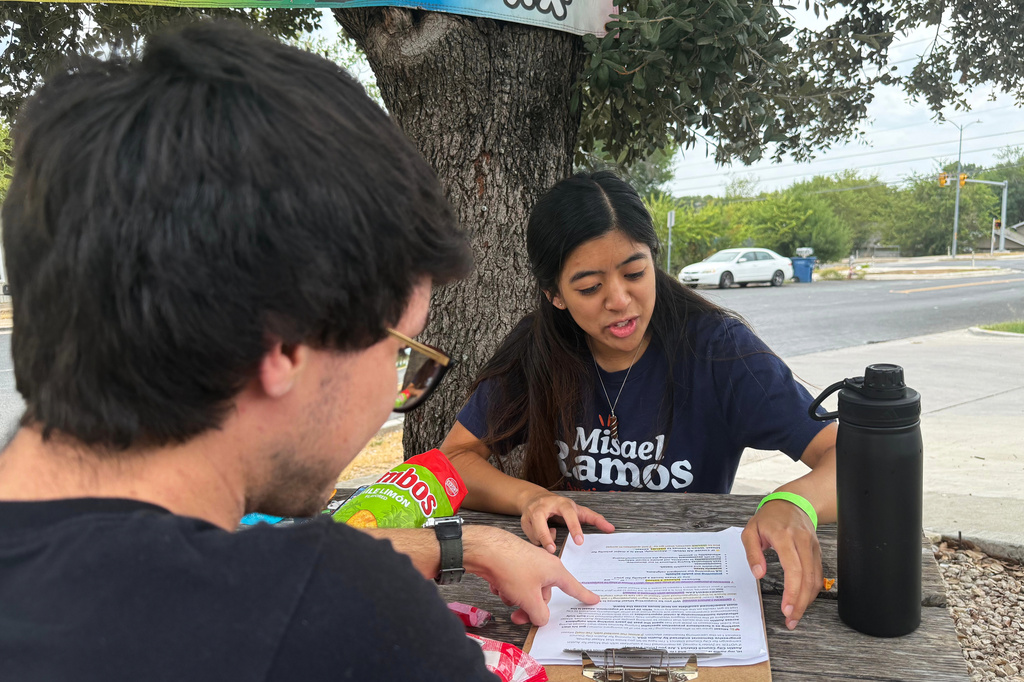
This photo taken with a smartphone shows two members of the Democratic Socialists of America, Mark Ramirez and Clarisse Manuel, during a day of canvassing Saturday, Sept. 26, 2026, in Austin, Texas. (AP Photo/Jesse Bedayn) |
Sandwiches to socialism: how a DSA chapter in Austin is building political power — By Jesse Bedayn
When the socialists filed into the pews of a church sanctuary in Texas, there were far more than would have attended just two years ago.
But that was before members of the Democratic Socialists of America were winning congressional primaries, and the acronym “DSA” became a fixture on television news chyrons.
Before Democrats began arguing about whether to court or rebuke this movement, and President Donald Trump started to complain about the threat of “godless Communists."
For many across the country, it all seemed to happen rather quickly, a political movement fresh off the bench that would, depending on who was asked, either uplift the working class or usher in Stalinism.
But for some in that church, none of this was quite so surprising. The Austin DSA, like many of the 250 chapters spanning the country, has spent years marshaling their members' earnestness, their willingness to volunteer dozens or hundreds of hours, into a local movement with an eye toward national power. Read more from Bedayn on his time spent with Austin DSA members. |
|
|
|
Midterm elections won't keep Trump from football, but a hurricane might |
President Donald Trump, center, attends the NFL Super Bowl 59 football game between the Philadelphia Eagles and the Kansas City Chiefs, Feb. 9, 2025, in New Orleans. (AP Photo/Ben Curtis) |
The midterm elections won't keep Trump from college football on Saturday. A hurricane might — By Will Weissert The midterm elections are looming and the first hurricane of the Atlantic Season is menacing the Gulf Coast. But Trump is really, really hoping the weather doesn’t stop him from going to another big college football game — this one in Alabama on Saturday night.
“Well, hurricane and football? I love Alabama. I gotta go to the game. It’d be awfully hard,” Trump said Wednesday, when asked if Hurricane Isaias — and a forecast track which has parts of Alabama, Mississippi and Florida bracing for significant impacts — might alter his plans.
Officials are still discussing how the storm might affect the game. But if it happens and Trump is there, it would be the 10th college football game he’s attended as president since 2017 — including the late September game in Knoxville when Texas topped Tennessee 20-17.
Read more from Weissert on Trump's football plans and love of sports. |
|
|
|
AP Elections spotlight: What it's like to cover the 2026 midterms |
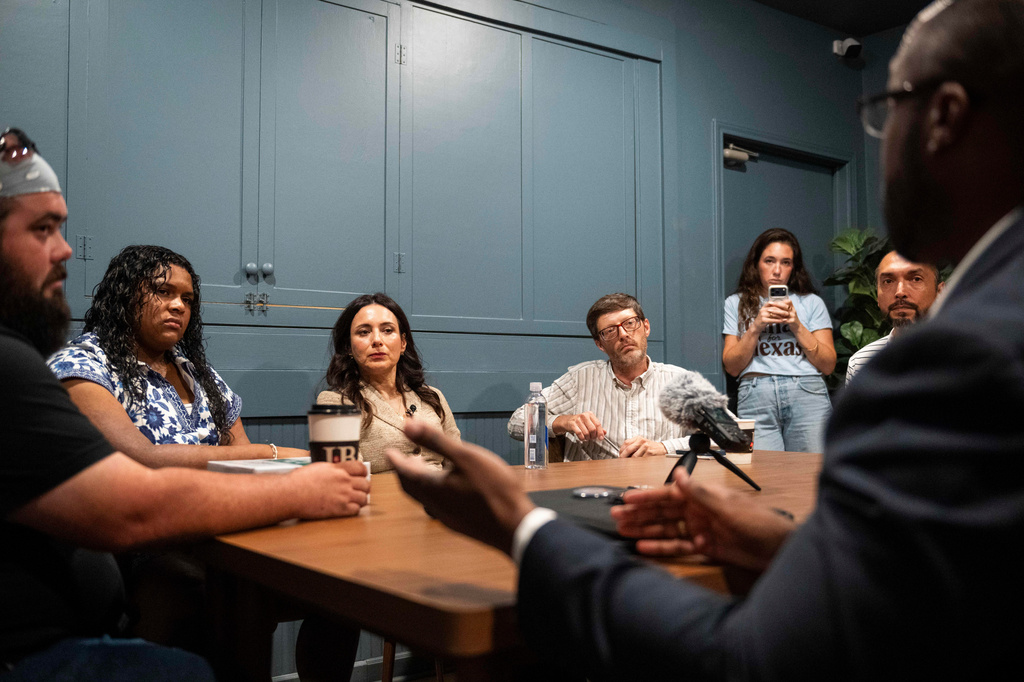
Democratic candidate for Texas governor Gina Hinojosa, third from the left, listens to Stephen Sanders, right, during a roundtable discussion on data centers, Saturday, July 18, 2026, in Lubbock, Texas. (AP Photo/Justin Rex) |
We asked our political reporters across the country who have been covering the midterm elections to pick their favorite story they've worked on this year and take stock of what made it memorable. Trump was in Texas this week hoping to boost the GOP's Senate candidate, but the governor's race there has hit on one of 2026's most nuanced issues: the debate over data centers.
Here's what Pennsylvania-based reporter Marc Levy had to say about that from his time in the Lone Star State: "Texas may not leap to mind as the place for a backlash against big business, but the governor's race there looks like the leading example for how anti-data center sentiment could galvanize voters in a big-time campaign.
I went to west Texas in July to see how the longshot Democratic candidate for governor, Gina Hinojosa, was handling the issue, and I found that plenty of conservatives are unhappy — both with data centers that fuel artificial intelligence and Republican Gov. Greg Abbott, who is seeking a fourth term.
It's become a defining issue for Abbott, who last year proclaimed that 'Texas is the epicenter of AI development.' By one estimate, Texas is poised to become the largest global data center market by 2030.
However, people worry about the impact on the state, especially when it comes to water. Ranchers said they're concerned that data centers will be ahead of them in line when there's rationing during droughts or shortages.
Will it make a difference? Abbott is certainly feeling the heat and has been issuing a series of orders for his administration to scrutinize data center projects."
Read more from Levy on his trip to Texas to delve into the data center debate. |
|
|
|
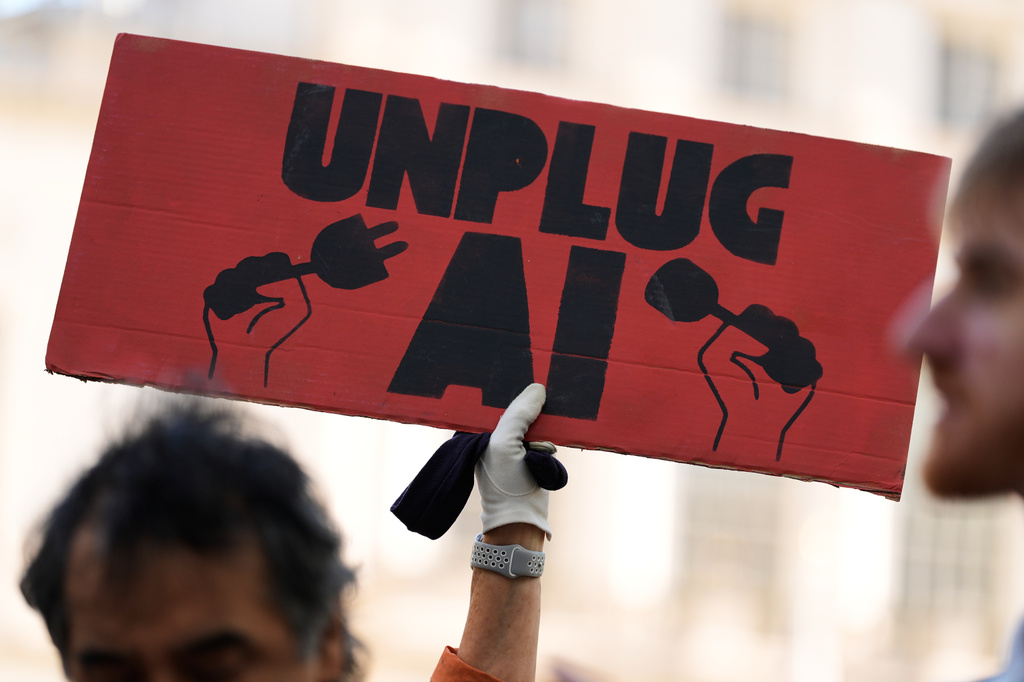
A small group of people supporting restrictions on artificial intelligence hold up signs in front of City Hall before a New York City Council hearing on artificial intelligence safety in New York, Oct. 5, 2026. (AP Photo/Seth Wenig) |
Most Americans think artificial intelligence is developing too fast, AP-NORC poll finds — By Barbara Ortutay and Linley Sanders Worries around artificial intelligence cross party lines, with the vast majority of Americans saying the U.S. government should prioritize keeping AI under human control and protecting workers. A new poll from The Associated Press-NORC Center for Public Affairs Research finds that most Americans, 64%, think AI is developing “too fast,” while 27% say its development has been “about right” and only 8% say it's moving “too slow.”
Trump has pushed back against slowing down AI development because of concerns that China will gain an advantage with the technology. Data centers powering AI projects have also taken a prominent role in major political races as the midterm elections approach.
About 8 in 10 U.S. adults say it's “extremely” or “very” important for the U.S. government to ensure that AI stays under human control, and they are about as likely to want the government to prioritize protecting the country's workforce. Most U.S. adults also think minimizing environmental harm and growing the U.S. economy are highly important. About half say this about promoting technological innovation, and slightly fewer say that about competing with China. Read more from Ortutay and Sanders on the new polling from AP on AI. View the AP-NORC Polling tracker. |
|
|
|
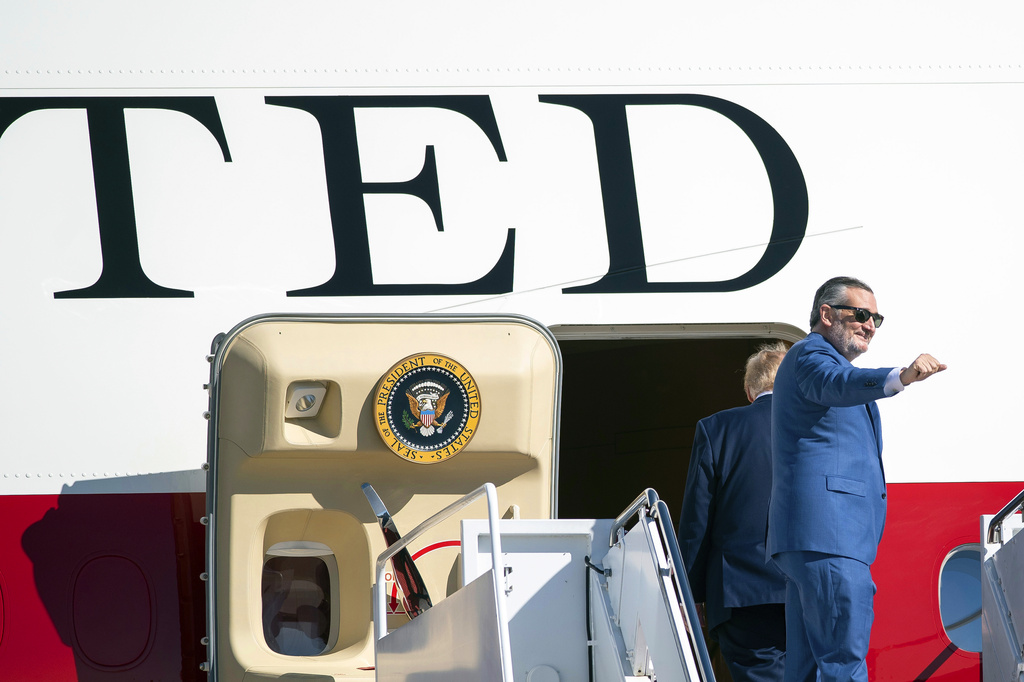
Sen. Ted Cruz, R-Texas, boards Air Force One at Joint Base Andrews, Md., Wednesday, Oct. 7, 2026. (AP Photo/Cliff Owen) |
|
| |
|