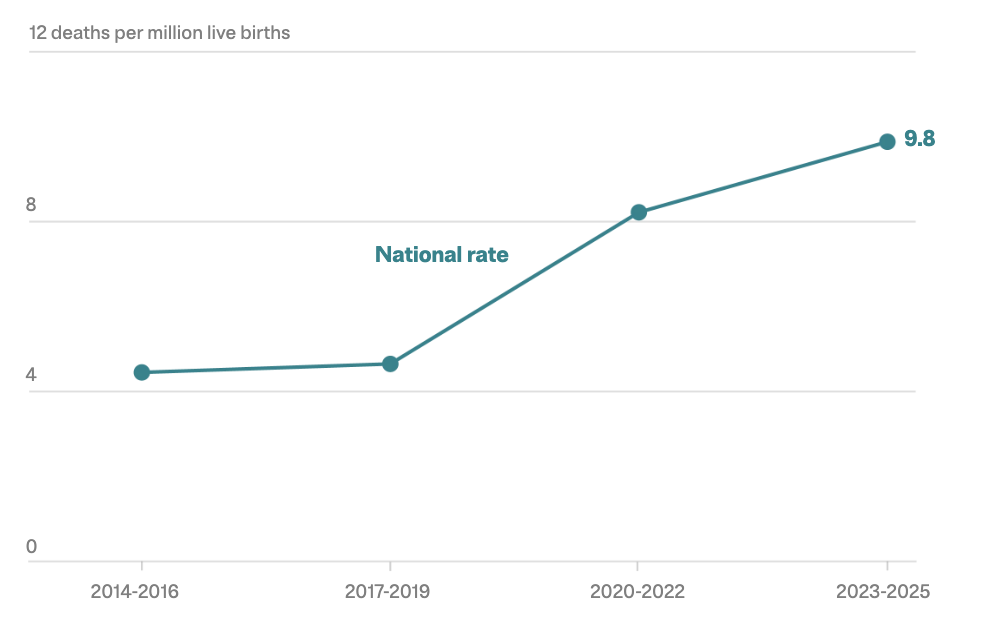
The answer, as it turns out, is multifold and begins with the nature of the condition itself. Ectopic pregnancies occur when an embryo fails to properly implant in the uterus and begins to develop elsewhere, most commonly inside a fallopian tube. The pregnancy grows until it causes the organ to rupture, triggering catastrophic bleeding.
It is a rare condition, estimated to impact up to 2% of pregnancies, but it is incredibly dangerous.
“I genuinely thought I was going to die,” said Kyleigh Thurman, whose right fallopian tube ruptured after she struggled to get ectopic care in Texas in 2023.
“There were a few times I asked my husband if I was going to die,” Leitaea Lowrimore of Oklahoma said in an ongoing lawsuit challenging an abortion ban, after being denied treatment for an ectopic pregnancy at multiple hospitals in February. “I kept thinking about our kids.”
Even before ectopic pregnancy deaths began rising, the condition was noted as the leading cause of death in the first trimester of pregnancy. Yet it has received little research attention. For example, the CDC doesn’t track how many ectopic pregnancies occur a year and doesn’t require healthcare providers to report them. The most recent nationwide study we could find examined data only through 2013.
The U.S. doesn’t conduct national maternal mortality reviews in the same way as countries like the United Kingdom, which responded to a similar spike in the years after the COVID-19 pandemic by instituting changes to emergency services and promoting awareness of ectopic pregnancy symptoms. Instead, in our country, much of the work of investigating pregnancy-related deaths is left to state committees.
This creates a large potential knowledge gap. In individual states, the number of ectopic deaths is small and subject to a lot of variation, making it harder to spot a trend. After our story was published, we reached out to maternal mortality review committees in states with abortions bans; many of them responded that they didn’t identify an increase in ectopic deaths and that, despite the findings of our reporting, they had no plans to examine this issue further.
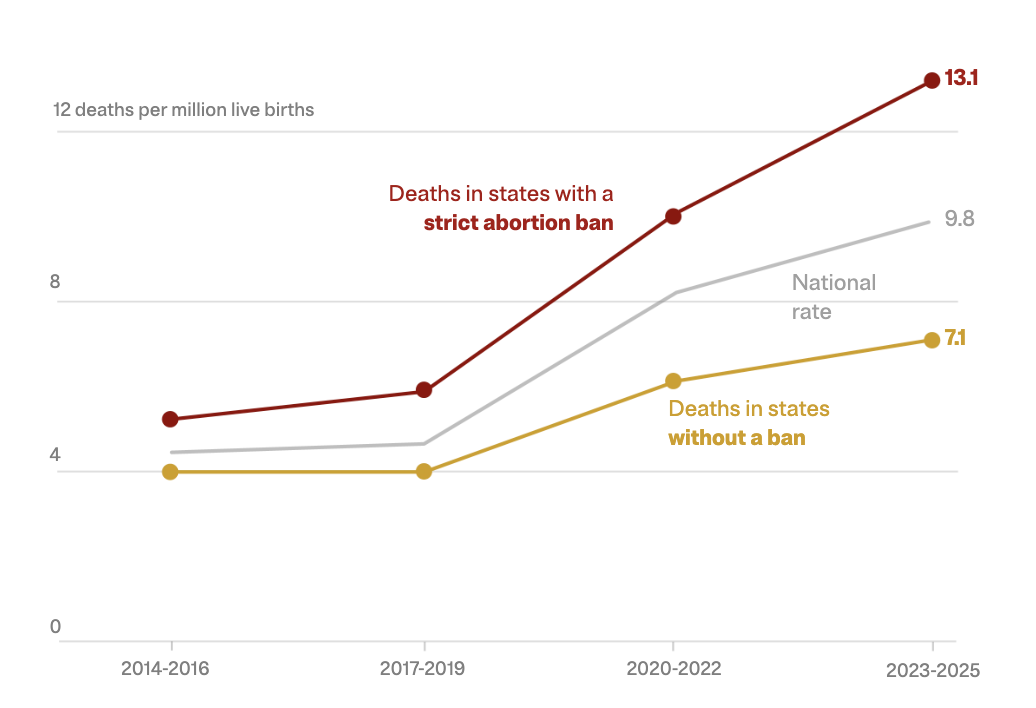
We realized the fact that nearly double the number of women are dying from ectopic pregnancies is visible at only the national level.
It is unclear why the CDC and other federal agencies across two administrations have failed to publicly respond to the increase in deaths despite having access to the same information ProPublica analyzed. We reached out to the CDC to ask what the agency has done to investigate or address this trend. It has epidemiologists who review death and birth records and has in the past done its own investigations and analyses. A spokesperson for the Department of Health and Human Services, which oversees the CDC, didn’t provide a direct answer to that question but said the agency continues to track maternal mortality trends, investigate their causes and provide funding for research.
Maternal experts agree that the government’s capacity to respond to this trend has been significantly reduced as a result of the staffing cuts initiated by the Trump administration since the beginning of last year. The CDC’s Division of Reproductive Health, for example, lost most of its 100 employees, according to a lawsuit filed by more than a dozen states’ attorneys general last year.
This lack of awareness surrounding ectopic pregnancy deaths is imperiling women’s lives.
We asked several experts why death rates were going up, but there was no consensus. And while our analysis can’t establish whether there is a causal link between abortion bans and the worse outcomes in the states that have them, there is no evidence that officials are stepping up to examine this question or offer solutions. Even professional organizations, such as the American College of Obstetricians and Gynecologists, have yet to provide specific guidance to doctors about how to adequately treat women with suspected ectopic pregnancies in states with abortion bans.
But experts say the trend we uncovered is unacceptable and requires a response. As Courtney Schreiber, a professor of obstetrics and gynecology, told us, our work “raises concern that young women are dying from a preventable cause at an increasing rate. That is not what we should be seeing in the United States of America.”
We hope you’ll read our recent investigation, which includes more details on potential explanations for this trend and stories from women in states with abortion bans who faced delays in care. We plan to continue reporting on maternal health and the impact of abortion bans for the foreseeable future. If you have tips or feedback for us, you can respond to this email.