Plus: Nobel literature laureate makes ancient Greece new; Hurricane Isaias breaks through |

US Edition - Today's top story: Why fall yard care could start with doing less – but not nothing

October 10, 2026

US Edition

The Conversation
 

Welcome to the Saturday edition of The Conversation U.S.’s Daily newsletter.

Over the long holiday weekend, many Americans will head into their yards to tidy up after summer and prepare for winter. Manjot Kaur Sidhu, a horticulture professor at the University of Maine, has some reasons you might want to take it a little easier than you have in the past.

In some parts of the country, leaves have yet to fall, but other places are starting to see the trees drop their summer greenery. Those leaves are a crucial part of your yard’s ecosystem and the broader environment in your community.

They provide both nutrients and shelter for pollinators, beetles and other insects. That can include ticks, so Sidhu offers a way to balance the need for protection with the desire to do more for the environment.

This week we also liked stories on the sometimes bizarre AI-generated political ads this election season, what it’s like to work on the Nobel-Prize-winning neutrino detector in Antarctica, and a novel way for lowering data center energy use – by storing heat underground.

Did somebody forward this email to you? Subscribe to our daily and weekly newsletters here.

 

Jeff Inglis

Environment + Energy Editor

 
Leaves on the ground are part of the natural cycle of nutrients. Manjot Sidhu

Why fall yard care could start with doing less – but not nothing

Manjot Kaur Sidhu, University of Maine

Fallen leaves provide essential winter habitat for native pollinators and provide natural mulch for the soil. If you have to clear some leaves, don’t get rid of them entirely: Move them out of sight.

Canadian essayist, poet and translator Anne Carson in New York City at the 2024 National Book Awards. Jay Dixit/WikiPortraits via Wikimedia Commons

Anne Carson’s Nobel-winning, genre-defying work bridges the gap between ancient Greek literature and modern life

Amy Cannon, USC Dornsife College of Letters, Arts and Sciences

Whether via her fill-in-the-blank translations or guest appearances on indie rock albums, Anne Carson has infused antiquity with a contemporary tongue

Hurricane Isaias just after making landfall near Destin, Fla., on Oct. 9, 2026. NOAA

How Hurricane Isaias broke through to become the first Atlantic hurricane in an extremely quiet 2026 season

Christopher Davis, UMass Amherst

An atmospheric scientist explains what’s been going on in the atmosphere, and how El Niño and the jet stream both play important roles.


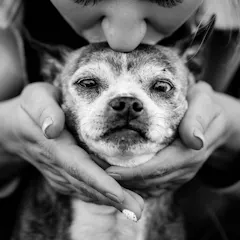
Why old dogs might be able to teach Alzheimer’s researchers new tricks

Julie Moreno, Colorado State University

As dogs age, their brains undergo similar changes to human brains, making them a valuable natural model to study dementia and other neurodegenerative diseases.

Sexual assault survivors’ stories may shift over time – a psychologist explains why it doesn’t mean they’re lying

Michele Patterson Ford, Dickinson College

The brain’s acute response to the trauma of sexual assault can block a person’s ability to accurately assess what they experienced.

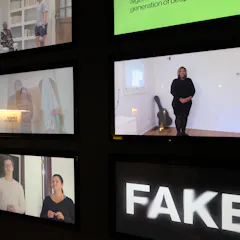
We’ve tracked $80M of spending on almost 170 AI-generated political ads this year – it’s weird

Travis N. Ridout, Washington State University; Erika Franklin Fowler, Wesleyan University; Michael Franz, Bowdoin College

Almost 170 ads and $80 million in spending and only 31% with a disclaimer: Here’s what researchers found when they tracked AI in this year’s campaign ads.

Primary voters are unrepresentative, inconsistent and very powerful

Robert Boatright, Clark University; Institute for Humane Studies

Primary winners represent the views of a small group of people who turn out inconsistently and often do not even represent the the views of the parties’ voters, to say nothing of the general public.

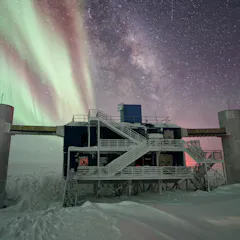
I’m a physicist who worked on the Nobel-winning neutrino search – here’s how a cubic kilometer of Antarctic ice became a telescope for ghost particles from space

Tyce DeYoung, Michigan State University

The 2026 Nobel Prize in physics recognizes Francis Halzen’s vision in building an unusual telescope in Antarctica, as well as the neutrino discoveries it’s made.

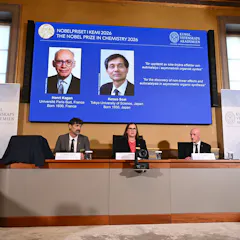
A molecule’s ‘handedness’ can determine whether it’s an effective drug – 4 examples of pharmaceuticals where chirality matters

Cedric Schaack, Wake Forest University; Mallory Green, Wake Forest University

The 2026 Nobel Prize in chemistry gave a hand to handed molecules – and the processes chemists use to create them.


The Conversation's News Quiz

Francis Halzen, who has been awarded the 2026 Nobel Prize in physics, did much of his amazing neutrino research at a South Pole observatory that shares a name with what famous hip-hop artist?

Big Boi
Ice Cube
Coolio
2Pac

Today's video

Illustration of a human figure surrounded by criscrossing green lines
Watch on YouTube
 

About The Conversation

We're a nonprofit news organization dedicated to bringing you facts and trustworthy analysis to help you make sense of our complex world. We can give away our articles thanks to the generosity of readers like you. Learn more about us

Support our work

More from The Conversation

Follow The Conversation

You can find us on all your favorite platforms:

• YouTube • Bluesky • Facebook • TikTok

•