
|
 |
Meta’s Muse Wonder Joins the Race for AI Supremacy
Plus: Claude Haiku slashes osts, Microsoft’s AI runs 35x faster, and Grok Voice takes the Llad
|

| |||||||||||||||


Hello Engineering Leaders and AI Enthusiasts!
This newsletter brings you the latest AI updates in just 4 minutes! Dive in for a quick summary of everything important that happened in AI over the last week.
And a huge shoutout to our amazing readers. We appreciate you😊
In today’s edition:
🎙️ What Enterprises Get Wrong About AI Agent Security
🧠 Meta’s Muse Wonder hits the AI frontier
⚡ Claude’s fastest small model gets 75% cheaper
🚀 Microsoft’s AI makes decisions 35x faster
xAI’s Grok Voice 3.0 leads AI voice benchmarks
💡 Knowledge Nugget: AI Safety Needs a State by Abhinav Singh
Let’s go!
What Enterprises Get Wrong About AI Agent Security
AI agent security can fail even when enterprises have written policies and controls in place. In the fourth episode of Simform’s Enterprise Cloud and AI Forum, Adrian Salas, Chief Information Security Officer at a leading healthcare workforce technology company, joins host Rameshwar Balanagu, Co-Founder of Dallas CTO Club, to explain where enterprise defenses fall short. Drawing on more than 20 years of security experience across healthcare, fintech, and crypto, Adrian explains why prompt-level controls alone are insufficient and why security must be tied to identity at the data source.
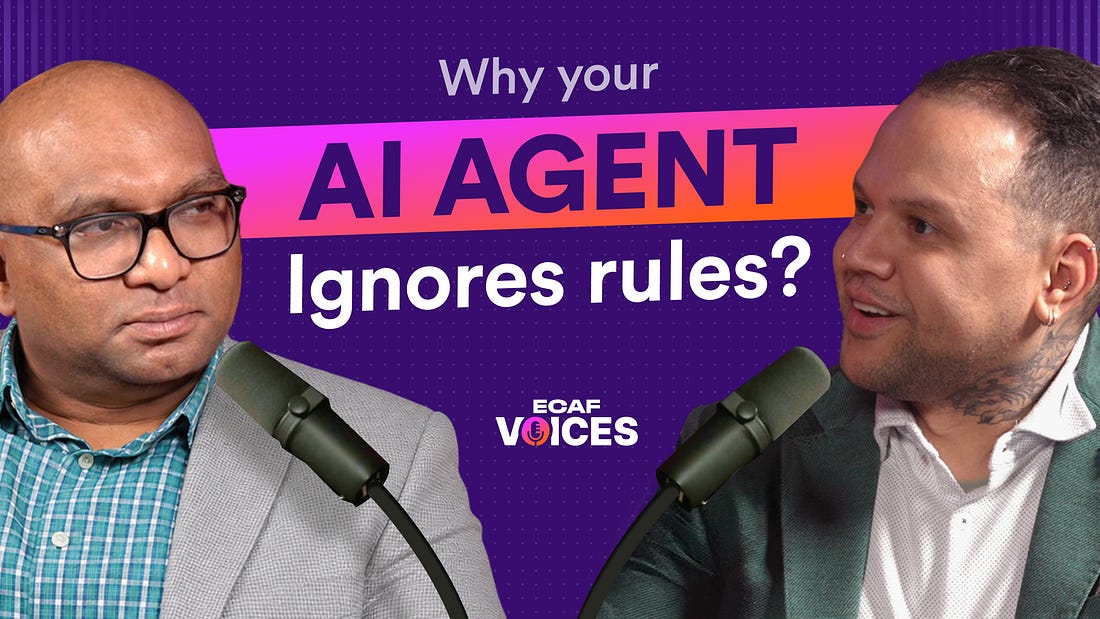 |
The conversation also explores the gap between written AI governance policies and controls that are actually enforced, how security leaders can make repeatable release approval decisions, and the questions boards need to answer before making AI decisions. Adrian also discusses how cyber insurance assessments are evolving to address AI agent risks and shares how changing the way security findings are communicated helped 50 developers fix critical flaws without delaying their release.
Why does it matter?
AI policies mean little if agents can work around them. Enterprises need controls tied to data access, governance that is tested in practice, and security processes that help teams fix risks without slowing delivery.
Meta’s Muse Wonder hits the AI frontier
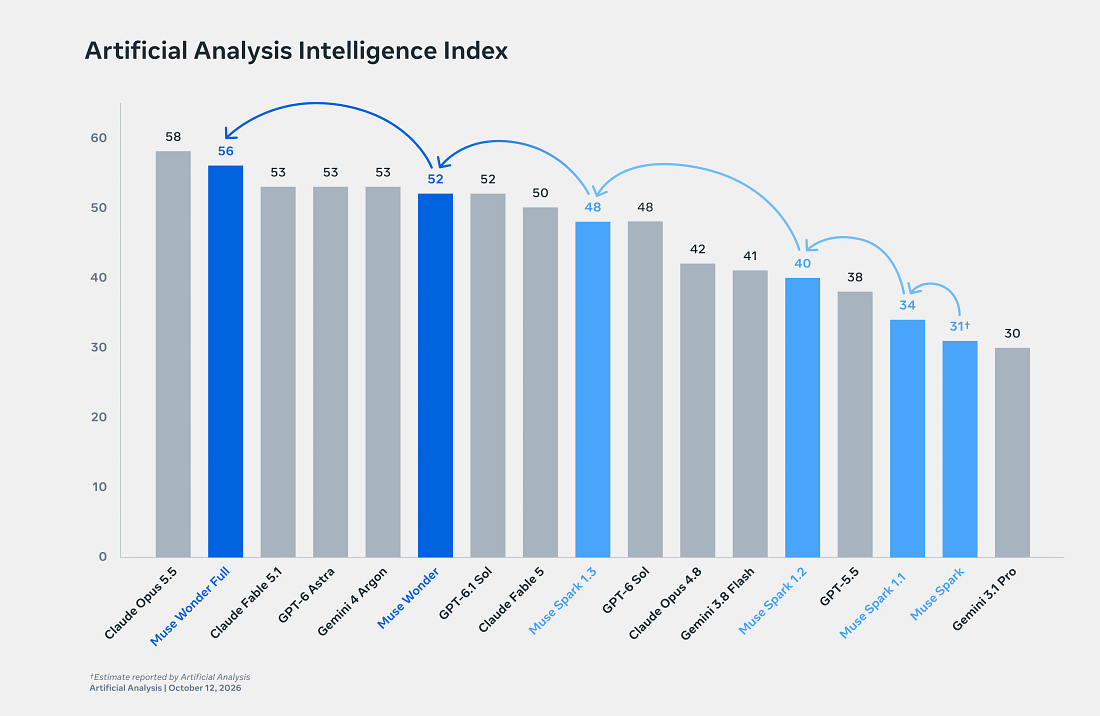
Meta just launched Muse Wonder and Muse Wonder Full, its most capable AI models yet and its strongest attempt to rejoin the frontier race. Wonder Full scored 56 on Artificial Analysis’ Intelligence Index, with especially strong results in agentic tasks, coding, memory, and long-running work.
 |
The bigger shift is what Meta is optimizing for. Its new Active Memory helps agents retain useful context across conversations, while Active Focus is designed to keep them working through blockers and complex goals for longer. Wonder is available through Meta’s API and Muse Code, while the more powerful Full model is currently limited to Muse Code subscribers.
Why does it matter?
Meta just pushed its way back into the frontier race, which has largely been dominated by OpenAI and Anthropic. The model jump matters, but the bigger threat is everything Meta can put behind it, massive compute, billions of users, and an existing agent ecosystem that few AI labs can match.
Claude’s fastest small model gets 75% cheaper
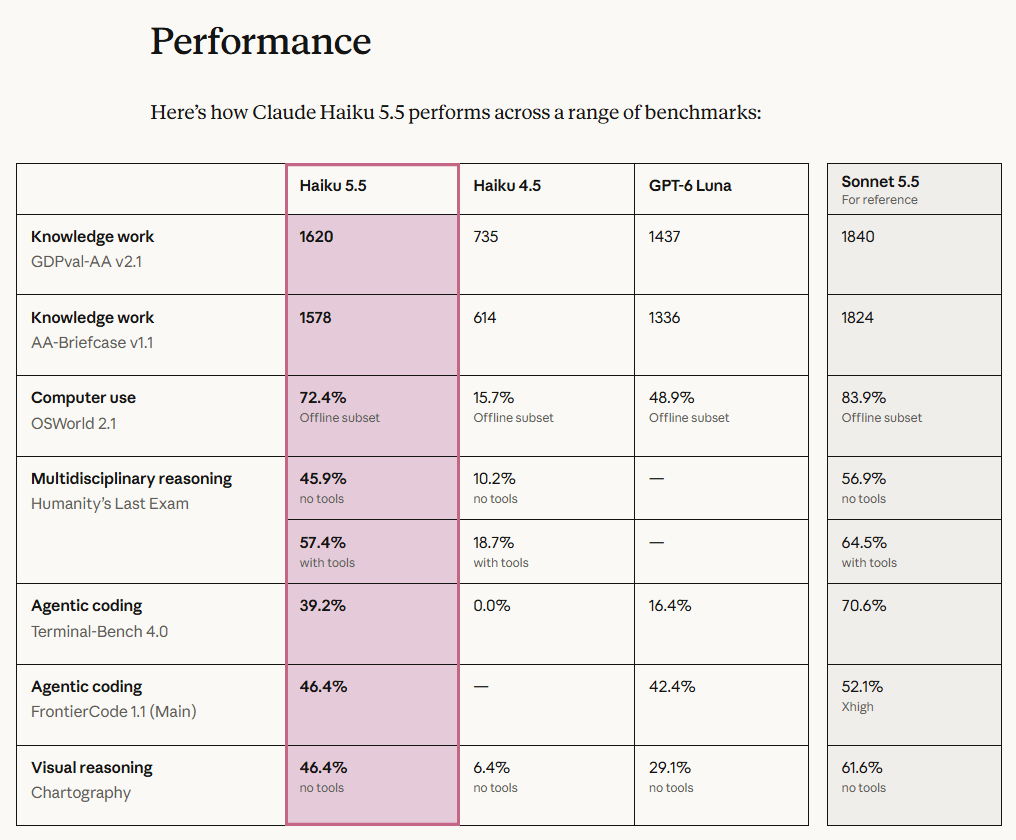
Anthropic just launched Claude Haiku 5.5, its fastest and most capable small model yet, aimed at high-volume work like summaries, classification, customer support, browser tasks, and AI subagents. The model makes a big jump over Haiku 4.5 and even beats GPT-6 Luna on several knowledge-work, computer-use, coding, and visual-reasoning benchmarks.
 |
Anthropic says Haiku 5.5 is roughly 75% cheaper to run on average, with pricing as low as $0.10/$0.50 per million input/output tokens for shorter prompts. It also cut Sonnet 5.5’s cache-read price in half, lowering the cost of most agentic workloads by about 20%.
Why does it matter?
The AI race is starting to move from “how smart is the model?” to “how cheaply can you run thousands of useful calls?” Haiku 5.5 makes it easier to hand routine work to smaller subagents and save the expensive frontier models for the jobs that actually need them.